GMCSCO Media Group

Author name: Admin

Best SEO Practices for Saudi Businesses to Rank Higher on Google

Best SEO Practices for Saudi Businesses to Rank Higher on Google

In today’s Saudi market, having a website is no longer enough. Every business — whether it’s a startup in Riyadh, a service provider in Jeddah, or an eCommerce brand targeting the GCC is competing for visibility on Google. And the reality is simple: If your business is not showing up on the first page, you are losing potential customers every single day. This is where SEO for Saudi businesses becomes not just important, but essential. However, SEO in 2026 is very different from what it used to be a few years ago. It is no longer about stuffing keywords or building random backlinks. Today, it is about understanding user intent, creating valuable content, optimizing for local search, and aligning with how AI-driven platforms like ChatGPT interpret and recommend content. In this guide, we will walk through the most effective and practical strategies that Saudi businesses can use to improve their Google ranking in Saudi Arabia and generate consistent leads. Now Hire SEO company Saudi Arabia Understanding the Saudi Digital Landscape Before jumping into strategies, it’s important to understand how users in Saudi Arabia actually search. Saudi Arabia has one of the fastest-growing digital economies in the Middle East. With high smartphone usage and a digitally active population, most users rely heavily on Google to find services, compare businesses, and make purchasing decisions. What makes this market unique is the combination of: Arabic and English search behavior Strong preference for local businesses High trust in reviews and brand authority Increasing use of voice search and AI tools This means your SEO strategy must be localized, relevant, and built around real user behavior — not generic global tactics. Businesses that invest in SEO services in Saudi Arabia with a localized approach are the ones seeing real growth. The Foundation: Keyword Strategy That Matches Intent One of the biggest mistakes businesses make is targeting keywords based only on search volume. In reality, what matters more is search intent. For example, someone searching for “SEO company in Saudi Arabia” is likely ready to hire, while someone searching “what is SEO” is just learning. A strong SEO strategy should include a mix of: Commercial keywords like SEO company in Saudi Arabia, hire SEO company Saudi Arabia Service-focused keywords such as affordable SEO services Saudi Arabia and local SEO services in Saudi Arabia Informational queries that answer real problems Instead of targeting one keyword per page, modern SEO works on topic clustering, where a single page naturally includes multiple related keywords like: SEO experts in Saudi Arabia Digital marketing Saudi Arabia Google ranking Saudi Arabia This approach helps search engines understand your authority on the topic. Creating Content That Actually Ranks (And Converts) Content is still one of the strongest pillars of SEO, but only when done correctly. Most businesses either: Copy content from competitors Use AI-generated text without editing Or write generic blogs with no real value That approach doesn’t work anymore. Google and AI tools now prioritize experience-based, helpful, and human-written content. To rank effectively, your content should: Start by directly answering the user’s question. For example, instead of long introductions, clearly explain the solution early in the blog. Then, go deeper into the topic by explaining: Why the problem exists What solutions work How users can implement them Adding examples, scenarios, and real-world insights makes your content more trustworthy. This is especially important if you are offering digital marketing Saudi Arabia services, where users are looking for expertise, not theory. Local SEO: The Most Powerful Opportunity for Saudi Businesses If there is one area where most businesses in Saudi Arabia are still underperforming, it is local SEO. Local SEO helps your business appear in searches like: “SEO company near me” “digital marketing agency Riyadh” “best services in Jeddah” To improve local rankings, businesses must optimize their Google Business Profile properly. This includes: Accurate business details Real images Regular updates Customer reviews Reviews, in particular, play a huge role. Saudi users trust businesses with strong ratings and positive feedback. Another important step is creating location-specific pages. For example: SEO services in Riyadh SEO company in Jeddah This helps you capture traffic from different cities and improve your overall Google ranking in Saudi Arabia. Hire GMCSCO for Your Business SEO. Technical SEO: The Backbone of Your Website Even the best content won’t perform if your website has technical issues. Search engines prefer websites that are fast, secure, and easy to navigate. Key areas to focus on include: Website speed: pages should load quickly, especially on mobile devices. Mobile responsiveness: your site must work perfectly on smartphones. Secure connection: HTTPS is a must. Clean structure: URLs and navigation should be simple and clear. Since most users in Saudi Arabia browse on mobile, ignoring mobile optimization can directly impact your rankings. On-Page SEO: Optimizing Every Page Properly On-page SEO is where you help Google understand your content. This includes: Proper heading structure (H1, H2, H3) Natural keyword placement Optimized meta titles and descriptions Internal linking between pages For example, if you are offering services, you should naturally connect your blog to pages like: SEO services in Saudi Arabia Best SEO agency in Saudi Arabia SEO experts in Saudi Arabia This improves both ranking and user experience. Contact GMCSCO and Improve Google ranking in Saudi Arabia Building Authority Through Backlinks Backlinks remain one of the strongest ranking factors. However, quality matters more than quantity. Instead of buying cheap links, focus on: Guest posting on relevant websites Listing your business in Saudi directories Publishing PR articles Collaborating with industry blogs A strong backlink profile signals to Google that your business is trustworthy and authoritative. AI Optimization: The New SEO Layer In 2026, SEO is no longer limited to Google. Your content should also be optimized for AI platforms like ChatGPT. This means: Writing clear and structured content Answering common questions Using simple language Providing real insights When your content is easy to understand, AI tools are more likely to recommend it. Converting Traffic into Real Business Getting traffic

Best SEO Practices for Saudi Businesses to Rank Higher on Google Read More »

WhatsApp API for Government Communication

How Governments Can Use WhatsApp API for Public Safety Communication During Uncertain Situations

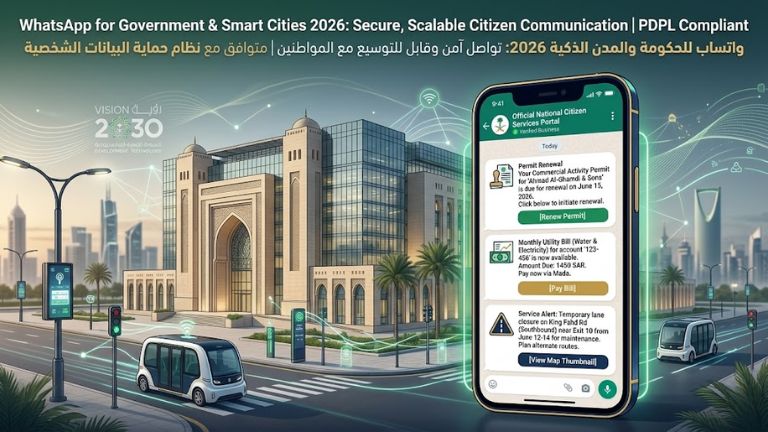
In times of uncertainty, whether due to geopolitical tensions, public safety concerns, or rapidly evolving situations, clear and timely communication becomes the backbone of public trust. Governments and ministries across the world are increasingly recognizing that traditional communication channels such as television broadcasts, press releases, and SMS—are no longer sufficient on their own. Citizens today expect real-time, direct, and reliable updates on platforms they already use daily. This is where WhatsApp Business API emerges as a powerful and responsible communication tool. With billions of active users globally, WhatsApp enables ministries and public sector organizations to deliver accurate, secure, and immediate information directly to citizens ensuring safety, clarity, and coordination without confusion. The Need for Real-Time Public Communication During uncertain or sensitive situations, information gaps can lead to: Panic and misinformation Overloaded helplines Reduced public trust Inefficient response coordination Governments must ensure that: Citizens receive verified information Communication is consistent and frequent Messages reach people instantly A structured communication system helps authorities maintain order, confidence, and transparency. Why WhatsApp is the Preferred Communication Channel WhatsApp has become one of the most trusted digital platforms worldwide. Its advantages for public communication include: High Open Rates Messages sent via WhatsApp typically have open rates above 90%, ensuring critical information is actually seen. Real-Time Delivery Unlike emails or delayed notifications, WhatsApp delivers messages instantly. Familiar Platform Citizens do not need to install new apps or learn new systems. Secure Communication End-to-end encryption ensures that messages are delivered securely. Multimedia Support Authorities can send: Text alerts Images (maps, instructions) Videos (guidelines, announcements) Documents (official notices) Key Use Cases for Ministries & Government Bodies Public Safety Announcements Governments can send timely updates such as: Safety advisories Travel guidelines Area-specific alerts Daily Situation Updates Instead of relying on scattered sources, ministries can provide: Daily summaries Verified updates Clarifications to avoid misinformation Emergency Instructions In critical scenarios, clear instructions can be shared: Where to seek help What precautions to take Which areas to avoid Citizen Support & Helplines Automated WhatsApp chatbots can: Answer common questions Provide instant guidance Reduce pressure on call centers Service Continuity Updates Governments can inform citizens about: Operational services Office timings Public transport updates Ensuring Responsible & Ethical Communication When using platforms like WhatsApp for public communication, it is essential to follow responsible practices: Accuracy First Only verified and approved information should be shared. No Panic Messaging Messages must be calm, clear, and reassuring. Consistent Tone Communication should reflect authority and stability. Respect Privacy Citizen data must be handled in compliance with data protection regulations. Avoid Over-Messaging Send only necessary updates to maintain trust and attention. Compliance and Policy Considerations Using WhatsApp Business API requires adherence to: Platform policies Local communication regulations Opt-in requirements Governments must ensure: Citizens have consented to receive messages Messages are informational, not promotional Communication aligns with public interest Working with an experienced WhatsApp API provider ensures: Proper setup Template approvals Scalable infrastructure Building a Scalable Communication System To effectively reach millions of citizens, ministries need a structured system: 1. Verified WhatsApp Business Account Ensures authenticity and trust. 2. Pre-Approved Message Templates For fast deployment during urgent situations. 3. Segmented Messaging Send location-specific updates to relevant audiences. 4. Automation & Chatbots Provide instant responses 24/7. 5. Analytics & Reporting Track delivery, engagement, and response rates. Benefits for Governments and Citizens For Governments: Faster communication Reduced misinformation Better coordination Improved public trust For Citizens: Direct access to verified information Reduced confusion Increased sense of safety Easy access to support Real-World Impact Globally, governments and public institutions have already adopted digital messaging platforms to: Share health advisories Provide emergency alerts Manage public communication efficiently The shift toward direct-to-citizen communication is no longer optional – it is essential for modern governance. Why WhatsApp API is the Future of Public Communication As digital adoption continues to grow, messaging platforms are becoming the primary interface between governments and citizens. WhatsApp stands out due to: Massive user base Ease of use Reliability Security It enables governments to move from: ❌ Delayed communication to ✅ Instant, structured, and trusted messaging How GMCSCO Supports Government Communication Systems At GMCSCO, we provide advanced WhatsApp Business API solutions designed for high-volume, secure, and compliant communication. Our solutions include: Official WhatsApp API setup Message template approval support Scalable bulk messaging infrastructure Chatbot automation for citizen support Real-time reporting and analytics We help ministries and organizations build reliable communication systems that deliver information efficiently and responsibly. Conclusion In times of uncertainty, communication is not just important—it is critical. Governments that invest in modern communication infrastructure can: Maintain public trust Ensure safety Deliver clarity when it matters most WhatsApp Business API provides a powerful, secure, and scalable way to connect with citizens making it an essential tool for public communication in today’s digital world. Looking to implement a secure and scalable WhatsApp communication system for your organization. Connect with GMCSCO to build a reliable, compliant, and high-performance messaging infrastructure tailored for public communication. Frequently Asked Questions (FAQs) Is WhatsApp Business API suitable for government communication? Yes, WhatsApp Business API can be used by government bodies and public sector organizations to deliver informational and service-related updates to citizens, provided all platform policies and local regulations are followed. Is it legal to send bulk WhatsApp messages to citizens? Bulk messaging is allowed only when users have opted in to receive communication. All messages must comply with WhatsApp policies and applicable local laws. Can WhatsApp be used for emergency or safety alerts? Yes, WhatsApp can be used as a real-time communication channel to share verified safety updates, instructions, and important notifications during critical situations. How can governments ensure messages are secure? WhatsApp provides end-to-end encryption, and official accounts can be verified to ensure authenticity and secure delivery of messages. What type of messages can be sent using WhatsApp API? Organizations can send: Public safety updates Service notifications Alerts and advisories Appointment and status updates All messages must be informational and non-promotional for public sector use cases. Do citizens need to give permission to receive messages?

How Governments Can Use WhatsApp API for Public Safety Communication During Uncertain Situations Read More »

Clarity in Communication

Introduction: A Quiet Shift in How People Understand the World

Over the past decade, the way people receive and interpret information has undergone a profound transformation. What was once dependent on scheduled broadcasts, official announcements, or physical communication channels has now become continuous, immediate, and deeply integrated into everyday life. In regions such as Saudi Arabia, the United Arab Emirates, Qatar, and Bahrain, where digital adoption is high and populations are highly connected, this transformation is even more visible. Information is no longer something people wait for it is something they experience in real time. In such an environment, moments of uncertainty take on a different dimension. Information does not arrive gradually; it appears all at once, often from multiple directions. People do not simply receive updates they interpret them instantly, emotionally, and collectively. This shift has introduced a new dynamic: Communication is no longer only about delivering information. It is also about shaping how that information is understood. Ready to simplify your communication strategy? Connect with GMCSCO today. The Nature of Information in Real Time In a connected society, information rarely arrives in isolation. It flows continuously through messaging platforms, social networks, news channels, and personal conversations. A single event can generate: Multiple interpretations Rapid discussions Repeated sharing across platforms Emotional reactions before full understanding This creates a unique challenge not of access, but of interpretation. People often encounter fragments of information before they encounter context. As a result, their understanding is shaped not only by facts but by how those facts are presented and perceived. In such moments, clarity becomes a stabilizing factor. Human Behavior in Moments of Uncertainty Uncertainty affects individuals in subtle but predictable ways. When people are unsure about a situation: They seek immediate answers They rely on familiar sources They respond emotionally before analytically They share information quickly within their circles These responses are natural. They are not driven by panic alone, but by the human instinct to understand and adapt. A short, clear message delivered at the right time can significantly influence this process. It does not need to be complex. In many cases, simplicity is more effective. For example: “The situation is being monitored. Services are operating normally. Further updates will follow.” Such communication provides orientation. It gives people a reference point. Let GMCSCO help you deliver clear, impactful messages – get in touch now. Everyday Platforms as Information Channels Messaging platforms have become deeply embedded in daily routines. Applications like WhatsApp Business API are no longer used only for personal communication—they are part of how people stay informed. Several factors contribute to this shift: High daily usage across all age groups Familiar and simple interfaces Immediate visibility of messages Integration into personal and group communication Because of this, communication delivered through such platforms feels closer, more direct, and more immediate than traditional channels. This does not replace traditional communication it complements it. Observing Patterns in Public Messaging Across different environments, certain patterns in communication begin to emerge, especially during evolving situations. These patterns often include: Short reassurance statements General awareness messages Updates about services or operations Clarifications of ongoing developments These forms of communication tend to share common characteristics: They are concise They avoid technical complexity They are easy to understand across diverse audiences Such patterns reflect an understanding of how people consume information today. Simplicity as a Strength In complex situations, it might seem natural to provide detailed explanations. However, detailed information is not always the most effective first response. Simple communication often works better because: It is easier to process quickly It reduces misinterpretation It creates immediate clarity Consider the difference: ❌ “Operational conditions are under continuous assessment.” ✅ “The situation is being monitored.” Both convey similar meaning, but the second is more accessible. Simplicity does not reduce accuracy—it enhances clarity. The Role of Tone in Communication Tone is often overlooked, yet it plays a critical role in how information is received. A message can be: Informative but unsettling Or informative and reassuring The difference lies in tone. A calm tone: Reduces emotional escalation Encourages trust Supports clarity A neutral and composed message allows people to absorb information without unnecessary concern.  Want smarter communication solutions for your business? Talk to GMCSCO. Structure of Clear Communication Clear communication often follows a simple structure: Acknowledgement of the situation Reassurance about stability Direction toward trusted updates For example: Dear Resident, The situation is being monitored. All essential services are functioning normally. Updates will be shared through official channels. This structure is easy to follow and avoids confusion. Communication as a Stabilizing Element In modern environments, communication itself can act as a stabilizing factor. When people receive clear and timely updates: They feel informed They feel connected They feel reassured This does not require extensive detail. Often, it requires consistency and clarity. Over time, consistent communication builds familiarity. Familiarity builds confidence. The Relationship Between Clarity and Trust Trust is not built through a single message. It develops over time through repeated, consistent experiences. Clear communication contributes to this process by: Reducing ambiguity Providing reliable reference points Maintaining a steady flow of information When clarity is present, trust tends to follow. The Subtle Impact of Timing Timing plays a crucial role in communication effectiveness. Information delivered: Too late may lose relevance Too early without clarity may create confusion Well-timed communication aligns with how people are experiencing a situation. It meets them at the right moment. This alignment enhances understanding. Multilingual Communication in Diverse Societies In regions with diverse populations, language plays an important role in accessibility. Communication that supports multiple languages: Reaches broader audiences Reduces misunderstanding Enhances inclusivity Clarity is not only about what is said—but also about how easily it can be understood by different groups. The Evolution Toward Direct Communication There is a visible shift toward communication that reaches people directly, rather than indirectly. Instead of searching for updates, people increasingly receive them through platforms they already use. This shift reflects: Changing habits Increasing expectations for immediacy Greater integration of communication into daily life Observing Digital Communication Trends Several broader trends can be

Introduction: A Quiet Shift in How People Understand the World Read More »

WhatsApp Business API Chatbot Setup KSA 2026

WhatsApp Business API Chatbot Setup KSA 2026: The Complete Expert Guide for Saudi & Indian Businesses

Why Businesses Are Losing Customers Every Day Without Realizing It Let’s start with a reality that most business owners don’t notice until it’s too late. Imagine a customer in Riyadh searching for a product late at night. They find your business on Google, click your WhatsApp button, and send a simple message: “Hi, what is the price?” At that exact moment, nobody from your team is available to respond. Maybe your office is closed. Maybe your staff is busy. Maybe the message just gets buried under dozens of others. So the customer waits for a few minutes… then opens another business listing… sends the same message… and receives an instant automated reply. Within ten minutes, they’ve already placed an order with your competitor. This scenario is happening thousands of times every day across Saudi Arabia and India. Businesses are not losing customers because their products are bad or their prices are high. They are losing them because they are simply not responding fast enough. Customer expectations have changed dramatically in the past few years. People no longer want to fill out forms, wait for emails, or sit on phone calls. They want instant answers on the platforms they already use and in Saudi Arabia, nothing dominates customer communication like WhatsApp. This is exactly why WhatsApp Business API chatbot setup in KSA has become one of the most important digital investments for modern businesses in 2026. It’s no longer just about automation. It’s about survival in a market where speed equals revenue. Understanding WhatsApp Business API Chatbots in Simple Terms To truly appreciate why businesses are investing heavily in WhatsApp automation, you need to understand what the WhatsApp Business API actually is and what it is not. Many business owners confuse the WhatsApp Business App with the API version. The regular WhatsApp Business App is designed for small businesses handling limited conversations. It offers basic auto-replies, labels, and simple message organization. But it quickly becomes useless when message volume grows. You cannot connect it to CRM systems. You cannot automate complex workflows. You cannot manage multiple agents efficiently. And most importantly, you cannot create intelligent conversational experiences. The WhatsApp Business API, on the other hand, transforms WhatsApp into a full-scale customer engagement platform. With API access, businesses can automate customer conversations from the moment someone sends a message until the entire transaction is completed. A chatbot can greet customers, understand their intent, provide product information, collect details, process payments, and even handle after-sales support. Instead of thinking of it as a chatbot, it’s more accurate to think of it as a digital business assistant that operates continuously, without fatigue, and with complete consistency. Why WhatsApp API Chatbots Matter More Than Ever in 2026 The demand for WhatsApp Business API chatbot setup in Saudi Arabia has surged for several reasons, all connected to larger changes in customer behavior and digital transformation. First, messaging has replaced traditional communication channels. Customers prefer sending a quick WhatsApp message instead of making phone calls or writing emails. Messaging feels informal, fast, and convenient. Second, customer patience has dropped dramatically. Studies show that most customers expect responses within minutes, not hours. Businesses that cannot meet this expectation lose trust immediately. Third, the scale of conversations has increased. A growing business may receive hundreds or thousands of messages daily. Handling these manually becomes impossible without hiring large support teams, which increases operational costs significantly. Fourth, artificial intelligence has matured. Modern chatbots are no longer rigid scripts. They can understand context, interpret natural language, and provide highly personalized responses. Finally, Saudi Arabia’s Vision 2030 initiative has accelerated digital adoption across industries. Businesses are actively investing in automation technologies to improve customer experience and operational efficiency. All these factors combined have made WhatsApp automation not just useful but essential. The Unique Importance of WhatsApp Chatbots in the Saudi Market Saudi Arabia presents a particularly strong case for WhatsApp automation because of its unique digital landscape. WhatsApp penetration in Saudi Arabia is among the highest in the world. Nearly every smartphone user relies on it as their primary communication tool. Unlike Western markets where customers may switch between multiple messaging apps, WhatsApp dominates customer interaction in the Kingdom. Additionally, Saudi consumers value convenience and responsiveness. Quick replies are often interpreted as professionalism and reliability, while delayed responses create negative impressions. Another key factor is the rapid growth of eCommerce and digital services. Customers now expect businesses to provide instant support during their buying journey. A WhatsApp chatbot acts as a digital storefront assistant, guiding customers from inquiry to purchase seamlessly. Industries such as retail, healthcare, real estate, education, banking, and travel are seeing especially strong returns from WhatsApp API chatbot implementation. How WhatsApp API Chatbots Actually Work Behind the Scenes While the user experience feels simple — sending messages and receiving replies — the technology behind WhatsApp Business API chatbots is quite sophisticated. When a business integrates the WhatsApp API, it connects its messaging channel to a centralized platform that manages communication workflows. This platform can be integrated with CRM systems, databases, payment gateways, and analytics tools. When a customer sends a message, the chatbot engine processes the text using natural language processing. It identifies the intent, determines the appropriate response, and triggers the relevant workflow. For example, if a customer asks about product pricing, the chatbot can automatically retrieve information from the product database and send personalized recommendations. If the customer wants to place an order, the bot can collect delivery details, confirm payment, and notify logistics systems. The entire process happens within seconds, creating a seamless and efficient customer experience. The Real Business Impact of WhatsApp Chatbot Automation One of the biggest reasons businesses invest in WhatsApp Business API chatbot setup is the measurable impact on revenue and operational efficiency. Companies that implement automation typically experience faster response times, which leads to higher customer satisfaction and increased conversion rates. Automated chatbots can handle multiple conversations simultaneously, eliminating the bottleneck of human availability. Support costs also decrease significantly because

WhatsApp Business API Chatbot Setup KSA 2026: The Complete Expert Guide for Saudi & Indian Businesses Read More »

AI Chatbot & Automation Trends on WhatsApp Business API for Gulf Markets

AI Chatbot and Automation Trends on WhatsApp Business API for Gulf Markets

Welcome, Gulf business visionaries! Still, in rapidly changing regional digital environments like those of Saudi Arabia and the United Arab Emirates where Vision 2030 in KSA and UAE Centennial 2071 are fueling innovation across healthcare, fintech, e-commerce, real estate, education, tourism, oil & gas, government services, enterprise/IT companies (to name just a few), not to mention the logistics sector AI chatbots and automation on WhatsApp Business API also take center stage as transformative tools. “With the sheer scale of WhatsApp reaching 99%+ penetration with billions of messages flowing through it each day within the region, businesses in Riyadh, Dubai, Jeddah, Abu Dhabi and even emerging new hubs like NEOM are now looking beyond just messaging to intelligent and automated systems that can help improve operational efficiencies, deliver personalized experiences and ultimately drive sustainable growth. And as February 2026 looms, the focus of Meta on task-based-AI (under occupation from general-purpose bots since January 15, 2026 under Meta’s official Business API policies) is perfectly in sync with Gulf regulations including KSA’s PDPL and UAE’s Federal Decree-Law No. 45/2021 on Personal Data Protection and SDAIA’s AI ethics frameworks – so automation remains ethical, remains secure, that fits right in to being fully compliant. This isn’t technology for technology’s sake: This is a strategic lever used by key industries, who can now run large-scale operations while establishing trusted long-term compliance. This in-depth guide (4500 words+) covers the most up-to-date chatbot & automation trends on WhatsApp Business API for Gulf markets covering leading edge trends, specialized AI mechanics with deep ethics examples, light sector comparisons, step-by-step implementation best practices, dedicated sections on practical usage across key industry verticals (healthcare with expanded use cases) + fintech with expanded case studies + e-commerce + real estate + education + tourism & travel with expanded use cases + oil & gas (expansion) and government services and enterprise/IT companies-new subsection focusing on AI in logistics booming for Gulf supply chains), improved to the tiniest detail case-studies with detailed metrics, challenges faced both conceptualized by us and actually practically achieved while implementing solutions suggested in these guides-originally tackling your exact challenges you face right now–adding future recommendations along aside having GMCSCO’s very own internal team of Artificial Intelligence at hand for bespoke high impact making solution delivery. Pricing note: Meta’s base cart (utility messages are $0.0107-$0.0157 USD for SAR effigy in KSA and ~0.04–0.06 in AED for UAE) certainly makes AI-driven automation very cost-effective from an enterprise standpoint but your actual costs will be tailored compendium to your use-cases once you’ve chatted about specifics such as bot complexity, volume and integrations! Backing up… With an AI team in-house at GMCSCO who specialize in GULF-focused and responsible solutions, then this really puts your business bang on launching into a market where ‘Ethical-AI’ is the #1 way to get enterprise to actually reach for their phones and make that call – so let’s see what 2 of these trends can do for your operation as a real-game changer, one which you can disconnect back from being part of someone else’s hand-waving style-policies (we like all things meta), coy references to Saudi government standards (beef anyone? sdaia.gov.sa) Or UAE regs (passive-aggressive lawyering much TDRA?) Fundamental AI Chatbot and Automation Trends in 2026 The 2026 changes to Meta put “purpose-built” automation first, while the company bans general AI to combat spam, stopping surprise and encouraging ethical use, according to a Meta Business API overview. Key trends include: Task Specific Bots Supremacy: Single task bots (i.e., ”Book Appointment” or “Track Payment”) — scaling on volume through portfolio limit rewriting (100K+ daily post-verification + 6-hour checks). Ethical AI Integration: Guided by SDAIA at KSA and UAE AI Strategy 2031, bots should prioritize transparency (decision logging), fairness (bias audits) and accountability (human overrides), with SDAIA mandating frequent audits and explainable AI. Hybrid Automation Flows: Leverage automation with human handoffs around complex queries, increasing solution rates by 35% all while ensuring ethics (e.g. escalations for sensitive health inquiries). Analytics-Driven Optimization: Meta’s bots include performance your tools can use and improve 9% more deliverability in ethical, high-quality conversations—designed with anonymized data for ongoing optimization. Gulf Localization and Compliance: Arabic NLP@ 95%+ for cultural language sensitives (e.g., responses during Ramadan, or Hajj alerts), compliant with CITC telecom laws and TDRA privacy standards. The sustainability angle: Anticipatory AI cuts waste in unnecessary sends, promoting Gulf Green initiatives like KSA’s Saudi Green Initiative—reducing digital waste on high-volume automation. Cross-Industry Scalability: Trends cut across all sectors as bots maturate to connect CRM/ERP for frictionless ops (see Meta’s Cloud API update) and teleporting into Vision 2030 AI hubs for enterprise / IT innovation. And these developments are helping industries automate without fear, in the process transforming WhatsApp into a profit making machine – all at once mixing GMCSCO’s AI unit which could soon be customizing bots specific to Gulf roles. Also Read About Integrate WhatsApp into Your Marketing Strategy Task-Specific AI Mechanics and Ethics Task-specific AI bots automate flows such as FAQ answers, order confirmations or appointment booking by using machine learning within Meta-approved borders to understand a user’s inputs and respond with templates. Mechanics: Bots trigger on keywords (e.g., “status” for utility updates), pacing sends to prevent marketing cap (2/user/24 hours) and portfolio scaling. In the Gulf markets, mechanics might be multilingual (Arabic/English) or geofenced (e.g., reminding you about deals close to your location when in UAE for tourism or KSA healthcare). Ethics extension: Transparency—record all decisions in logs (e.g., “Bot returned request to ‘Refund’ template according to agreed history available for PDPL review”); Fairness—bias audits (e.g., make equal response time to expat vs. local users in UAE, or urban/rural users concordance score); Accountability—in ambiguous situations, escalate up a chain of humans (as opposed to arbitrary bots) in fintech disputes or health claims. Examples: In high-throughput Gulf ops, bots don’t be culturally insensitive (e.g., no auto-promos during prayers—the dispatch a record logs as “Ethical delay applied”); bias checks prevent discriminant-affect in banking stuffs (e.g., not favoring the high-value get or tandem they-know-who-you-are customers in fintech); privacy ethics say the training must be anonymized-up-the-wazooed-for-sured-maybe-even-more-so than usual like masking health data behind see the raised in

AI Chatbot and Automation Trends on WhatsApp Business API for Gulf Markets Read More »

Enterprise Use Cases for WhatsApp Business API in KSA

Enterprise Use Cases for WhatsApp Business API in KSA Beyond Basics for 2026 Growth

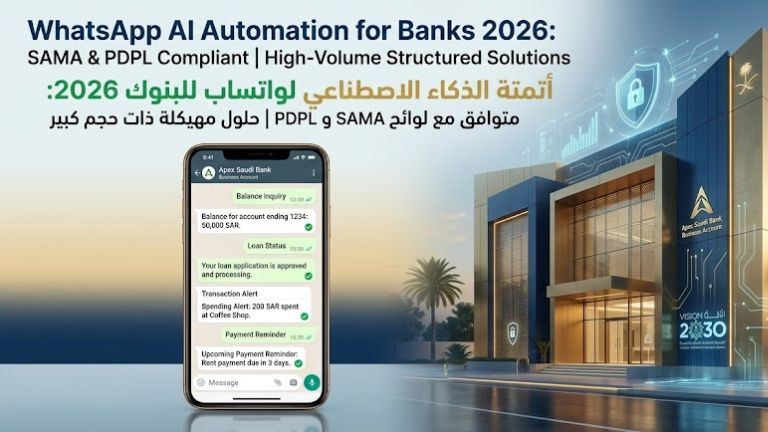
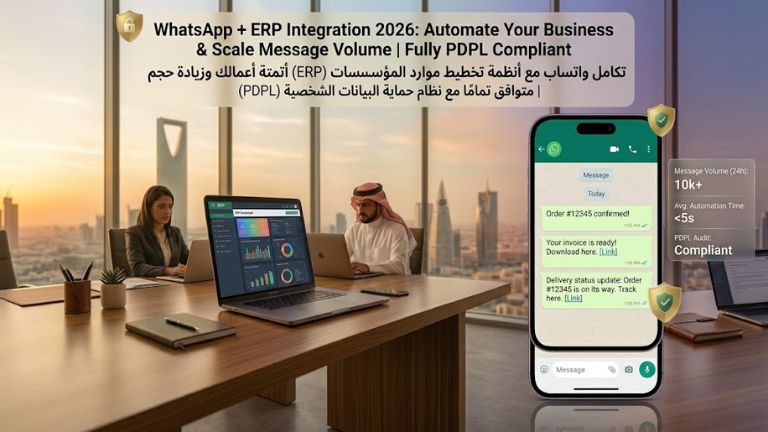
KSA business trailblazers! And where once mom-and-pop stores used WhatsApp to quickly chat with customers, enterprises in 2026 are getting the most out of features like the WhatsApp Business API for some next-level use cases. These extend beyond simple messaging, and support secure, enterprise-scale operations in numerous markets. Outlined below are our real life use cases in key areas of finance, logistics retail and healthcare including gaps or opportunities that other avoid like cross border UAE synergies. Scenario 1: Finance Security notifications. One of the banks in Jeddah send a transaction alerts and account statements via WhatsApp (encrypted OTP). This incorporates end to end encryption and is still SAMA compliant. With capacity for judgments which go over 100,000 messages per day, in 2026 the bank can send mass alerts with no concern for successful delivery and as such keep their customers informed. Use Case 2: Logistics Tracking in real time. A logistics company connects its ERP system with WhatsApp Business API. Buyers will receive updates to read for example, Parcel received at Dammam Confirm with interactive buttons. This cuts inbound support requests by 40% and speeds up delivery confirmation. Use Case 3: Retail Personalised catalogues. Retail chains serving UAE and KSA distribute animated product catalogs on WhatsApp. Then you have a message like Browse Eid Collection that makes it possible for customers to browse products within the chat, promoting deeper engagement and in app sales rather than sending them to your website. Case 4: Health Care Appointment bots: 2026) healthcare provider only uses purpose-specific bots. Patients can book an appointment or reschedule a visit or receive reminders without having to hold general conversations with AI. This leads to higher operational efficiency and fewer missed appointments. Unique twist for KSA enterprises. Mix enterprise messaging with local flavor. That might be reminder of times of prayer for internal staff communication, or sensitive prompting to use a certain service during the month’s when food and drink are proscribed (note some examples: Ramadan time & Hajj time). Prepared to get into customized enterprise use cases. Contact US for Customized KSA Enterprise Solutions. Spoiler: These are no cookie cuter cases. They are a blueprint for corporate supremacy in Saudi Arabia 2026. Why WhatsApp Is Not Enough for Your Enterprise in KSA WhatsApp has evolved into a strategic enterprise channel in Saudi Arabia. Enterprises now require Secure and compliant communication High volume scalable messaging Automation with governance Integration with internal systems Measurable business outcomes Raw chat based use-case is no longer sufficient for enterprise requirements. What Does WhatsApp Business API Offer to Enterprises Strategically? There’s no doubt that utilizing WhatsApp API creative use cases will provide you with a clear competitive edge. Key benefits include Reduced operational costs Faster customer response times Improved customer trust Higher engagement and retention Easy interface with CRM and ERP systems These advantages are in line with the Vision 2030 digitalization objectives.  Also Read About 2026 WhatsApp Business API Trends Deep Dive Finance Sector WhatsApp Use Cases Trust is a key requirement to finance and banking. Common finance use cases One time password delivery Transaction confirmations Statement notifications Payment reminders Fraud alerts Why WhatsApp works End to end encryption High open rates Immediate delivery Familiar user interface These scenarios decrease the dependence on SMS, and enhance customer experience. Deep Dive: Logistics & Supply Chain Use Cases Logistics companies are dealing with high flow of time-based updates. High impact logistics use cases Shipment status notifications Delivery confirmations Delay alerts Driver coordination Proof of delivery requests Benefits achieved Lower support tickets Faster issue resolution Improved customer satisfaction WhatsApp turns into a live operational channel. Also Read About WhatsApp Business API Compliance 2026 Deep Dive Retail and Ecommerce Examples of Use Retail businesses rely on WhatsApp to shrink the buyer journey. Retail focused use cases Interactive product catalogs Personalized recommendations Order confirmations Delivery tracking Returns and exchanges Results include Higher conversion rates Increased repeat purchases Stronger brand loyalty Conversational retail Filled with conversational commerce not promotional commerce.  Deep Dive Healthcare Use Cases Healthcare organizations need to walk the line between efficiency and compliance. Healthcare approved use cases Appointment scheduling Visit reminders Test result notifications Follow up care instructions Task-specific bots are used in a controlled manner, to guarantee adherence and patient confidence. Get official WhatsApp business API for your business today with GMCSCO. Cross Border UAE AND KSA Synergy Companies in the UAE and KSA that span their businesses across gain from a cohesive WhatsApp strategy. Cross border advantages Centralized messaging management Localized templates by country Unified analytics and reporting Consistent customer experience WhatsApp Business API enables the possibility to scale regionally while remaining local from a regulatory standpoint. Cultural Proximity as Source of Advantage Saudi Arabia is different in its culture and seasons. Effective localization includes Arabic first messaging Respect for prayer times Ramadan & Hajj dedicated streams National event awareness Emotionally connected messaging leads to cultural alignment and trust. Also Read About CRM Integration with WhatsApp Business API for UAE & KSA Enterprise Use Cases/ Compliance and Governance Compliance is table stakes for enterprise WhatsApp usage. Key governance principles Explicit user opt in Approved message templates Purpose driven automation Data privacy alignment with PDPL & SAMA Regular audits and monitoring Scale and brand reputation protection also demand compliance. How Enterprise WhatsApp use Cases are Being Measured for Success Enterprises must track performance metrics. Key metrics include Delivery and read rates Button click actions Support query reduction Conversion impact Cost per interaction Through data driven insights, the campaign can be constantly refined. Also Read About WhatsApp Business API Strategies for KSA Enterprises in 2026 Common Mistakes Enterprises Should Avoid Don’t make these three mistakes when going live with WhatsApp API. Misusing WhatsApp as a broadcast spamming machine Ignoring cultural context Over automating conversations Skipping consent management Debilitation to have unification with the in-house systems Avoidance ensures long term success. How GMCSCO is Assisting Enterprises to Deploy Power Use Cases GMCSCO partners with KSA companies to develop and implement top of the line WhatsApp solutions. Our support includes Enterprise use case discovery Industry specific workflow design CRM and ERP integration Compliance validation Performance analytics Continuous optimization We are results-oriented, not just process. Broad Steps for Adopting Enterprise Use Cases There’s a method to the madness: A system for success. Discover high value business processes Define compliant

Enterprise Use Cases for WhatsApp Business API in KSA Beyond Basics for 2026 Growth Read More »

Scroll to Top