GMCSCO Media Group

Digital Marekting

The Role of Communication in Modern Society

Introduction: The Role of Communication in Modern Society

In today’s connected environment, information travels faster than ever before. Across regions such as Saudi Arabia, the United Arab Emirates, Qatar, and Bahrain, digital platforms have become a primary source of awareness for millions of people. During moments of uncertainty, people naturally look for clarity. Beyond facts and updates, there is also a need for reassurance information that helps individuals understand the situation without creating unnecessary concern. In such contexts, communication plays a quiet yet powerful role in shaping public perception. Information Flow in a Real-Time World Digital platforms have transformed how information is shared and consumed. Updates can reach millions within seconds, often from multiple sources at the same time. While this speed creates accessibility, it also introduces complexity: Information may appear without context Different sources may communicate differently People may interpret situations based on partial updates In such an environment, clarity often becomes more valuable than volume. The Human Response to Uncertainty When people encounter uncertain situations, their first instinct is to seek understanding. Simple, clear communication can influence how situations are perceived. A short, reassuring message—delivered at the right moment—can help people feel informed and composed. For Example: “Authorities are monitoring the situation. Essential services are operating normally. Further updates will be shared through official channels.” Messages like these do not introduce new information alone they shape how information is received. The Evolution of Messaging Platforms Messaging platforms have gradually become part of everyday life. Applications such as WhatsApp Business API are now used not only for personal communication but also for structured information sharing. Their characteristics naturally support wide communication reach: Familiar interface used daily Instant message delivery Encrypted communication Support for multiple languages These platforms reflect how communication habits have evolved in the digital era. Patterns in Public Communication Across different contexts, certain types of communication tend to emerge: Short reassurance messages Public awareness updates Service-related information General guidance during evolving situations These forms of communication are often simple, direct, and easy to understand. The Importance of Tone and Simplicity The way information is presented can influence how it is perceived. Compare two approaches: ❌ “Alert issued. Situation under observation.” ✅ “The situation is being monitored. Please remain calm.” Both communicate similar intent, but the second creates a more composed response. Tone, therefore, becomes as important as content. A Sample Format of Reassurance Communication A commonly observed structure in calm communication includes: Dear Resident, The situation is being monitored. Essential services are functioning normally. Updates will be shared through official channels. Such formats are simple, neutral, and easy to follow. Communication and Public Perception In modern environments, communication is closely linked to perception. Timely information can reduce uncertainty Clear messaging can improve understanding Consistent updates can build familiarity Over time, these factors contribute to how information is received and trusted. Observing the Shift Toward Direct Communication There is a noticeable shift toward more direct forms of communication, where information reaches people through platforms they already use in daily life. This shift reflects a broader trend: communication is becoming more immediate, more accessible, and more integrated into everyday routines. Conclusion: The Subtle Impact of a Single Message In moments of uncertainty, even a small piece of information can influence how people feel and respond. Clear and calm communication does not draw attention to itself yet its impact can be significant. Sometimes, a single message is enough to create a sense of clarity. Clarity supports calm. Calm supports stability.

Introduction: The Role of Communication in Modern Society Read More »

Best SEO Practices for Saudi Businesses to Rank Higher on Google

Best SEO Practices for Saudi Businesses to Rank Higher on Google

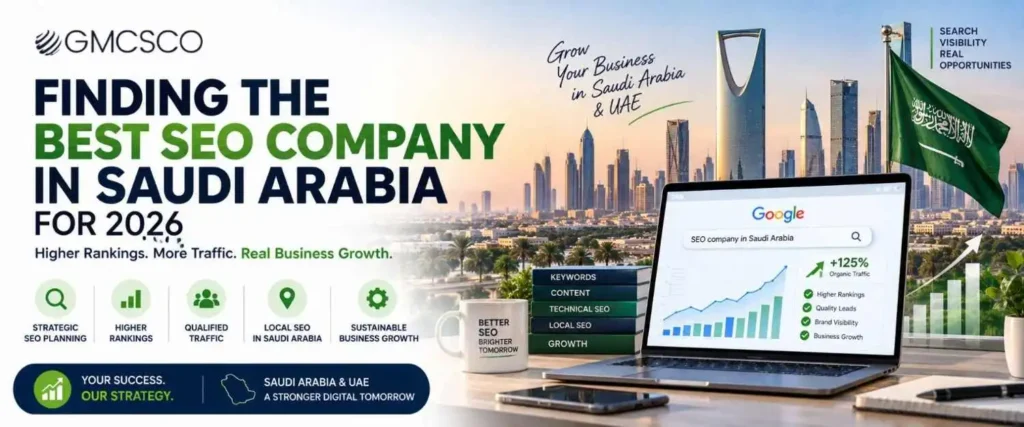
In today’s Saudi market, having a website is no longer enough. Every business — whether it’s a startup in Riyadh, a service provider in Jeddah, or an eCommerce brand targeting the GCC is competing for visibility on Google. And the reality is simple: If your business is not showing up on the first page, you are losing potential customers every single day. This is where SEO for Saudi businesses becomes not just important, but essential. However, SEO in 2026 is very different from what it used to be a few years ago. It is no longer about stuffing keywords or building random backlinks. Today, it is about understanding user intent, creating valuable content, optimizing for local search, and aligning with how AI-driven platforms like ChatGPT interpret and recommend content. In this guide, we will walk through the most effective and practical strategies that Saudi businesses can use to improve their Google ranking in Saudi Arabia and generate consistent leads. Now Hire SEO company Saudi Arabia Understanding the Saudi Digital Landscape Before jumping into strategies, it’s important to understand how users in Saudi Arabia actually search. Saudi Arabia has one of the fastest-growing digital economies in the Middle East. With high smartphone usage and a digitally active population, most users rely heavily on Google to find services, compare businesses, and make purchasing decisions. What makes this market unique is the combination of: Arabic and English search behavior Strong preference for local businesses High trust in reviews and brand authority Increasing use of voice search and AI tools This means your SEO strategy must be localized, relevant, and built around real user behavior — not generic global tactics. Businesses that invest in SEO services in Saudi Arabia with a localized approach are the ones seeing real growth. The Foundation: Keyword Strategy That Matches Intent One of the biggest mistakes businesses make is targeting keywords based only on search volume. In reality, what matters more is search intent. For example, someone searching for “SEO company in Saudi Arabia” is likely ready to hire, while someone searching “what is SEO” is just learning. A strong SEO strategy should include a mix of: Commercial keywords like SEO company in Saudi Arabia, hire SEO company Saudi Arabia Service-focused keywords such as affordable SEO services Saudi Arabia and local SEO services in Saudi Arabia Informational queries that answer real problems Instead of targeting one keyword per page, modern SEO works on topic clustering, where a single page naturally includes multiple related keywords like: SEO experts in Saudi Arabia Digital marketing Saudi Arabia Google ranking Saudi Arabia This approach helps search engines understand your authority on the topic. Creating Content That Actually Ranks (And Converts) Content is still one of the strongest pillars of SEO, but only when done correctly. Most businesses either: Copy content from competitors Use AI-generated text without editing Or write generic blogs with no real value That approach doesn’t work anymore. Google and AI tools now prioritize experience-based, helpful, and human-written content. To rank effectively, your content should: Start by directly answering the user’s question. For example, instead of long introductions, clearly explain the solution early in the blog. Then, go deeper into the topic by explaining: Why the problem exists What solutions work How users can implement them Adding examples, scenarios, and real-world insights makes your content more trustworthy. This is especially important if you are offering digital marketing Saudi Arabia services, where users are looking for expertise, not theory. Local SEO: The Most Powerful Opportunity for Saudi Businesses If there is one area where most businesses in Saudi Arabia are still underperforming, it is local SEO. Local SEO helps your business appear in searches like: “SEO company near me” “digital marketing agency Riyadh” “best services in Jeddah” To improve local rankings, businesses must optimize their Google Business Profile properly. This includes: Accurate business details Real images Regular updates Customer reviews Reviews, in particular, play a huge role. Saudi users trust businesses with strong ratings and positive feedback. Another important step is creating location-specific pages. For example: SEO services in Riyadh SEO company in Jeddah This helps you capture traffic from different cities and improve your overall Google ranking in Saudi Arabia. Hire GMCSCO for Your Business SEO. Technical SEO: The Backbone of Your Website Even the best content won’t perform if your website has technical issues. Search engines prefer websites that are fast, secure, and easy to navigate. Key areas to focus on include: Website speed: pages should load quickly, especially on mobile devices. Mobile responsiveness: your site must work perfectly on smartphones. Secure connection: HTTPS is a must. Clean structure: URLs and navigation should be simple and clear. Since most users in Saudi Arabia browse on mobile, ignoring mobile optimization can directly impact your rankings. On-Page SEO: Optimizing Every Page Properly On-page SEO is where you help Google understand your content. This includes: Proper heading structure (H1, H2, H3) Natural keyword placement Optimized meta titles and descriptions Internal linking between pages For example, if you are offering services, you should naturally connect your blog to pages like: SEO services in Saudi Arabia Best SEO agency in Saudi Arabia SEO experts in Saudi Arabia This improves both ranking and user experience. Contact GMCSCO and Improve Google ranking in Saudi Arabia Building Authority Through Backlinks Backlinks remain one of the strongest ranking factors. However, quality matters more than quantity. Instead of buying cheap links, focus on: Guest posting on relevant websites Listing your business in Saudi directories Publishing PR articles Collaborating with industry blogs A strong backlink profile signals to Google that your business is trustworthy and authoritative. AI Optimization: The New SEO Layer In 2026, SEO is no longer limited to Google. Your content should also be optimized for AI platforms like ChatGPT. This means: Writing clear and structured content Answering common questions Using simple language Providing real insights When your content is easy to understand, AI tools are more likely to recommend it. Converting Traffic into Real Business Getting traffic

Best SEO Practices for Saudi Businesses to Rank Higher on Google Read More »

WhatsApp API for Government Communication

How Governments Can Use WhatsApp API for Public Safety Communication During Uncertain Situations

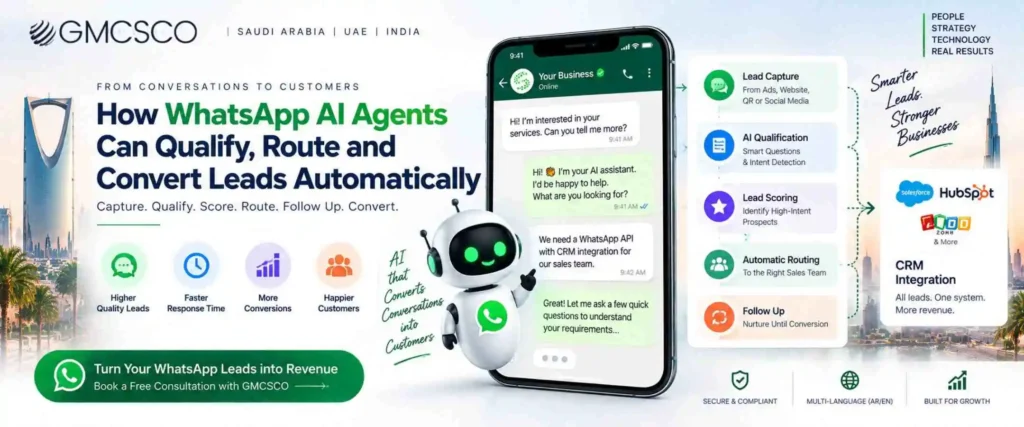
In times of uncertainty, whether due to geopolitical tensions, public safety concerns, or rapidly evolving situations, clear and timely communication becomes the backbone of public trust. Governments and ministries across the world are increasingly recognizing that traditional communication channels such as television broadcasts, press releases, and SMS—are no longer sufficient on their own. Citizens today expect real-time, direct, and reliable updates on platforms they already use daily. This is where WhatsApp Business API emerges as a powerful and responsible communication tool. With billions of active users globally, WhatsApp enables ministries and public sector organizations to deliver accurate, secure, and immediate information directly to citizens ensuring safety, clarity, and coordination without confusion. The Need for Real-Time Public Communication During uncertain or sensitive situations, information gaps can lead to: Panic and misinformation Overloaded helplines Reduced public trust Inefficient response coordination Governments must ensure that: Citizens receive verified information Communication is consistent and frequent Messages reach people instantly A structured communication system helps authorities maintain order, confidence, and transparency. Why WhatsApp is the Preferred Communication Channel WhatsApp has become one of the most trusted digital platforms worldwide. Its advantages for public communication include: High Open Rates Messages sent via WhatsApp typically have open rates above 90%, ensuring critical information is actually seen. Real-Time Delivery Unlike emails or delayed notifications, WhatsApp delivers messages instantly. Familiar Platform Citizens do not need to install new apps or learn new systems. Secure Communication End-to-end encryption ensures that messages are delivered securely. Multimedia Support Authorities can send: Text alerts Images (maps, instructions) Videos (guidelines, announcements) Documents (official notices) Key Use Cases for Ministries & Government Bodies Public Safety Announcements Governments can send timely updates such as: Safety advisories Travel guidelines Area-specific alerts Daily Situation Updates Instead of relying on scattered sources, ministries can provide: Daily summaries Verified updates Clarifications to avoid misinformation Emergency Instructions In critical scenarios, clear instructions can be shared: Where to seek help What precautions to take Which areas to avoid Citizen Support & Helplines Automated WhatsApp chatbots can: Answer common questions Provide instant guidance Reduce pressure on call centers Service Continuity Updates Governments can inform citizens about: Operational services Office timings Public transport updates Ensuring Responsible & Ethical Communication When using platforms like WhatsApp for public communication, it is essential to follow responsible practices: Accuracy First Only verified and approved information should be shared. No Panic Messaging Messages must be calm, clear, and reassuring. Consistent Tone Communication should reflect authority and stability. Respect Privacy Citizen data must be handled in compliance with data protection regulations. Avoid Over-Messaging Send only necessary updates to maintain trust and attention. Compliance and Policy Considerations Using WhatsApp Business API requires adherence to: Platform policies Local communication regulations Opt-in requirements Governments must ensure: Citizens have consented to receive messages Messages are informational, not promotional Communication aligns with public interest Working with an experienced WhatsApp API provider ensures: Proper setup Template approvals Scalable infrastructure Building a Scalable Communication System To effectively reach millions of citizens, ministries need a structured system: 1. Verified WhatsApp Business Account Ensures authenticity and trust. 2. Pre-Approved Message Templates For fast deployment during urgent situations. 3. Segmented Messaging Send location-specific updates to relevant audiences. 4. Automation & Chatbots Provide instant responses 24/7. 5. Analytics & Reporting Track delivery, engagement, and response rates. Benefits for Governments and Citizens For Governments: Faster communication Reduced misinformation Better coordination Improved public trust For Citizens: Direct access to verified information Reduced confusion Increased sense of safety Easy access to support Real-World Impact Globally, governments and public institutions have already adopted digital messaging platforms to: Share health advisories Provide emergency alerts Manage public communication efficiently The shift toward direct-to-citizen communication is no longer optional – it is essential for modern governance. Why WhatsApp API is the Future of Public Communication As digital adoption continues to grow, messaging platforms are becoming the primary interface between governments and citizens. WhatsApp stands out due to: Massive user base Ease of use Reliability Security It enables governments to move from: ❌ Delayed communication to ✅ Instant, structured, and trusted messaging How GMCSCO Supports Government Communication Systems At GMCSCO, we provide advanced WhatsApp Business API solutions designed for high-volume, secure, and compliant communication. Our solutions include: Official WhatsApp API setup Message template approval support Scalable bulk messaging infrastructure Chatbot automation for citizen support Real-time reporting and analytics We help ministries and organizations build reliable communication systems that deliver information efficiently and responsibly. Conclusion In times of uncertainty, communication is not just important—it is critical. Governments that invest in modern communication infrastructure can: Maintain public trust Ensure safety Deliver clarity when it matters most WhatsApp Business API provides a powerful, secure, and scalable way to connect with citizens making it an essential tool for public communication in today’s digital world. Looking to implement a secure and scalable WhatsApp communication system for your organization. Connect with GMCSCO to build a reliable, compliant, and high-performance messaging infrastructure tailored for public communication. Frequently Asked Questions (FAQs) Is WhatsApp Business API suitable for government communication? Yes, WhatsApp Business API can be used by government bodies and public sector organizations to deliver informational and service-related updates to citizens, provided all platform policies and local regulations are followed. Is it legal to send bulk WhatsApp messages to citizens? Bulk messaging is allowed only when users have opted in to receive communication. All messages must comply with WhatsApp policies and applicable local laws. Can WhatsApp be used for emergency or safety alerts? Yes, WhatsApp can be used as a real-time communication channel to share verified safety updates, instructions, and important notifications during critical situations. How can governments ensure messages are secure? WhatsApp provides end-to-end encryption, and official accounts can be verified to ensure authenticity and secure delivery of messages. What type of messages can be sent using WhatsApp API? Organizations can send: Public safety updates Service notifications Alerts and advisories Appointment and status updates All messages must be informational and non-promotional for public sector use cases. Do citizens need to give permission to receive messages?

How Governments Can Use WhatsApp API for Public Safety Communication During Uncertain Situations Read More »

How to Send OTP on WhatsApp-Complete Setup Guide

How to Send OTP on WhatsApp-Complete Setup Guide

In today’s digital-first economy, speed, security, and user experience are no longer optional. They are core to how businesses acquire, engage, and retain customers. One of the most critical touchpoints in this journey is user verification. For years, SMS-based OTPs have been the default. But in 2026, that model is rapidly shifting. Businesses across industries are moving toward WhatsApp OTP authentication for better delivery rates, enhanced security, and superior customer experience. If you are a business owner, marketing leader, or enterprise decision maker evaluating this shift, this guide will walk you through not just the “how,” but the “why,” the “when,” and the “what it means for your business outcomes.” Why Businesses Are Moving from SMS OTP to WhatsApp OTP Let’s start with a reality most businesses face but rarely articulate clearly. SMS OTP systems are becoming unreliable and expensive at scale. Delivery failures, delays, spam filters, and rising telecom costs are all creating friction in user onboarding and transaction completion. Now contrast that with WhatsApp. WhatsApp has over 2.5 billion active users globally. In regions like the UAE, Saudi Arabia, India, and Southeast Asia, it is often the primary communication channel. From a strategic standpoint, this changes everything. Instead of forcing users to switch channels, you are meeting them where they already are. That reduces drop-offs and increases completion rates. From a business perspective, this is not just a messaging upgrade. It is a conversion optimization strategy. Book Free Consultation What Does “Sending OTP on WhatsApp” Actually Mean? When we talk about sending OTP on WhatsApp, we are not referring to manual messages or basic automation. We are referring to a structured, API-driven, compliant messaging system powered by the WhatsApp Business API. This system allows businesses to send secure, automated, real-time OTP messages directly to users via WhatsApp. These OTPs can be used for: Account login Transaction verification Password reset User onboarding Two-factor authentication The key here is that these messages are categorized as transactional messages, not promotional messages. This distinction matters for compliance and approval. The Evolution of WhatsApp Marketing and Messaging in 2026 WhatsApp is no longer just a chat app. It has evolved into a full-scale business communication platform. In 2026, WhatsApp sits at the center of: Customer support Marketing automation Transactional messaging AI-driven conversations Commerce enablement Businesses are no longer asking whether to use WhatsApp. They are asking how deeply they can integrate it into their customer journey. OTP delivery is often the first step in that integration. Once businesses adopt WhatsApp for authentication, they naturally expand into chatbot automation, personalized messaging, and lifecycle marketing. Also Read About How to send OTP and notification SMS for businesses Free vs Paid Methods: What Actually Works? A common question businesses ask is whether they can send OTPs on WhatsApp for free. Technically, there are limited “free” approaches using unofficial APIs or basic WhatsApp Business app setups. But from a business and compliance standpoint, these are not viable options. Let’s break this down clearly. Free Methods These usually involve: Manual sending Unofficial APIs Basic automation tools The problems with these approaches include: No scalability No reliability Risk of number blocking No compliance with WhatsApp policies No delivery tracking For any serious business, this is not sustainable. Paid and Official Method The only scalable and compliant way is through the WhatsApp Business API. This gives you: High delivery rates Automation capabilities Secure message templates Scalability for enterprise usage Integration with CRM and backend systems If your business relies on user authentication and secure transactions, this is the only practical path. Get Your WhatsApp OTP Solution How the WhatsApp Business API Works for OTP Delivery To send OTP via WhatsApp at scale, you need access to the WhatsApp Business API. This is not an app you download. It is an infrastructure layer that connects your systems to WhatsApp’s messaging network. Here’s how it works in practice. When a user initiates an action such as login or signup, your backend system triggers an API request. This request sends an approved message template containing the OTP to the user’s WhatsApp number. The user receives the OTP instantly inside WhatsApp. The entire process happens in seconds, and it is fully automated. Step-by-Step Setup Guide for Sending OTP on WhatsApp Let’s break this down into a practical implementation framework. Step 1: Apply for WhatsApp Business API Access You need an official WhatsApp Business account. This can be done through a certified solution provider or directly through Meta’s business platform. This is where many businesses start working with a bulk WhatsApp service provider who handles the technical onboarding and approval process. Step 2: Verify Your Business Business verification is mandatory. You will need to submit: Business registration details Website Business email domain Legal documents This step ensures that only legitimate businesses can use WhatsApp messaging at scale. Also Read About WhatsApp API access requirements for OTP messaging Step 3: Create OTP Message Templates WhatsApp requires pre-approved templates for sending OTP messages. These templates must follow strict guidelines. For example: “Your verification code is {{1}}. Do not share this code with anyone.” These templates are reviewed and approved before you can use them. Step 4: Integrate API with Your System Your development team or solution provider integrates the API with your backend. This allows your system to automatically send OTP messages when triggered. Step 5: Test and Deploy Before going live, you test: Delivery speed Message accuracy Failure scenarios User experience Once validated, you deploy the system. Role of Automation and AI Chatbots in OTP Workflows OTP delivery is just the starting point. The real value comes when you integrate it with automation and AI chatbots. For example: A user signs up → receives OTP → verifies → immediately enters a chatbot flow → receives onboarding guidance → gets product recommendations This creates a seamless, conversational experience. Instead of treating OTP as a standalone function, forward-thinking businesses integrate it into a larger customer journey. This is where platforms like GMCSCO come into play, helping businesses

How to Send OTP on WhatsApp-Complete Setup Guide Read More »

How Saudi Companies Can Generate B2B Leads Through SEO

How Saudi Companies Can Generate B2B Leads Through SEO

Introduction: Why Most Saudi Businesses Struggle with B2B Lead Generation If you speak to business owners or marketing leaders across Saudi Arabia today, one frustration comes up again and again. “We are getting traffic, but not the right leads.” Or worse. “We are not getting any inbound leads at all.” Despite investing heavily in digital marketing, many companies still rely on cold outreach, referrals, or paid ads. These channels can work, but they are expensive, inconsistent, and difficult to scale. Search engine optimization changes that equation. When done correctly, SEO becomes a predictable and compounding engine for generating high quality B2B leads. It brings decision makers directly to your website at the exact moment they are searching for solutions. And in a rapidly digitizing Saudi market, this is no longer optional. It is a competitive necessity. The Real Challenges Saudi Companies Face in B2B Marketing Before we talk about SEO solutions, it is important to understand the actual business problems companies are dealing with. Over Dependence on Paid Advertising Many companies rely heavily on Google Ads or LinkedIn campaigns. While these can generate leads, the cost per acquisition continues to rise. Once you stop spending, leads stop coming. Lack of Content Strategy Businesses often create random blog posts without targeting search intent. The result is low traffic and zero conversions. Poor Website Conversion Experience Even when traffic comes in, websites are not optimized for lead capture. No clear CTAs, no engagement tools, and no structured funnel. Limited Visibility in Search Engines Companies are simply not ranking for high intent keywords that decision makers are searching. Weak Integration with Automation Leads are not nurtured properly. Without automation, many opportunities are lost. These challenges are not unique to Saudi Arabia, but they are amplified in fast growing economies where digital maturity is still evolving. Book Free Consultation Why SEO Matters More Than Ever in Saudi and Global Markets Saudi Arabia is undergoing a massive digital transformation under Vision 2030. Businesses are rapidly moving online, and decision makers are increasingly using search engines as their first step in the buying journey. At the same time, search behavior itself is evolving. People are no longer just typing short keywords. They are asking detailed questions, using voice search, and relying on AI powered summaries. This means: Ranking on Google is no longer enough You need to appear in AI search results Your content must answer specific business questions SEO today is not just about visibility. It is about becoming the most trusted answer. If your competitors are investing in SEO and you are not, you are effectively invisible to a large segment of your potential buyers. What Does B2B SEO Really Mean in Simple Terms B2B SEO is the process of making your business visible to other businesses when they search for solutions online. But it is not just about traffic. It is about attracting the right kind of traffic. For example: A generic keyword like “marketing services” may bring visitors. But a targeted keyword like “AI automation solutions for enterprises in Saudi Arabia” brings decision makers. That is the difference between traffic and leads. A strong B2B SEO strategy focuses on: Understanding buyer intent Targeting high value keywords Creating solution driven content Optimizing for conversions Also Read About SEO strategy for businesses in Saudi Arabia Practical Example: How SEO Generates Real B2B Leads Let us take a simple example. A Saudi based company offering WhatsApp chatbot solutions creates a blog targeting the keyword: “How to automate customer support using WhatsApp chatbot” This blog: Explains the problem Shows practical use cases Provides step by step guidance Includes a consultation CTA Now imagine a business owner searching for that exact problem. They land on your article. They find value. They trust your expertise. They reach out. This is inbound lead generation at its best. No cold calls. No chasing. Just qualified leads coming to you. Talk to SEO Expert Step by Step: How Saudi Companies Can Build a B2B SEO Lead Engine Step 1: Identify High Intent Keywords Start with understanding what your potential clients are searching for. Focus on: Problem based keywords Solution based queries Industry specific terms Avoid vanity keywords. Prioritize intent over volume. Step 2: Build Topic Clusters Instead of random blogs, create structured content clusters. Example: Main Topic: AI Automation for Businesses Supporting Topics: Benefits of automation Cost reduction strategies Implementation guides This improves authority and ranking. Step 3: Create Decision Driven Content Your content should answer business questions such as: How can I reduce operational costs What is the ROI of automation Which solution is best for my industry Content should guide users towards a decision. Step 4: Optimize for Conversions Traffic without conversion is wasted effort. Add: Clear CTAs Lead forms Chatbots WhatsApp integration This is where customer engagement platforms play a critical role. Also Read About AI-powered lead generation strategies Step 5: Implement Technical SEO Ensure your website: Loads fast Is mobile friendly Has clean structure Uses schema markup Technical SEO directly impacts rankings. Step 6: Track and Improve Use analytics to track: Traffic sources Keyword rankings Conversion rates Continuously refine your strategy. If you are unsure how to structure this process for your business, it is worth consulting experts who specialize in AI automation solutions and SEO driven lead generation strategies. Key Business Benefits of SEO for B2B Companies Predictable Lead Flow Unlike paid ads, SEO builds long term visibility. Lower Cost Per Acquisition Organic leads are significantly cheaper over time. Higher Quality Leads Users searching for solutions are already interested. Stronger Brand Authority Ranking on Google builds trust. Better Customer Insights SEO data reveals what your customers actually want. Get B2B Lead Strategy Where Most Companies Go Wrong Even with the right intention, many businesses fail in SEO due to common mistakes. Ignoring Search Intent Focusing on keywords without understanding user intent. Publishing Low Value Content Generic blogs that do not solve real problems. No Conversion Strategy No clear path for visitors to become leads. Lack

How Saudi Companies Can Generate B2B Leads Through SEO Read More »

SMS Marketing for Healthcare and Clinics in Saudi Arabia

SMS Marketing for Healthcare and Clinics in Saudi Arabia

Missed appointments are one of the biggest hidden revenue leaks in healthcare. Across Saudi Arabia, clinics and hospitals lose thousands of riyals every month due to no-shows, delayed communication, and poor patient engagement systems. What makes it worse is that most healthcare providers still rely on outdated communication methods—calls that go unanswered or emails that patients rarely check. Meanwhile, patients in Saudi Arabia are mobile-first. SMS open rates exceed 95%, and messages are typically read within minutes. This creates a massive opportunity. If used strategically, SMS marketing is not just a communication tool—it becomes a revenue driver, an operational optimizer, and a patient experience enhancer. This article breaks down exactly how healthcare providers in Saudi Arabia can use SMS marketing to improve outcomes, reduce inefficiencies, and scale patient engagement. Get SMS Marketing Strategy What is SMS Marketing for Healthcare? SMS marketing for healthcare is the use of text messaging to communicate with patients for appointments, reminders, promotions, alerts, and engagement. It includes: Appointment reminders and confirmations Follow-up care instructions Prescription refill alerts Health campaign promotions Emergency notifications In healthcare, SMS is less about “marketing” and more about timely, relevant communication that improves patient outcomes and clinic efficiency. Key Industry Challenges in Healthcare Communication Healthcare providers in Saudi Arabia face consistent communication gaps that directly impact revenue and patient satisfaction. High No-Show Rates Missed appointments disrupt schedules and reduce revenue predictability. Manual Communication Overload Staff spend hours calling patients for confirmations and reminders. Poor Patient Engagement Patients forget appointments, ignore emails, or lack timely follow-ups. Fragmented Systems Many clinics operate without integrated CRM or automation tools. Language Barriers Saudi Arabia’s diverse population requires Arabic and English communication. These inefficiencies compound over time. A clinic seeing 50 patients daily with a 20% no-show rate is losing a significant portion of potential revenue. This is where automation through SMS becomes critical. If you’re exploring ways to streamline communication and reduce operational strain, it’s worth evaluating automation-driven engagement solutions tailored for healthcare. Also Read About WhatsApp Broadcast vs WhatsApp Business API Why This Matters in Saudi Arabia and UAE Healthcare in Saudi Arabia is undergoing rapid digital transformation under Vision 2030. Key regional insights: Mobile penetration exceeds 95% Patients prefer instant communication over calls Government initiatives support digital healthcare adoption Private clinics are becoming highly competitive In the UAE, the adoption curve is even faster, with hospitals already integrating SMS with WhatsApp and AI chatbots for omnichannel engagement. Saudi Arabia is catching up quickly. Clinics that adopt SMS early gain: Higher patient retention Better operational efficiency Stronger brand trust Those who delay risk falling behind competitors who offer faster, more convenient patient communication. How SMS Marketing Works in Healthcare At its core, SMS marketing in healthcare is simple but powerful. Step-by-step flow: Patient books an appointment System sends automated SMS confirmation Reminder SMS is triggered 24 hours before visit Follow-up SMS sent after consultation Feedback or review request is triggered All of this can be automated through a connected system. Key components: SMS gateway provider Patient database or CRM Automation workflows Consent management system The real value comes from integration—not just sending messages, but sending the right message at the right time. Discuss Your Clinic Growth Use Cases Across Industries While healthcare is a primary use case, SMS marketing extends across industries. Healthcare and Clinics Appointment reminders Lab test result notifications Vaccination reminders Post-treatment follow-ups Ecommerce Order confirmations Delivery updates Promotional offers Logistics Shipment tracking alerts Delivery confirmations Real Estate Lead follow-ups Property viewing confirmations Pharmacies Refill reminders Prescription alerts For healthcare specifically, SMS becomes a patient experience tool rather than just a marketing channel. If you’re evaluating cross-channel engagement, combining SMS with WhatsApp chatbot solutions can significantly improve response rates and automation depth. Also Read About WhatsApp marketing campaign ideas for Saudi businesses Step-by-Step Implementation Guide Choose the Right SMS Platform Look for: Local compliance support (Saudi regulations) Arabic and English messaging API integration capabilities Build a Patient Database Collect: Phone numbers with consent Appointment history Preferences Set Up Automation Workflows Examples: Appointment reminders Follow-up messages Health campaign alerts Integrate with CRM or EMR This ensures real-time communication based on patient actions. Monitor and Optimize Track: Delivery rates Open rates Response rates No-show reduction Plan Your Automation Strategy Business Benefits and ROI Impact SMS marketing delivers measurable business impact. Reduced No-Show Rates Clinics report up to 30–50% reduction in missed appointments. Increased Revenue More attended appointments = higher utilization. Lower Operational Costs Automation reduces manual calling efforts. Improved Patient Satisfaction Timely communication builds trust. Higher Conversion Rates SMS campaigns outperform email significantly. Example ROI Scenario: A clinic with 1,000 monthly appointments: 20% no-show rate = 200 missed visits SMS reminders reduce this to 10% 100 additional visits recovered This directly translates into increased revenue without additional marketing spend. Common Mistakes to Avoid Sending Without Consent Violates regulations and damages trust. Over Messaging Too many messages lead to opt-outs. Generic Messaging Lack of personalization reduces engagement. Ignoring Timing Sending messages at wrong times reduces effectiveness. No Integration Standalone SMS tools limit automation benefits. If you’re unsure about compliance or workflow setup, consulting with experts in healthcare automation can prevent costly mistakes. Also Read About Bulk WhatsApp marketing strategy in Saudi Arabia Future Trends (2026 and Beyond) The future of healthcare communication in Saudi Arabia is intelligent, automated, and omnichannel. Key trends: AI-driven personalization SMS + WhatsApp hybrid communication Predictive appointment reminders Integration with wearable health data Voice + SMS combined engagement Healthcare providers will move from reactive communication to proactive patient engagement systems. Frequently Asked Questions (FAQs) Q: Is SMS marketing legal for healthcare in Saudi Arabia? Yes, but it requires patient consent and compliance with local communication regulations. Q: How effective are SMS reminders for clinics? SMS reminders can reduce no-shows by up to 50%. Q: Can SMS be integrated with healthcare systems? Yes, most modern SMS platforms integrate with CRM and EMR systems. Q: What is the cost of SMS marketing in Saudi Arabia? Costs vary but are generally low compared

SMS Marketing for Healthcare and Clinics in Saudi Arabia Read More »

Scroll to Top