Case Studies: Successful WhatsApp Business API Deployments in KSA & UAE – 2026
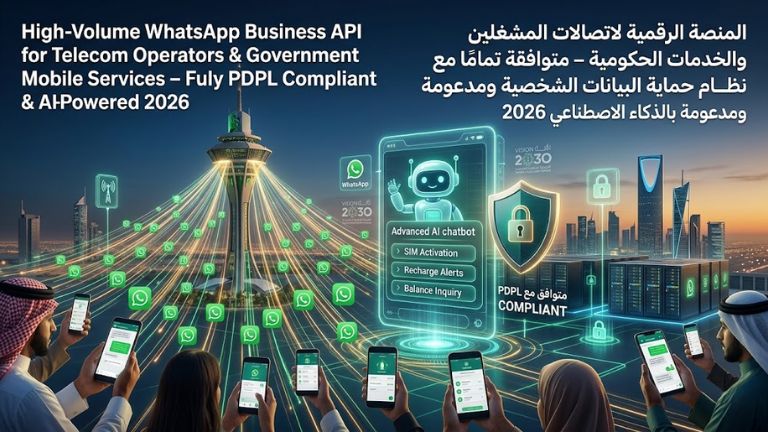
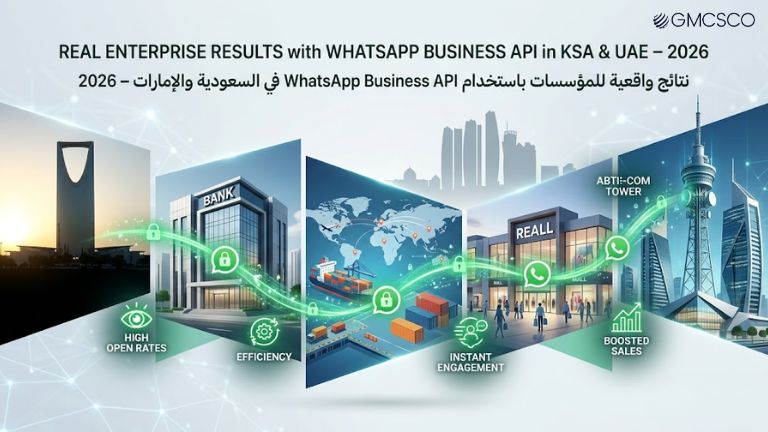
Real results speak louder than promises. Below are anonymous case studies based on actual WhatsApp Business API deployments we have supported for organizations in Saudi Arabia and the UAE. Note: Client names and specific identifiers have been removed to respect confidentiality and NDA agreements. Need enterprise-grade WhatsApp automation with complete confidentiality? GMCSCO builds secure solutions with privacy-first implementation. Case Study 1: Government Department (Citizen Services)Challenge: Low response rates on permit renewals, bill payments, and public inquiries. Solution: PDPL-compliant predictive notification system with structured messaging flows. Results Achieved: Over 90% open rate on renewal reminders Significant reduction in manual follow-up calls Improved on-time completion of citizen requests Full PDPL compliance with sovereign data hosting Case Study 2: Financial Institution Challenge: High call center volume for routine balance inquiries, transaction alerts, and service requests. Solution: Structured AI automation integrated with their core systems. Results Achieved: Substantial reduction in inbound routine calls Faster response time for customers Maintained full regulatory compliance (SAMA & PDPL) Case Study 3: Logistics & Supply Chain Company Challenge: Frequent customer calls regarding shipment status and delays. Solution: Real-time tracking and predictive delay alerts via WhatsApp. Results Achieved: Major decrease in tracking-related inquiries Improved customer satisfaction and perception of reliability Case Study 4: Retail & Hospitality Group Challenge: Low engagement on promotions, loyalty programs, and booking confirmations. Solution: Personalized offers and automated booking flows. Results Achieved: Significantly higher engagement compared to previous channels Increase in repeat business and customer retention Case Study 5: Telecom & Service Provider Challenge: High volume of customer queries related to balance, recharge, and plan upgrades. Solution: High-volume automation with intelligent routing. Results Achieved: Efficient handling of large message volumes Notable reduction in call center workload Handle high-volume customer queries efficiently with scalable WhatsApp Business API automation and intelligent routing. Book free consultation with GMCSCO now. Common Success Factors Across Deployments Strong emphasis on PDPL and local regulatory compliance from day one Use of sovereign / client-server data hosting for sensitive information Structured and auditable automation (instead of open chatbots) Seamless integration with existing CRM/ERP systems Dedicated account management and ongoing optimization GMCSCO 💬 Chat on WhatsApp 📅 Schedule Consultation Now 📞 Call Now FAQs: Q1: What results can enterprises achieve with WhatsApp Business API in KSA and UAE? Enterprises can improve message open rates, reduce manual follow-up calls, automate customer support, increase response speed, and improve customer engagement through secure WhatsApp Business API deployments. Q2: Is WhatsApp Business API suitable for large enterprises in Saudi Arabia and the UAE? Yes, WhatsApp Business API is suitable for large enterprises when implemented with proper compliance, secure hosting, audit logs, structured automation, and integration with existing business systems. Q3: How does WhatsApp Business API improve customer communication? It allows organizations to send timely notifications, reminders, alerts, confirmations, tracking updates, and support messages directly through WhatsApp, where customers are more likely to respond quickly. Q4: Can WhatsApp Business API reduce call center workload? Yes, automated WhatsApp flows can handle routine queries, status updates, reminders, and service requests, reducing repetitive calls and allowing support teams to focus on complex cases. Q5: Is WhatsApp Business API compliant for sensitive enterprise communication? It can be compliant when deployed with consent management, secure data handling, audit logging, role-based access, approved hosting, and privacy-first automation practices. Q6: What industries benefit most from WhatsApp Business API in the GCC? Industries such as public services, finance, logistics, retail, hospitality, telecom, healthcare, education, and service-based businesses can benefit from WhatsApp automation and customer engagement. Q7: Can WhatsApp Business API be integrated with CRM or ERP systems? Yes, WhatsApp Business API can be integrated with CRM, ERP, booking systems, payment systems, tracking platforms, and internal enterprise applications for automated workflows. Q8: What type of WhatsApp automation is safe for enterprise use? Structured, task-specific automation is safest. This includes predefined flows for alerts, reminders, FAQs, bookings, tracking updates, service requests, and escalation to human agents. Q9: Why is data hosting important for WhatsApp Business API deployments? Data hosting is important because enterprises handling sensitive customer information may require client-server, private cloud, or sovereign hosting options to meet internal and regional compliance requirements. Q10: How does WhatsApp Business API improve logistics and delivery communication? It can send real-time shipment updates, delivery alerts, delay notifications, proof-of-delivery messages, and customer support responses, reducing tracking-related inquiries. Q11: Can WhatsApp Business API improve retail and hospitality engagement? Yes, businesses can use WhatsApp for personalized offers, loyalty updates, booking confirmations, reminders, feedback collection, and customer reactivation campaigns. Q12: How can GMCSCO help with WhatsApp Business API deployment in KSA and UAE? GMCSCO helps enterprises deploy secure, compliant, and scalable WhatsApp Business API solutions with structured automation, CRM/ERP integration, audit logging, sovereign hosting options, and ongoing optimization. Ready to build a secure, scalable, and compliant WhatsApp Business API system for your organization? Book a consultation with GMCSCO today. GMCSCO 💬 Chat on WhatsApp 📅 Schedule Consultation Now 📞 Call Now
Case Studies: Successful WhatsApp Business API Deployments in KSA & UAE – 2026 Read More »