GMCSCO Media Group

Author name: Admin

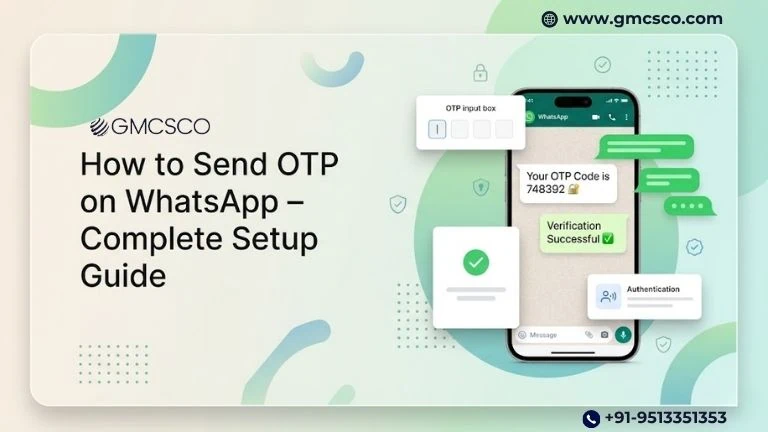
How to Send OTP on WhatsApp-Complete Setup Guide

How to Send OTP on WhatsApp-Complete Setup Guide

In today’s digital-first economy, speed, security, and user experience are no longer optional. They are core to how businesses acquire, engage, and retain customers. One of the most critical touchpoints in this journey is user verification. For years, SMS-based OTPs have been the default. But in 2026, that model is rapidly shifting. Businesses across industries are moving toward WhatsApp OTP authentication for better delivery rates, enhanced security, and superior customer experience. If you are a business owner, marketing leader, or enterprise decision maker evaluating this shift, this guide will walk you through not just the “how,” but the “why,” the “when,” and the “what it means for your business outcomes.” Why Businesses Are Moving from SMS OTP to WhatsApp OTP Let’s start with a reality most businesses face but rarely articulate clearly. SMS OTP systems are becoming unreliable and expensive at scale. Delivery failures, delays, spam filters, and rising telecom costs are all creating friction in user onboarding and transaction completion. Now contrast that with WhatsApp. WhatsApp has over 2.5 billion active users globally. In regions like the UAE, Saudi Arabia, India, and Southeast Asia, it is often the primary communication channel. From a strategic standpoint, this changes everything. Instead of forcing users to switch channels, you are meeting them where they already are. That reduces drop-offs and increases completion rates. From a business perspective, this is not just a messaging upgrade. It is a conversion optimization strategy. Book Free Consultation What Does “Sending OTP on WhatsApp” Actually Mean? When we talk about sending OTP on WhatsApp, we are not referring to manual messages or basic automation. We are referring to a structured, API-driven, compliant messaging system powered by the WhatsApp Business API. This system allows businesses to send secure, automated, real-time OTP messages directly to users via WhatsApp. These OTPs can be used for: Account login Transaction verification Password reset User onboarding Two-factor authentication The key here is that these messages are categorized as transactional messages, not promotional messages. This distinction matters for compliance and approval. The Evolution of WhatsApp Marketing and Messaging in 2026 WhatsApp is no longer just a chat app. It has evolved into a full-scale business communication platform. In 2026, WhatsApp sits at the center of: Customer support Marketing automation Transactional messaging AI-driven conversations Commerce enablement Businesses are no longer asking whether to use WhatsApp. They are asking how deeply they can integrate it into their customer journey. OTP delivery is often the first step in that integration. Once businesses adopt WhatsApp for authentication, they naturally expand into chatbot automation, personalized messaging, and lifecycle marketing. Also Read About How to send OTP and notification SMS for businesses Free vs Paid Methods: What Actually Works? A common question businesses ask is whether they can send OTPs on WhatsApp for free. Technically, there are limited “free” approaches using unofficial APIs or basic WhatsApp Business app setups. But from a business and compliance standpoint, these are not viable options. Let’s break this down clearly. Free Methods These usually involve: Manual sending Unofficial APIs Basic automation tools The problems with these approaches include: No scalability No reliability Risk of number blocking No compliance with WhatsApp policies No delivery tracking For any serious business, this is not sustainable. Paid and Official Method The only scalable and compliant way is through the WhatsApp Business API. This gives you: High delivery rates Automation capabilities Secure message templates Scalability for enterprise usage Integration with CRM and backend systems If your business relies on user authentication and secure transactions, this is the only practical path. Get Your WhatsApp OTP Solution How the WhatsApp Business API Works for OTP Delivery To send OTP via WhatsApp at scale, you need access to the WhatsApp Business API. This is not an app you download. It is an infrastructure layer that connects your systems to WhatsApp’s messaging network. Here’s how it works in practice. When a user initiates an action such as login or signup, your backend system triggers an API request. This request sends an approved message template containing the OTP to the user’s WhatsApp number. The user receives the OTP instantly inside WhatsApp. The entire process happens in seconds, and it is fully automated. Step-by-Step Setup Guide for Sending OTP on WhatsApp Let’s break this down into a practical implementation framework. Step 1: Apply for WhatsApp Business API Access You need an official WhatsApp Business account. This can be done through a certified solution provider or directly through Meta’s business platform. This is where many businesses start working with a bulk WhatsApp service provider who handles the technical onboarding and approval process. Step 2: Verify Your Business Business verification is mandatory. You will need to submit: Business registration details Website Business email domain Legal documents This step ensures that only legitimate businesses can use WhatsApp messaging at scale. Also Read About WhatsApp API access requirements for OTP messaging Step 3: Create OTP Message Templates WhatsApp requires pre-approved templates for sending OTP messages. These templates must follow strict guidelines. For example: “Your verification code is {{1}}. Do not share this code with anyone.” These templates are reviewed and approved before you can use them. Step 4: Integrate API with Your System Your development team or solution provider integrates the API with your backend. This allows your system to automatically send OTP messages when triggered. Step 5: Test and Deploy Before going live, you test: Delivery speed Message accuracy Failure scenarios User experience Once validated, you deploy the system. Role of Automation and AI Chatbots in OTP Workflows OTP delivery is just the starting point. The real value comes when you integrate it with automation and AI chatbots. For example: A user signs up → receives OTP → verifies → immediately enters a chatbot flow → receives onboarding guidance → gets product recommendations This creates a seamless, conversational experience. Instead of treating OTP as a standalone function, forward-thinking businesses integrate it into a larger customer journey. This is where platforms like GMCSCO come into play, helping businesses

How to Send OTP on WhatsApp-Complete Setup Guide Read More »
How Saudi Companies Can Generate B2B Leads Through SEO

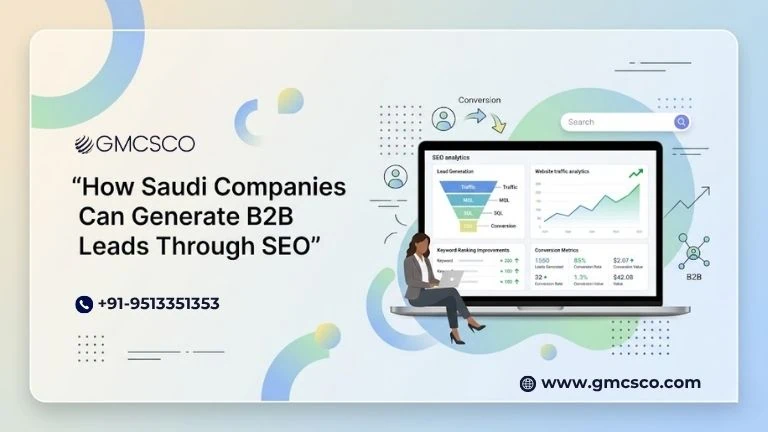
How Saudi Companies Can Generate B2B Leads Through SEO

Introduction: Why Most Saudi Businesses Struggle with B2B Lead Generation If you speak to business owners or marketing leaders across Saudi Arabia today, one frustration comes up again and again. “We are getting traffic, but not the right leads.” Or worse. “We are not getting any inbound leads at all.” Despite investing heavily in digital marketing, many companies still rely on cold outreach, referrals, or paid ads. These channels can work, but they are expensive, inconsistent, and difficult to scale. Search engine optimization changes that equation. When done correctly, SEO becomes a predictable and compounding engine for generating high quality B2B leads. It brings decision makers directly to your website at the exact moment they are searching for solutions. And in a rapidly digitizing Saudi market, this is no longer optional. It is a competitive necessity. The Real Challenges Saudi Companies Face in B2B Marketing Before we talk about SEO solutions, it is important to understand the actual business problems companies are dealing with. Over Dependence on Paid Advertising Many companies rely heavily on Google Ads or LinkedIn campaigns. While these can generate leads, the cost per acquisition continues to rise. Once you stop spending, leads stop coming. Lack of Content Strategy Businesses often create random blog posts without targeting search intent. The result is low traffic and zero conversions. Poor Website Conversion Experience Even when traffic comes in, websites are not optimized for lead capture. No clear CTAs, no engagement tools, and no structured funnel. Limited Visibility in Search Engines Companies are simply not ranking for high intent keywords that decision makers are searching. Weak Integration with Automation Leads are not nurtured properly. Without automation, many opportunities are lost. These challenges are not unique to Saudi Arabia, but they are amplified in fast growing economies where digital maturity is still evolving. Book Free Consultation Why SEO Matters More Than Ever in Saudi and Global Markets Saudi Arabia is undergoing a massive digital transformation under Vision 2030. Businesses are rapidly moving online, and decision makers are increasingly using search engines as their first step in the buying journey. At the same time, search behavior itself is evolving. People are no longer just typing short keywords. They are asking detailed questions, using voice search, and relying on AI powered summaries. This means: Ranking on Google is no longer enough You need to appear in AI search results Your content must answer specific business questions SEO today is not just about visibility. It is about becoming the most trusted answer. If your competitors are investing in SEO and you are not, you are effectively invisible to a large segment of your potential buyers. What Does B2B SEO Really Mean in Simple Terms B2B SEO is the process of making your business visible to other businesses when they search for solutions online. But it is not just about traffic. It is about attracting the right kind of traffic. For example: A generic keyword like “marketing services” may bring visitors. But a targeted keyword like “AI automation solutions for enterprises in Saudi Arabia” brings decision makers. That is the difference between traffic and leads. A strong B2B SEO strategy focuses on: Understanding buyer intent Targeting high value keywords Creating solution driven content Optimizing for conversions Also Read About SEO strategy for businesses in Saudi Arabia Practical Example: How SEO Generates Real B2B Leads Let us take a simple example. A Saudi based company offering WhatsApp chatbot solutions creates a blog targeting the keyword: “How to automate customer support using WhatsApp chatbot” This blog: Explains the problem Shows practical use cases Provides step by step guidance Includes a consultation CTA Now imagine a business owner searching for that exact problem. They land on your article. They find value. They trust your expertise. They reach out. This is inbound lead generation at its best. No cold calls. No chasing. Just qualified leads coming to you. Talk to SEO Expert Step by Step: How Saudi Companies Can Build a B2B SEO Lead Engine Step 1: Identify High Intent Keywords Start with understanding what your potential clients are searching for. Focus on: Problem based keywords Solution based queries Industry specific terms Avoid vanity keywords. Prioritize intent over volume. Step 2: Build Topic Clusters Instead of random blogs, create structured content clusters. Example: Main Topic: AI Automation for Businesses Supporting Topics: Benefits of automation Cost reduction strategies Implementation guides This improves authority and ranking. Step 3: Create Decision Driven Content Your content should answer business questions such as: How can I reduce operational costs What is the ROI of automation Which solution is best for my industry Content should guide users towards a decision. Step 4: Optimize for Conversions Traffic without conversion is wasted effort. Add: Clear CTAs Lead forms Chatbots WhatsApp integration This is where customer engagement platforms play a critical role. Also Read About AI-powered lead generation strategies Step 5: Implement Technical SEO Ensure your website: Loads fast Is mobile friendly Has clean structure Uses schema markup Technical SEO directly impacts rankings. Step 6: Track and Improve Use analytics to track: Traffic sources Keyword rankings Conversion rates Continuously refine your strategy. If you are unsure how to structure this process for your business, it is worth consulting experts who specialize in AI automation solutions and SEO driven lead generation strategies. Key Business Benefits of SEO for B2B Companies Predictable Lead Flow Unlike paid ads, SEO builds long term visibility. Lower Cost Per Acquisition Organic leads are significantly cheaper over time. Higher Quality Leads Users searching for solutions are already interested. Stronger Brand Authority Ranking on Google builds trust. Better Customer Insights SEO data reveals what your customers actually want. Get B2B Lead Strategy Where Most Companies Go Wrong Even with the right intention, many businesses fail in SEO due to common mistakes. Ignoring Search Intent Focusing on keywords without understanding user intent. Publishing Low Value Content Generic blogs that do not solve real problems. No Conversion Strategy No clear path for visitors to become leads. Lack

How Saudi Companies Can Generate B2B Leads Through SEO Read More »

SMS Marketing for Healthcare and Clinics in Saudi Arabia

SMS Marketing for Healthcare and Clinics in Saudi Arabia

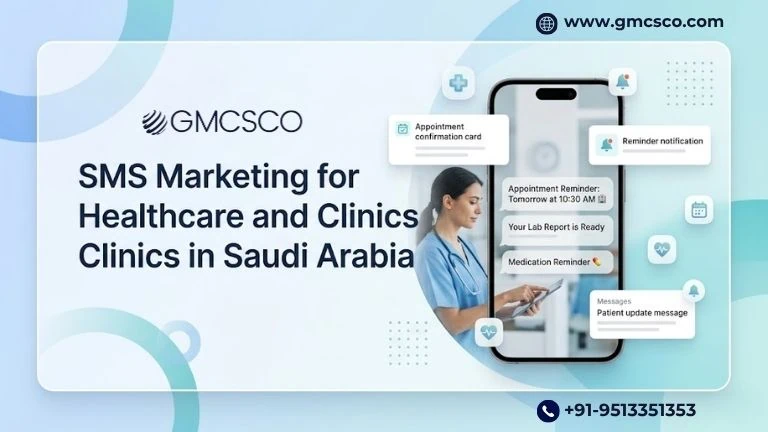
Missed appointments are one of the biggest hidden revenue leaks in healthcare. Across Saudi Arabia, clinics and hospitals lose thousands of riyals every month due to no-shows, delayed communication, and poor patient engagement systems. What makes it worse is that most healthcare providers still rely on outdated communication methods—calls that go unanswered or emails that patients rarely check. Meanwhile, patients in Saudi Arabia are mobile-first. SMS open rates exceed 95%, and messages are typically read within minutes. This creates a massive opportunity. If used strategically, SMS marketing is not just a communication tool—it becomes a revenue driver, an operational optimizer, and a patient experience enhancer. This article breaks down exactly how healthcare providers in Saudi Arabia can use SMS marketing to improve outcomes, reduce inefficiencies, and scale patient engagement. Get SMS Marketing Strategy What is SMS Marketing for Healthcare? SMS marketing for healthcare is the use of text messaging to communicate with patients for appointments, reminders, promotions, alerts, and engagement. It includes: Appointment reminders and confirmations Follow-up care instructions Prescription refill alerts Health campaign promotions Emergency notifications In healthcare, SMS is less about “marketing” and more about timely, relevant communication that improves patient outcomes and clinic efficiency. Key Industry Challenges in Healthcare Communication Healthcare providers in Saudi Arabia face consistent communication gaps that directly impact revenue and patient satisfaction. High No-Show Rates Missed appointments disrupt schedules and reduce revenue predictability. Manual Communication Overload Staff spend hours calling patients for confirmations and reminders. Poor Patient Engagement Patients forget appointments, ignore emails, or lack timely follow-ups. Fragmented Systems Many clinics operate without integrated CRM or automation tools. Language Barriers Saudi Arabia’s diverse population requires Arabic and English communication. These inefficiencies compound over time. A clinic seeing 50 patients daily with a 20% no-show rate is losing a significant portion of potential revenue. This is where automation through SMS becomes critical. If you’re exploring ways to streamline communication and reduce operational strain, it’s worth evaluating automation-driven engagement solutions tailored for healthcare. Also Read About WhatsApp Broadcast vs WhatsApp Business API Why This Matters in Saudi Arabia and UAE Healthcare in Saudi Arabia is undergoing rapid digital transformation under Vision 2030. Key regional insights: Mobile penetration exceeds 95% Patients prefer instant communication over calls Government initiatives support digital healthcare adoption Private clinics are becoming highly competitive In the UAE, the adoption curve is even faster, with hospitals already integrating SMS with WhatsApp and AI chatbots for omnichannel engagement. Saudi Arabia is catching up quickly. Clinics that adopt SMS early gain: Higher patient retention Better operational efficiency Stronger brand trust Those who delay risk falling behind competitors who offer faster, more convenient patient communication. How SMS Marketing Works in Healthcare At its core, SMS marketing in healthcare is simple but powerful. Step-by-step flow: Patient books an appointment System sends automated SMS confirmation Reminder SMS is triggered 24 hours before visit Follow-up SMS sent after consultation Feedback or review request is triggered All of this can be automated through a connected system. Key components: SMS gateway provider Patient database or CRM Automation workflows Consent management system The real value comes from integration—not just sending messages, but sending the right message at the right time. Discuss Your Clinic Growth Use Cases Across Industries While healthcare is a primary use case, SMS marketing extends across industries. Healthcare and Clinics Appointment reminders Lab test result notifications Vaccination reminders Post-treatment follow-ups Ecommerce Order confirmations Delivery updates Promotional offers Logistics Shipment tracking alerts Delivery confirmations Real Estate Lead follow-ups Property viewing confirmations Pharmacies Refill reminders Prescription alerts For healthcare specifically, SMS becomes a patient experience tool rather than just a marketing channel. If you’re evaluating cross-channel engagement, combining SMS with WhatsApp chatbot solutions can significantly improve response rates and automation depth. Also Read About WhatsApp marketing campaign ideas for Saudi businesses Step-by-Step Implementation Guide Choose the Right SMS Platform Look for: Local compliance support (Saudi regulations) Arabic and English messaging API integration capabilities Build a Patient Database Collect: Phone numbers with consent Appointment history Preferences Set Up Automation Workflows Examples: Appointment reminders Follow-up messages Health campaign alerts Integrate with CRM or EMR This ensures real-time communication based on patient actions. Monitor and Optimize Track: Delivery rates Open rates Response rates No-show reduction Plan Your Automation Strategy Business Benefits and ROI Impact SMS marketing delivers measurable business impact. Reduced No-Show Rates Clinics report up to 30–50% reduction in missed appointments. Increased Revenue More attended appointments = higher utilization. Lower Operational Costs Automation reduces manual calling efforts. Improved Patient Satisfaction Timely communication builds trust. Higher Conversion Rates SMS campaigns outperform email significantly. Example ROI Scenario: A clinic with 1,000 monthly appointments: 20% no-show rate = 200 missed visits SMS reminders reduce this to 10% 100 additional visits recovered This directly translates into increased revenue without additional marketing spend. Common Mistakes to Avoid Sending Without Consent Violates regulations and damages trust. Over Messaging Too many messages lead to opt-outs. Generic Messaging Lack of personalization reduces engagement. Ignoring Timing Sending messages at wrong times reduces effectiveness. No Integration Standalone SMS tools limit automation benefits. If you’re unsure about compliance or workflow setup, consulting with experts in healthcare automation can prevent costly mistakes. Also Read About Bulk WhatsApp marketing strategy in Saudi Arabia Future Trends (2026 and Beyond) The future of healthcare communication in Saudi Arabia is intelligent, automated, and omnichannel. Key trends: AI-driven personalization SMS + WhatsApp hybrid communication Predictive appointment reminders Integration with wearable health data Voice + SMS combined engagement Healthcare providers will move from reactive communication to proactive patient engagement systems. Frequently Asked Questions (FAQs) Q: Is SMS marketing legal for healthcare in Saudi Arabia? Yes, but it requires patient consent and compliance with local communication regulations. Q: How effective are SMS reminders for clinics? SMS reminders can reduce no-shows by up to 50%. Q: Can SMS be integrated with healthcare systems? Yes, most modern SMS platforms integrate with CRM and EMR systems. Q: What is the cost of SMS marketing in Saudi Arabia? Costs vary but are generally low compared

SMS Marketing for Healthcare and Clinics in Saudi Arabia Read More »

How to Send Bulk WhatsApp Messages in 2026 (Free + Paid Methods)

How to Send Bulk WhatsApp Messages in 2026 (Free + Paid Methods)

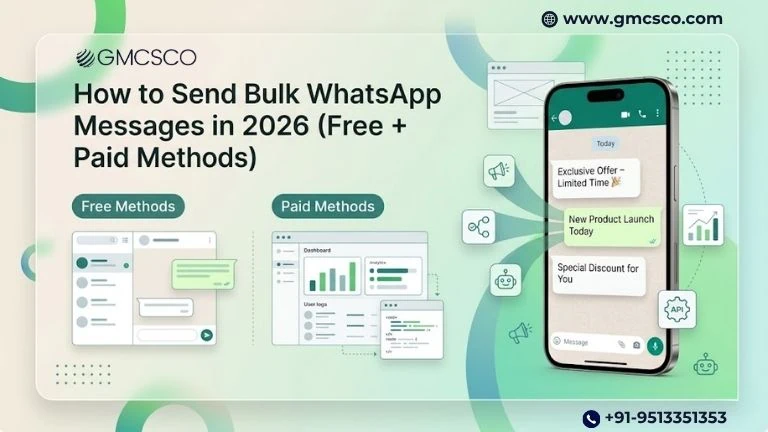
If you’re running a business in 2026, chances are WhatsApp is already one of your most important communication channels. What has changed, however, is how businesses are using it. Bulk messaging on WhatsApp is no longer just about blasting offers to a list of contacts. It has evolved into a highly structured, regulated, and intelligent communication system powered by automation, AI, and customer data. Over the past decade, I’ve worked with startups, mid-sized companies, and enterprise teams across global markets including the UAE and Saudi Arabia. One pattern is consistent: businesses that treat WhatsApp as a strategic engagement platform outperform those using it as just another messaging tool. In this guide, I’ll walk you through how bulk WhatsApp messaging actually works in 2026, what your options are, where most businesses go wrong, and how to make the right decision depending on your growth stage. Why Businesses Are Moving Toward Bulk WhatsApp Messaging Let’s start with the “why,” because strategy always matters more than tools. Email open rates are declining. SMS is effective but expensive and limited. Social media algorithms are unpredictable. WhatsApp, on the other hand, offers something extremely powerful: Open rates often exceeding 90 percent Real-time, conversational engagement High trust environment Direct access to customers without algorithm interference But here’s the reality most businesses don’t fully understand. You cannot scale WhatsApp messaging the same way you scale email campaigns. There are restrictions, approval layers, and technical frameworks that define how bulk messaging works. Ignoring these leads to account bans, poor delivery rates, and wasted marketing spend. Start WhatsApp Automation The Evolution of WhatsApp Marketing in 2026 Back in the early days, businesses relied heavily on WhatsApp broadcast lists and manual messaging. That approach is now outdated. In 2026, WhatsApp marketing operates across three maturity levels: Level 1: Manual Messaging (Basic Users) WhatsApp Business App Broadcast lists Limited scalability No automation Level 2: Semi-Automated Messaging (Growing Businesses) Third-party tools Basic CRM integrations Scheduled campaigns Level 3: Fully Automated Messaging Ecosystem (Advanced Businesses) WhatsApp Business API AI chatbot integration Customer journey automation Real-time analytics and segmentation Most businesses today are somewhere between Level 1 and Level 2, while high-growth companies are fully investing in level 3. Also Read About how to send bulk WhatsApp messages step by step Free Methods to Send Bulk WhatsApp Messages Let’s talk about the free options first, because this is where most businesses begin. Using WhatsApp Broadcast Lists This is the most accessible method. You can create a broadcast list and send messages to multiple contacts at once. Sounds simple, but there are critical limitations: Users must have your number saved Broadcast size is limited No automation or personalization No analytics High manual effort For small businesses or early-stage startups, this can work for: Sending updates to loyal customers Sharing announcements Basic promotional campaigns But once your database grows beyond a few hundred contacts, this method becomes inefficient and unscalable. Using WhatsApp Groups Some businesses try to use groups for bulk messaging. This is not recommended for professional marketing. Why? Privacy concerns Message clutter Low engagement quality Poor brand perception Groups are better suited for community building rather than structured marketing campaigns. The Hidden Risk in Free Methods Many businesses try to bypass limitations using unofficial tools or scripts. This is where things go wrong. WhatsApp has become extremely strict about spam detection and policy violations. If you’re sending bulk messages without proper compliance: Your number can be banned permanently Your messages may not be delivered Your business credibility suffers In 2026, cutting corners on WhatsApp is not just risky, it’s expensive in the long run. Paid Methods That Actually Scale Now let’s move into the serious side of WhatsApp marketing. If your goal is to generate leads, nurture customers, or run structured campaigns, you need a more advanced approach. Talk to WhatsApp Expert What is the WhatsApp Business API and Why It Matters The WhatsApp Business API is the backbone of scalable messaging. It allows businesses to: Send bulk messages to thousands or millions of users Automate conversations Integrate with CRM systems Use AI chatbots Track performance metrics Unlike the standard app, the API is designed for businesses that need scale, structure, and compliance. This is where terms like WhatsApp API for business become important. How It Works in Practice Instead of manually sending messages, you: Upload your customer data into a CRM or platform Create approved message templates Segment your audience Launch campaigns Automate responses through chatbots This transforms WhatsApp from a messaging app into a full-fledged customer engagement engine. Choosing the Right Bulk WhatsApp Service Provider This is one of the most critical decisions you’ll make. A bulk WhatsApp service provider acts as the bridge between your business and WhatsApp’s API infrastructure. Not all providers are equal. A good provider will offer: Official API access Template approval support CRM integrations Campaign analytics Automation workflows Data security compliance In markets like the Middle East, businesses specifically look for solutions that align with regional requirements such as WhatsApp business API Saudi Arabia compliance and telecom regulations. Choosing the wrong provider can limit your scalability, while the right one can significantly accelerate your growth. Book Free Consultation Today Free vs Paid Methods: A Strategic Comparison Let’s break this down in a way business leaders care about. Free Methods Low cost Limited scalability No automation High manual effort High risk when misused Paid Methods Scalable infrastructure Automation capabilities Advanced targeting Compliance support Measurable ROI If you’re serious about growth, the shift from free to paid is not optional, it’s inevitable. Automation and AI Chatbots: The Real Game Changer Bulk messaging alone is not enough. What happens after the message is delivered is where real business impact is created. This is where AI-powered chatbots come in. Instead of sending a message and waiting for manual replies, you can: Instantly respond to customer queries Qualify leads automatically Route conversations to sales teams Trigger follow-up messages Personalize conversations at scale For example, a real estate company in Dubai can:

How to Send Bulk WhatsApp Messages in 2026 (Free + Paid Methods) Read More »

SMS Marketing for Logistics and Delivery Companies in Saudi Arabia

SMS Marketing for Logistics and Delivery Companies in Saudi Arabia

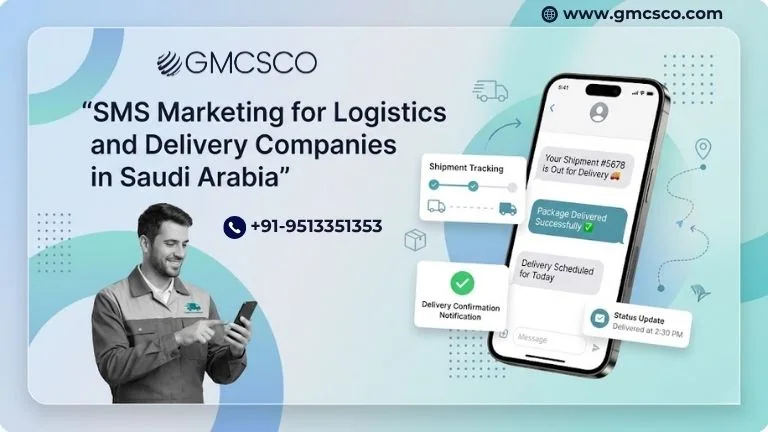
Introduction: The Communication Gap Costing Logistics Businesses Millions In the logistics and delivery industry, speed is everything. But speed alone does not guarantee success anymore. Customers today expect transparency, real time updates, and seamless communication from the moment an order is placed until it reaches their doorstep. In Saudi Arabia, where ecommerce growth is accelerating and same day delivery expectations are rising, logistics companies are under intense pressure. Yet, many businesses still struggle with a critical issue that directly impacts customer satisfaction and operational efficiency. That issue is communication. Missed deliveries, failed attempts, incorrect addresses, and customer unavailability are often not operational failures but communication failures. A simple delay in informing a customer can lead to increased costs, wasted resources, and poor brand perception. This is where SMS marketing for logistics and delivery companies in Saudi Arabia becomes not just useful but essential. Get Delivery Solution The Real Challenges Logistics Companies Face Today Before diving into solutions, it is important to understand the real operational pain points businesses are dealing with. Failed Deliveries and Increased Costs Delivery agents arrive but customers are unavailable. This leads to repeated delivery attempts, increased fuel costs, and inefficiency in last mile delivery operations. Lack of Real Time Communication Customers often do not know when their package will arrive. This uncertainty reduces trust and increases support inquiries. Overloaded Customer Support Teams Without automated communication, customers call support centers frequently asking for updates, leading to higher operational costs. Low Customer Satisfaction Delayed or unclear communication leads to frustration, poor reviews, and lost repeat business. Inefficient Delivery Scheduling Without proper notifications, customers are not prepared to receive deliveries, resulting in missed time slots. These challenges are common across logistics companies in Saudi Arabia, especially with the rapid growth of ecommerce platforms and cross border trade. Why SMS Marketing Matters More Than Ever in Saudi Arabia Saudi Arabia has one of the highest mobile penetration rates in the world. Almost every customer carries a mobile phone, and SMS remains one of the most direct and reliable communication channels. Unlike email or app notifications, SMS does not require internet access or app installation. Messages are opened within minutes, making it ideal for time sensitive logistics communication. Key Market Factors Driving SMS Adoption Rapid ecommerce expansion across KSA Increased demand for same day and next day delivery High expectations for real time updates Growing need for automation in logistics operations Preference for mobile first communication For logistics businesses, SMS is no longer just a marketing tool. It is a core operational communication channel. Also Read About Bulk SMS marketing strategy for Saudi businesses What is SMS Marketing in Logistics and How Does It Work SMS marketing in logistics is not about promotional messages. It is about transactional, timely, and relevant communication that improves delivery efficiency and customer experience. Simple Explanation It involves sending automated text messages to customers at different stages of the delivery journey. Common Types of SMS Communication Order confirmation messages Shipment dispatch notifications Out for delivery alerts Delivery time window updates OTP verification for delivery Failed delivery notifications Feedback and rating requests These messages are triggered automatically based on system events using SMS API integration with logistics platforms. Real World Use Cases for Logistics SMS Solutions Let us break down how leading logistics companies are using SMS effectively. Delivery Confirmation Alerts Customers receive a message when their order is out for delivery with estimated arrival time. This ensures they are available to receive the package. Real Time Tracking Updates Instead of checking apps, customers get instant updates via SMS, improving convenience and reducing support calls. Address Verification via OTP Delivery agents can confirm recipient identity through OTP, reducing fraud and incorrect deliveries. Failed Delivery Recovery If a delivery fails, an automated SMS allows customers to reschedule instantly. Feedback Collection Post delivery messages requesting feedback help improve service quality and customer retention. Advisory Insight If your logistics operations rely heavily on manual communication or customer support teams, it may be time to explore automation driven messaging solutions that reduce workload while improving service experience. Improve Delivery Now Step by Step: How to Implement SMS Marketing for Logistics Implementing SMS solutions does not have to be complex. Here is a practical approach. Step 1: Identify Communication Touchpoints Map the entire delivery journey and identify where communication is needed. Step 2: Choose an SMS API Provider Select a reliable provider that supports bulk SMS, automation, and integration with your logistics system. Step 3: Integrate with Existing Systems Connect your order management or delivery system with SMS APIs for automated triggers. Step 4: Define Message Templates Create clear, concise, and action oriented message templates. Step 5: Automate Workflows Set rules for when messages should be sent based on delivery events. Step 6: Monitor and Optimize Track delivery success rates, customer engagement, and response patterns to refine communication strategies. Business Benefits of SMS Marketing for Logistics Companies Higher Delivery Success Rates Customers are informed in advance, reducing missed deliveries. Reduced Operational Costs Fewer failed attempts mean lower fuel and manpower costs. Improved Customer Satisfaction Clear communication builds trust and enhances customer experience. Lower Support Workload Automated updates reduce inbound queries significantly. Faster Delivery Cycles Better coordination leads to quicker deliveries. Increased Customer Retention Satisfied customers are more likely to reorder and recommend your service. Advisory Insight Businesses investing in AI driven communication tools and automated customer engagement platforms often see measurable improvements in both efficiency and customer loyalty. Also Read About SMS vs WhatsApp marketing in Saudi Arabia Common Mistakes Logistics Companies Make Even when companies adopt SMS solutions, they often fail to maximize impact due to these mistakes. Sending Generic Messages Messages that lack clarity or personalization do not drive action. Over Messaging Too many messages can frustrate customers and reduce engagement. Lack of Integration Manual messaging defeats the purpose of automation. Ignoring Customer Preferences Not allowing customers to choose delivery windows or communication preferences leads to poor experience. No Performance Tracking Without analytics, businesses cannot improve their communication strategy.

SMS Marketing for Logistics and Delivery Companies in Saudi Arabia Read More »

How to Use WhatsApp Broadcast for Promotions and Offers in Saudi Arabia

How to Use WhatsApp Broadcast for Promotions and Offers in Saudi Arabia

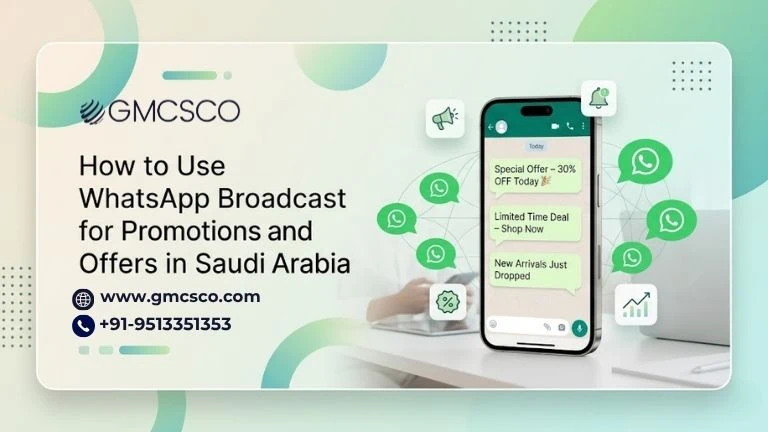
If you are running a business in Saudi Arabia right now, you are probably facing a familiar problem. Customers are harder to reach. Email open rates are declining. Social media algorithms are unpredictable. Paid ads are getting more expensive every quarter. Yet one channel continues to outperform almost everything else in terms of visibility and engagement. WhatsApp. With extremely high open rates and daily usage across Saudi Arabia, WhatsApp has quietly become one of the most powerful business communication tools available today. But here is the catch. Most businesses are still using it incorrectly. They either send random messages, spam customers, or fail to build structured campaigns that actually convert. That is where WhatsApp Broadcast comes in. When used strategically, it can become a high ROI marketing engine for promotions, offers, and customer engagement. Get WhatsApp Marketing Plan The Real Problem: Why Traditional Promotion Channels Are Failing Before we dive into WhatsApp Broadcast, it is important to understand why businesses are actively looking for alternatives. Email Fatigue Customers are overwhelmed with emails. Even important promotional campaigns often get ignored. Low Organic Reach Social platforms limit visibility unless you invest in paid promotions. Delayed Communication SMS and email lack real time conversational engagement. Lack of Personalization Most traditional campaigns are not tailored to individual customer behavior. Rising Acquisition Costs Getting new customers is becoming more expensive than retaining existing ones. This creates a clear gap. Businesses need a direct, personal, and high engagement communication channel. WhatsApp fills that gap. A quick strategic thought If your business relies heavily on repeat customers or frequent offers, it is worth exploring conversational channels that allow direct engagement instead of passive communication. Why WhatsApp Marketing Matters in Saudi Arabia Saudi Arabia is one of the fastest growing digital economies in the Middle East. Here are a few key realities: Smartphone penetration is extremely high WhatsApp is one of the most widely used messaging apps Customers prefer direct and instant communication Businesses are rapidly adopting digital engagement tools This means one thing. Customers are already on WhatsApp. The question is whether your business is using it effectively. For businesses in retail, healthcare, real estate, travel, fintech, and ecommerce, WhatsApp is no longer optional. It is becoming a primary communication channel. Also Read About WhatsApp Broadcast vs WhatsApp Business API What is WhatsApp Broadcast and How Does It Work Let us simplify this. A WhatsApp Broadcast allows you to send a single message to multiple contacts at once without creating a group. Each recipient receives the message privately as if it was sent individually. Key Characteristics Messages appear as personal chats Customers cannot see other recipients Replies come directly to your business Works only with users who have saved your number This last point is critical. WhatsApp Broadcast is permission based. Which means it aligns with modern privacy standards and customer expectations. Why WhatsApp Broadcast is Powerful for Promotions Now let us connect the dots. Why should businesses in Saudi Arabia use WhatsApp Broadcast for promotions and offers? Extremely High Open Rates Unlike emails, WhatsApp messages are usually read within minutes. Direct Customer Reach No algorithms. No visibility restrictions. Personal Experience Messages feel one to one rather than mass marketing. Instant Action Customers can respond, click, or convert immediately. Cost Effective Lower cost compared to paid advertising channels. Strategic insight Businesses that combine WhatsApp Broadcast with customer segmentation often see significantly higher conversion rates compared to generic campaigns. Talk to Strategy Expert Practical Use Cases for WhatsApp Broadcast in Saudi Arabia Let us look at real business scenarios where WhatsApp Broadcast works effectively. Retail Businesses Flash sales New product launches Seasonal promotions Healthcare Providers Appointment reminders Health packages and offers Preventive care campaigns Real Estate Companies Property launch announcements Limited time investment offers Site visit invitations Ecommerce Brands Abandoned cart reminders Exclusive discount codes Product recommendations Hospitality and Travel Holiday packages Last minute deals Loyalty offers Advisory insight If your business has repeat customers or time sensitive offers, WhatsApp Broadcast can significantly improve engagement and response rates. Explore WhatsApp Automation Step by Step: How to Use WhatsApp Broadcast for Promotions Here is a practical approach to implementing WhatsApp Broadcast effectively. Step 1: Build an Opt In Contact List You cannot just add random numbers. Customers must: Save your number Agree to receive messages Ways to collect opt ins: Website forms Checkout pages QR codes in store Social media campaigns Step 2: Segment Your Audience Not all customers are the same. Segment based on: Purchase history Location Interests Customer lifecycle stage This allows you to send highly relevant promotions. Step 3: Create Value Driven Messages Avoid spam. Instead, focus on: Exclusive offers Limited time discounts Personalized recommendations Useful updates Example: Instead of “Buy now 50% off” Try “Hi Ahmed, we have a limited time offer on your favorite product category. Would you like early access?” Step 4: Use Clear Call to Action Every message should guide the customer. Examples: Shop now Book appointment Reply to confirm Click to view offer Step 5: Monitor Responses and Optimize Track: Response rate Conversion rate Customer feedback Improve your campaigns based on real data. Strategic thought Businesses that integrate WhatsApp campaigns with CRM and automation tools can scale this process without increasing manual workload. Also Read About WhatsApp marketing campaign ideas for Saudi businesses Business Benefits and ROI Impact Using WhatsApp Broadcast is not just about sending messages. It directly impacts business performance. Increased Customer Engagement Higher response rates compared to email or SMS Improved Conversion Rates Personalized messaging drives action Faster Sales Cycles Real time communication reduces delays Better Customer Retention Regular engagement builds relationships Reduced Marketing Costs Less reliance on paid channels Common Mistakes Businesses Make Even though WhatsApp Broadcast is powerful, many businesses fail to use it correctly. Sending Too Many Messages Leads to customer annoyance and opt outs Ignoring Personalization Generic messages reduce engagement Not Segmenting Audience Irrelevant offers lower conversion Lack of Strategy Random messaging without clear goals No Automation Manual handling limits scalability Advisory insight

How to Use WhatsApp Broadcast for Promotions and Offers in Saudi Arabia Read More »

Scroll to Top