GMCSCO Media Group

Author name: Yash

High-volume WhatsApp Business API messaging analytics dashboard for Saudi Arabia enterprises with smart automation tools.

High-Volume Messaging Strategies on WhatsApp API for KSA Enterprises

Marhaba, KSA enterprise trailblazers! In Saudi Arabia’s rapidly evolving digital landscape, where Vision 2030 is propelling sectors like logistics, retail, finance, and healthcare toward unprecedented efficiency, high-volume messaging via WhatsApp Business API is a critical tool for maintaining customer connections at scale. With over 99% smartphone penetration and Saudis exchanging billions of messages daily, enterprises in Riyadh, Jeddah, Dammam, and NEOM are using this platform to handle 100,000+ interactions per day—delivering order updates, promotional alerts, and real-time support without overwhelming teams or infrastructure. As we navigate February 2026, Meta’s portfolio-level limits (now scaling in just 6 hours post-verification) and task-specific AI restrictions make high-volume strategies more accessible and compliant, aligning perfectly with KSA’s Personal Data Protection Law (PDPL) and National Cybersecurity Authority (NCA) standards. Non-compliant or inefficient approaches can lead to throttles, blocks, or fines up to SAR 5 million, but done right, this unlocks massive ROI through higher engagement and retention. This detailed guide (expanded to over 3500 words) explores high-volume messaging strategies on WhatsApp Business API for KSA enterprises, including core mechanics, task-specific AI optimizations with ethics examples, light industry comparisons, step-by-step best practices, a dedicated subsection on e-commerce integrations (with expanded case studies), an enhanced focus on WhatsApp API applications in healthcare (with expanded case studies, as this is a hot topic for patient-centric high-volume comms under MoH guidelines), a new subsection on WhatsApp API for fintech (another booming area tied to SAMA regs and digital banking growth), enhanced overall case studies with metrics, challenges, trends, and suggestions for future-proofing. Pricing note: Meta’s base rates (e.g., utility messages ~$0.0107–$0.0157 USD, with SAR equivalents ~0.04–0.06) favor high-volume with tiered discounts, but your final costs will be customized after discussing requirements like send volumes, AI features, and CRM ties. The focus here is on empowering your business to scale messaging ethically and effectively, attracting those 5-10 daily organic leads from KSA enterprises seeking robust solutions. As a hot topic, high-volume strategies tie into Vision 2030’s sustainability goals—reducing physical mail through digital sends—and SDAIA’s AI ethics push, making this a boom area for innovative enterprises in healthcare and fintech, where personalized, secure messaging drives trust and compliance. Core Mechanics of High-Volume Messaging High-volume messaging refers to sending 100,000+ template messages daily across your portfolio, typically for utility (transactions like shipment notifications or appointment reminders), marketing (promos with strict caps to prevent spam), or authentication (OTPs for secure access or verifications). Meta’s 2026 model emphasizes portfolio pacing: After business verification (a process involving proving low spam rates via quality metrics and compliance audits), limits start at 100K unique users per day, with automatic reviews every 6 hours for scaling—up to unlimited for top performers based on sustained high engagement. This replaces the slower 24-hour checks from 2025, enabling dynamic bursts during cultural or seasonal peaks like Hajj season, Ramadan, or National Day promotions, where enterprises might spike to 500K+ or even 1M sends in a day without immediate throttling. Key elements include: Template Categories and Throttling Details: Utility messages (e.g., “Your order from Dammam is en route—track here with this button”) have fewer restrictions, lower costs, and higher delivery priorities, making them ideal for the bulk of high-volume traffic (recommend 80-90% mix to optimize). Marketing messages are capped at 2 per user per 24 hours to align with anti-spam policies, requiring careful pacing to avoid flags; authentication scales freely but demands precise compliance to prevent security-related blocks. Throttling occurs if quality drops—e.g., high user reports trigger automatic pauses. Quality Ratings and Feedback Loops Explained: Meta scores deliveries on a scale using metrics like delivered/read rates (target 95%+), user blocks/reports (keep under 1%), and overall engagement (clicks on buttons/links). High scores (boosted by AI-optimized templates that personalize ethically) unlock faster scaling, with up to 9% better delivery for content rated “excellent.” Feedback loops involve real-time monitoring—e.g., if 5% of a batch gets blocked, the system pauses and alerts for adjustments. Compliance Foundations in Depth: PDPL demands explicit opt-ins (documented consents with business name and message types), data minimization (only send necessary info), and user rights (e.g., easy access/deletion requests). NCA requires robust cybersecurity, with end-to-end encryption built-in via WhatsApp’s Signal protocol, plus regular vulnerability scans. For high-volume, this means implementing automated logging of consents for every send, anonymizing personal data in AI processes, and conducting impact assessments for large campaigns to ensure no privacy risks. Pacing Mechanisms Step-by-Step: Batch sends in controlled waves (e.g., 80 messages per second per number, adjustable via API for bursts up to 45 per user in short periods). Use webhooks for status updates—e.g., “delivered” vs. “failed”—to refine in real-time. In KSA’s regulated environment, pacing also ties to CITC (Communications and Information Technology Commission) guidelines for telecom traffic, ensuring no network overload during national events. Efficiency tip: Aim for 80% utility in high-volume mixes—cheaper, less regulated, and higher open rates (98%+ in KSA, per Meta reports), while reserving marketing for targeted, high-value campaigns. Also Read About WhatsApp Business API Compliance Saudi Arabia 2026 Optimizing with Task-Specific AI in High-Volume Scenarios In 2026, AI is pivotal for high-volume, but limited to task-specific bots (e.g., no general chit-chat; only functions like “Track Order,” “Confirm Appointment,” or “Verify Transaction”). These bots handle pacing, personalization, and monitoring, reducing staff load by 40% while ensuring ethical use. Expanding on AI ethics (influenced by SDAIA guidelines in KSA): Transparency means logging bot actions in detail (e.g., “This pacing decision was based on anonymized engagement data, not personal identifiers, with full audit trail available”); fairness prevents bias through rigorous checks (e.g., equal send rates for all demographics, audited quarterly to avoid favoring urban Riyadh over rural users or certain nationalities in personalization); accountability includes mandatory human overrides for ethical dilemmas (e.g., delaying messages during prayer times or sensitive periods like Ramadan to respect cultural norms). Specific examples: In high-volume promos, AI must ethically cap sends to avoid overwhelming users (per PDPL consent rules), logging “Send halted to respect user opt-out preferences and prevent fatigue”; bias checks ensure no discrimination in personalization (e.g., not assuming

High-Volume Messaging Strategies on WhatsApp API for KSA Enterprises Read More »
WhatsApp chatbot best practices under SDAIA ethics guidelines for Saudi businesses

WhatsApp Chatbot Best Practices SDAIA Ethics The Complete 2026 Guide for Saudi Businesses

Picture this. Early 2025 a major Riyadh based bank rolled out a new WhatsApp chatbot to handle thousands of daily customer queries about accounts transfers and loan status. It worked fast and saved them a fortune on call center staff. Then complaints started pouring in. Some customers felt the bot gave different answers based on their area code. Others had no idea they were talking to artificial intelligence until a wrong answer escalated. Within weeks the quality rating slipped and the team faced internal questions about alignment with national standards. That is the exact moment many Saudi enterprises discover how critical WhatsApp chatbot best practices SDAIA ethics really are in 2026. I have guided more than two dozen large KSA organizations through exactly this transition over the past eighteen months at GMCSCO. The difference between a chatbot that builds trust and one that quietly damages reputation comes down to one thing: treating SDAIA ethics not as a checklist but as the foundation of every conversation flow. Today I am sharing the complete playbook we use with enterprise clients across banking retail logistics and government linked sectors. You will see the exact seven principles from SDAIA how they translate directly into WhatsApp chatbot design, the step by step process that actually works and the mistakes that still catch even sophisticated teams off guard. If your company operates in the Kingdom and you want scalable WhatsApp automation that stays fully aligned with national values this guide is written for you. Let us walk through it together. Why SDAIA Ethics Have Become Essential for Every WhatsApp Chatbot in Saudi Arabia 2026 Saudi Arabia leads the region in artificial intelligence adoption under Vision 2030 with more than thirty three million active WhatsApp users expecting instant personalized service. At the same time the Saudi Data and Artificial Intelligence Authority continues to set the benchmark for responsible technology through its well established ethics framework. The 2025 update to the AI Ethics Principles remains the core reference for all AI systems including conversational tools like WhatsApp chatbots. These principles are not yet turned into a single binding law but they shape everything from government tenders to private sector reputation and incentive badges. Companies that embed them early report higher customer satisfaction, lower block rates and smoother scaling. Those who treat them as optional watch compliance issues surface during audits or public feedback. For large organizations the stakes are even higher. A single biased response or undisclosed artificial intelligence interaction can trigger PDPL complaints, data protection reviews or quality rating drops that throttle your entire messaging capacity. Get WhatsApp chatbot best practices SDAIA ethics right and you turn regulatory alignment into a genuine competitive edge. The Seven SDAIA AI Ethics Principles Applied Directly to WhatsApp Chatbots SDAIA organizes responsible artificial intelligence around seven clear principles. Here is how each one translates into practical design decisions for your WhatsApp Business API chatbot in 2026. Fairness Eliminates bias discrimination or unfair treatment across every user group. In practice this means training your chatbot on diverse Saudi datasets that include different regions ages , genders and dialects. Test responses to ensure a customer in Jeddah receives the same helpful tone and accuracy as one in Dammam. Regular bias audits every quarter become standard for enterprise deployments. Privacy and Security Respect personal data at every step and protect it from breaches. Design flows that collect only what is necessary store conversations securely inside Saudi borders where possible and give users one tap options to delete their data or stop all future messaging. Combine this with PDPL compliant consent logging so you can prove every interaction was authorized. Humanity Keep the human at the center. Your chatbot should feel helpful, never manipulative. Align responses with Saudi cultural values avoid pressure tactics and always offer an easy path to speak with a real team member. Users must retain full choice and dignity throughout the conversation. Social and Environmental Benefits Ensure your chatbot contributes positively to society and minimizes resource use. Promote sustainable choices in retail flows, support community initiatives in banking messages and run the system on efficient cloud infrastructure that respects national environmental goals. Also Read About WhatsApp Business API Compliance Saudi Arabia 2026 Reliability and Safety Deliver consistent accurate responses that never cause harm. Validate every critical flow against real customer scenarios, test for edge cases and maintain human oversight for any decision involving money, health or personal security. Monitor for hallucinations especially in generative artificial intelligence components. Transparency and Explain ability Tell users clearly when they are speaking with artificial intelligence. A simple greeting like “Hello I am an AI assistant here to help with your query. Reply HUMAN for a team member” builds immediate trust. For complex answers provide short explanations of how the response was generated and always log decisions for internal review. Accountability and Responsibility Assign clear ownership for every outcome. Maintain detailed logs of chatbot actions, assign a responsible person inside your organization and create escalation paths for when things go wrong. This principle ties everything together and proves to regulators and customers that you stand behind the technology. When you weave these seven principles into your WhatsApp chatbot best practices SDAIA ethics become the invisible force that makes automation feel trustworthy at scale. Step by Step Process to Build an Ethical WhatsApp Chatbot Aligned with SDAIA Follow this exact sequence and you will launch with confidence. First complete your official Business API verification through an authorized provider and map every planned flow against the seven principles. Next design consent and disclosure at the very first message. Record explicit opt in with timestamps and include the AI disclosure immediately. Then build the conversation architecture with fairness and humanity in mind. Create separate paths for different user segments, test across dialects and embed easy human handover triggers for sensitive topics. Integrate your core systems so the chatbot pulls live accurate data rather than guessing. This step directly supports reliability and safety. Launch a controlled pilot with one department

WhatsApp Chatbot Best Practices SDAIA Ethics The Complete 2026 Guide for Saudi Businesses Read More »

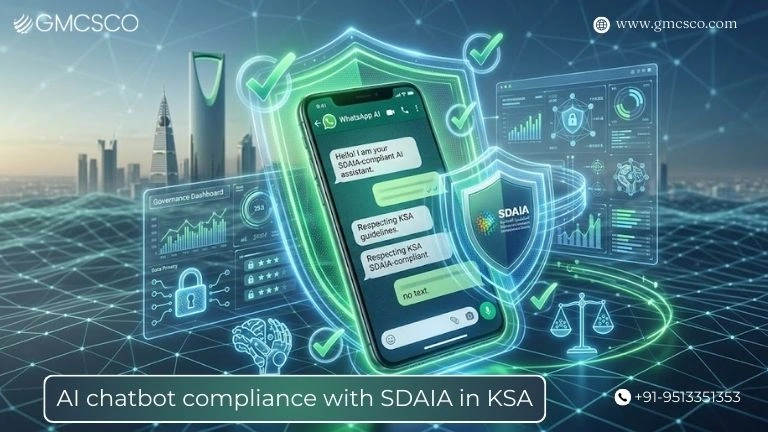
AI chatbot compliance with SDAIA standards on WhatsApp in KSA ensuring responsible automation and data governance

AI Chatbot Compliance with SDAIA in KSA: Your Essential Guide to Responsible Automation

Business owners across Saudi Arabia face a common pressure today. Customers demand instant personalized support on WhatsApp and other channels yet regulators demand strict protection of personal data and ethical use of artificial intelligence. One misstep with an AI chatbot can trigger fines under the Personal Data Protection Law that reach millions of riyals, damage customer trust or even halt operations. If your company uses or plans to use AI powered chatbots for customer service sales support or lead generation then SDAIA compliance is not optional. It is the foundation that lets you scale safely while aligning with Vision 2030 goals. This guide walks you through every practical aspect so you can turn compliance into a competitive advantage rather than a burden. We will cover the real challenges businesses face, why this matters now, simple explanations of the rules, practical examples step by step adoption strategies, measurable benefits, common pitfalls, future outlook and answers to the questions decision makers ask most. By the end you will know exactly how to build or upgrade AI chatbots that respect Saudi regulations, protect your customers and drive real business growth. The Growing Pains of AI Chatbots in Saudi Businesses Many companies in retail banking, healthcare and e-commerce jumped into AI chatbots to handle high volumes of inquiries, reduce agent workload and deliver 24 hour service. The results look impressive at first with faster response times and higher engagement rates. Yet behind the scenes problems quickly surface. Non compliant systems often collect more customer data than needed store conversations without proper encryption or fail to obtain clear consent before processing information. When a data breach occurs or a customer complains to SDAIA the consequences hit hard. Fines, penalties and mandatory audits follow while public trust erodes fast. Operational challenges compound the issue. Teams struggle to keep chatbots updated with accurate information across Arabic dialects and cultural nuances. Generative AI features sometimes produce hallucinations or biased responses that conflict with local values. Without built in human oversight or audit trails leaders cannot prove compliance during regulatory reviews. Marketing leaders and startup founders I advise frequently mention another frustration. They invest in popular global chatbot platforms only to discover later that data flows outside the Kingdom or that transparency features do not meet SDAIA expectations. The result is wasted budget delayed launches and frustrated customers who feel their privacy is at risk. Enterprise decision makers face even bigger stakes. Large organizations must align chatbot deployments with internal governance policies, national data standards and sector specific rules from bodies like the Saudi Central Bank or the Communications and Information Technology Commission. Missing any piece creates legal exposure that no amount of clever automation can fix. Also Read About SDAIA-aligned WhatsApp AI solutions Why AI Chatbot Compliance with SDAIA Matters in Today’s KSA UAE and Global Digital Economy Saudi Arabia stands at the forefront of responsible AI adoption in the Gulf. Vision 2030 positions data and artificial intelligence as core drivers of economic diversification away from oil. SDAIA leads this charge by setting clear national standards that protect citizens while encouraging innovation. For businesses operating in the Kingdom compliance builds the trust needed to serve over 30 million WhatsApp users who expect seamless yet secure experiences. Companies that demonstrate SDAIA alignment often see higher customer retention, stronger brand reputation and smoother partnerships with government entities. The topic carries equal weight for organizations active across the wider GCC including the UAE. While each country maintains its own data protection framework the principles of consent transparency and data localization overlap significantly. Enterprises that master SDAIA rules find it easier to adapt their solutions for neighboring markets and create truly regional customer engagement platforms. On the global stage investors and partners increasingly favor organizations that operate with strong ethical AI practices. International clients particularly in regulated industries review compliance records before signing contracts. A well documented SDAIA compliant chatbot program signals maturity and reduces perceived risk making your business more attractive for cross border deals and funding rounds. In short, compliance is no longer just a legal checkbox. It has become a strategic enabler that supports sustainable growth, protects against future regulatory tightening and positions forward thinking companies as leaders in the knowledge economy. Understanding AI Chatbots and SDAIA Compliance in Simple Terms At its core an AI chatbot is a software system that uses natural language processing and sometimes generative models to understand customer messages and respond intelligently. When integrated with WhatsApp Business API these tools handle everything from order tracking to appointment booking and personalized recommendations without constant human intervention. SDAIA compliance means designing, deploying and operating these systems according to two main pillars. First the AI Ethics Principles which outline seven foundational values. Second the Personal Data Protection Law along with its implementing regulations and the National Data Management and Personal Data Protection Standards. The seven AI Ethics Principles are fairness, privacy and security, humanity social and environmental benefits, reliability and safety, transparency and explain ability and accountability and responsibility. In practice this means your chatbot must avoid bias, treat all users equitably, protect data rigorously, keep humans in control for important decisions, disclose when it is an AI system and maintain clear records of its actions. The PDPL adds specific obligations around consent data minimization accuracy security breach notification and data subject rights such as access correction and deletion. For chatbots this translates to showing users exactly what data will be collected, why it is needed and how they can withdraw consent at any time. Generative AI guidelines issued by SDAIA add another layer especially for chatbots that create dynamic responses. You must inform users they are interacting with AI and provide options to speak with human review outputs for accuracy and never input sensitive or classified data into external models. When all these elements work together you get a chatbot that feels helpful, culturally respectful and fully aligned with national priorities. Also Read About WhatsApp Business API compliance in Saudi Arabia Real World Use Cases

AI Chatbot Compliance with SDAIA in KSA: Your Essential Guide to Responsible Automation Read More »

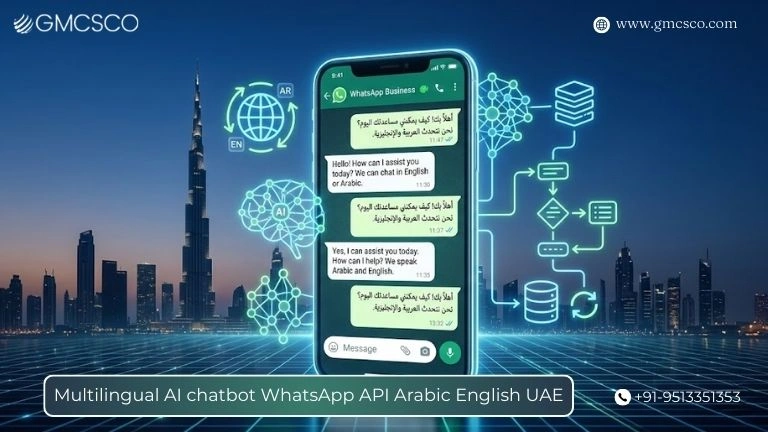
Multilingual AI chatbot on WhatsApp API with Arabic and English support for UAE businesses

Multilingual AI chatbot WhatsApp API Arabic English UAE

Picture this. Your Dubai based retail store receives dozens of inquiries every hour from customers who start in Arabic then switch to English mid conversation. Your Abu Dhabi healthcare clinic fields appointment requests at 2am from expats who expect instant answers. Your real estate team in Sharjah loses leads because response times stretch beyond a few minutes. These scenarios play out daily across the UAE where diverse populations demand seamless communication on the platform everyone already uses: WhatsApp. Business owners and marketing leaders know the frustration all too well. Manual teams cannot keep pace with volume or language nuances. Customers abandon conversations and take their business elsewhere. This is exactly why multilingual AI chatbots powered by the WhatsApp Business API have become essential for companies operating in the UAE market. In this guide we explore how these intelligent systems solve real operational challenges. We break down the technology in practical terms. We share step by step adoption paths that deliver measurable returns. And we highlight how forward thinking organizations achieve efficiency gains while building stronger customer relationships in both Arabic and English. The Daily Operational Challenges Businesses Face Without Modern Automation Customer service teams in the UAE handle an overwhelming mix of queries ranging from simple order tracking to complex account details. Staff members juggle phone calls, emails and WhatsApp messages while trying to respond accurately in the right language. Translation delays create misunderstandings. Night shifts leave gaps in coverage. High staff turnover adds training costs that never seem to end. Many companies still rely on basic auto replies or shared inboxes. These approaches lead to inconsistent experiences. A customer asking about a property listing in Arabic might receive an English only template that feels impersonal. Another inquiring about a bank balance at midnight gets no reply until morning and moves to a competitor who offers instant support. The cost adds up quickly. Hiring additional agents for round the clock coverage strains budgets especially for startups and mid sized firms. Error rates rise when agents handle multiple languages under pressure. Customer satisfaction scores drop when responses feel robotic or delayed. In a market where word of mouth travels fast through family and community networks these issues directly impact revenue and reputation. Also Read About WhatsApp Chatbot TDRA Regulations UAE 2026 Why Multilingual AI Solutions Matter More Than Ever in the UAE Digital Economy The UAE stands at the forefront of global AI adoption with 64 percent of the working age population actively using artificial intelligence tools as of late 2025. This leadership position reflects a broader national push toward digital transformation that touches every sector from government services to private enterprise. WhatsApp enjoys remarkable reach here with adoption rates around 90 percent among adults. Smartphone penetration exceeds 95 percent meaning nearly every customer already conducts business conversations on this single app. People expect instant personalized interactions in their preferred language whether Modern Standard Arabic Gulf dialects or fluent English. Tourism, hospitality and e-commerce sectors thrive on this connectivity. Real estate agents close deals through conversational flows. Banks provide secure balance checks without forcing customers into apps or websites. Healthcare providers manage appointments and reminders efficiently. The convergence of high AI readiness, strong messaging platform usage and multilingual population creates the perfect environment for intelligent chatbots to deliver outsized impact. Companies that adopt these tools early position themselves ahead of competitors still stuck with traditional methods. They meet customer expectations for speed and relevance while freeing human teams for higher value strategic work. Understanding the Technology Behind Multilingual AI Chatbots on WhatsApp At its core the WhatsApp Business API serves as the official secure channel for companies to communicate at scale. Unlike the regular WhatsApp app this enterprise solution allows automated messaging template approvals and rich media sharing while maintaining full compliance with Meta policies and local regulations. The AI layer brings intelligence to these conversations. Advanced natural language processing models trained on both Arabic and English understand context intent and even code switching where users mix languages naturally. The system detects the incoming message language automatically then responds in the same tongue or maintains consistency based on user preference. These chatbots go far beyond simple keyword matching. They pull real time data from your inventory systems or customer databases to provide accurate answers. They remember conversation history across sessions. They escalate complex issues to live agents with full context preserved. For Arabic support the best solutions handle regional dialects and right to left text formatting flawlessly. Integration happens through secure APIs connecting the chatbot to your existing tools. Customer relationship management platforms synchronize seamlessly so every interaction updates records automatically. This creates a unified view of each customer journey without manual data entry. Real World Use Cases Showing Tangible Results Consider a leading e-commerce retailer in Dubai. Before automation their team managed hundreds of daily queries about order status delivery times and returns. After implementing a multilingual AI chatbot they automated 75 percent of these interactions. Customers now receive instant updates in Arabic or English. Cart abandonment dropped significantly because the system sends personalized recovery messages at the right moment. Sales teams report higher conversion rates since they focus only on qualified high value leads. In the real estate sector a prominent agency in Abu Dhabi uses the technology to qualify prospects around the clock. Potential buyers send property photos or location preferences in Arabic. The chatbot responds with matching listings availability details and virtual tour links. Agents receive only warm leads with complete conversation summaries. This approach helped the firm increase lead volume by over 40 percent while reducing response time from hours to seconds. Healthcare providers in the UAE face unique demands for privacy and accuracy. One clinic network deployed a compliant chatbot that handles appointment scheduling prescription refill requests and basic health queries. Patients choose their language preference upfront. The system books slots directly into the calendar and sends confirmations with reminders. No sensitive data gets mishandled because everything stays within secure approved flows. Patient satisfaction

Multilingual AI chatbot WhatsApp API Arabic English UAE Read More »

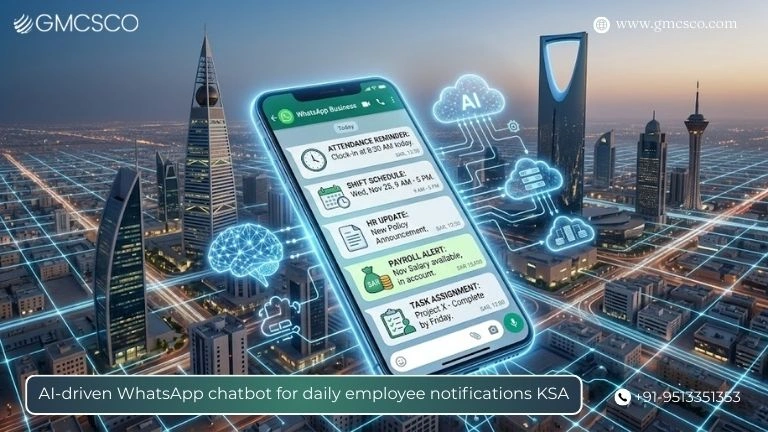
AI-driven WhatsApp chatbot for daily employee notifications and HR alerts in KSA

AI driven WhatsApp chatbot for daily employee notifications KSA

Introduction: The Silent Communication Crisis Inside Modern Businesses Every growing business eventually faces the same challenge. Information does not reach employees on time. Policies are updated but not read. Shift schedules change but someone misses the memo. HR sends reminders that get buried in email inboxes. Compliance announcements are ignored. Operational updates create confusion instead of clarity. In Saudi Arabia, where digital transformation is accelerating under Vision 2030, businesses cannot afford communication gaps. Whether you run a retail chain in Riyadh, a logistics firm in Jeddah, a healthcare group in Dammam, or a fast growing startup in NEOM, internal communication efficiency directly impacts productivity, compliance, and profitability. Now consider this fact. WhatsApp is one of the most widely used communication platforms in the Kingdom. Employees check it multiple times a day. It is immediate, familiar, and trusted. So the strategic question becomes simple. What if businesses could automate daily employee notifications through an AI driven WhatsApp chatbot for daily employee notifications KSA? Not just broadcast messages. But intelligent, automated, personalized communication that improves operations. This article will break down how it works, why it matters, and how forward thinking organizations in Saudi Arabia are implementing it to gain measurable competitive advantage. If your organization is exploring automation, this guide will help you make an informed decision. The Real Operational Challenges Businesses Face Today Let us address the ground reality. Most companies in KSA still rely on: Email for internal updates Manual WhatsApp groups Paper notices HR portals that employees rarely check Supervisors verbally relaying information This creates several problems. Also Read About WhatsApp Business API Compliance Saudi Arabia 2026 1. Low Message Visibility Email open rates for internal communication can be surprisingly low, especially among frontline staff who do not sit at desks all day. 2. Human Dependency Managers must manually remind teams. HR must resend notifications. Operations teams repeat instructions daily. 3. Inconsistent Communication Different departments receive information at different times. This leads to confusion and mistakes. 4. Compliance Risk In sectors like healthcare, finance, logistics, and manufacturing, missed notifications can result in regulatory penalties. 5. Employee Disengagement When communication feels chaotic, employees lose trust in systems. Saudi Arabia is rapidly digitizing government services, banking, and enterprise operations. Yet many companies still operate internal communication models from a decade ago. This is where AI powered employee engagement tools and enterprise WhatsApp automation Saudi Arabia become strategic assets. If your organization still relies heavily on manual reminders, it may be time to evaluate smarter automation options. Why This Matters in the Saudi and Global Digital Economy Saudi Arabia is not just adopting digital technology. It is leading regional transformation. With initiatives aligned to Vision 2030, companies are under pressure to: Improve operational efficiency Enhance workforce productivity Adopt smart automation systems Reduce administrative overhead Strengthen compliance frameworks At the same time, employees expect real time communication. Also Read About Enterprise WhatsApp automation Saudi Arabia Globally, enterprise messaging is moving toward conversational AI, automated notifications, and intelligent workflow integration. In KSA specifically: WhatsApp penetration is extremely high Mobile first communication dominates Distributed workforces are increasing Retail, logistics, construction, and hospitality rely on frontline staff An AI chatbot for internal communication bridges the gap between management systems and employees in the field. It creates a real time, automated communication channel that employees already use daily. For business owners and enterprise decision makers, this is not about technology hype. It is about operational reliability. If your competitors are improving internal response time through automation, standing still is not an option. What Is an AI Driven WhatsApp Chatbot for Daily Employee Notifications Let us simplify the concept. An AI driven WhatsApp chatbot for daily employee notifications KSA is a smart automation system integrated with your business software that sends structured, automated updates to employees via WhatsApp. It can: Send daily shift schedules Notify employees about attendance reminders Share policy updates Deliver HR announcements Provide training reminders Send payroll notifications Share compliance alerts Collect confirmations from employees The AI component enables: Personalization based on role or department Language customization such as Arabic and English Automated responses to employee queries Escalation logic if a message is not acknowledged Smart reporting and analytics Instead of managers manually sending updates, the system connects to HR software, ERP systems, CRM platforms, or attendance tools. When a trigger occurs, the chatbot automatically sends the right message to the right employee at the right time. This is not just messaging. It is intelligent business process automation KSA applied to internal communication. Also Read About AI Chatbot and Automation Practical Business Use Cases in Saudi Arabia Let us explore how real businesses apply this solution. Retail Chains Retail businesses often manage hundreds of staff across multiple branches. Use cases include: Daily shift assignments Inventory reminders Promotion briefing messages Sales target updates Store compliance checklists An automated HR notification chatbot solution ensures every staff member receives updates before the shift begins. Construction and Contracting Field workers may not check email regularly. Chatbot use cases include: Safety compliance alerts Project schedule changes Equipment inspection reminders Site meeting notifications Healthcare Organizations Hospitals and clinics can use WhatsApp automation for: Shift rotations Policy changes Training reminders Patient care protocol updates Logistics and Delivery Companies For drivers and warehouse teams: Route changes Delivery instructions Performance notifications Attendance tracking reminders Corporate Offices For enterprise teams: Townhall announcements IT maintenance alerts HR document reminders Performance review scheduling In each case, employee communication automation KSA reduces manual work and improves accountability. If you are unsure whether your industry can benefit, consider mapping your daily repetitive internal messages. Those are automation opportunities. How Companies Adopt an AI WhatsApp Notification System One of the most common concerns among decision makers is implementation complexity. Let us break it down into a practical step by step approach. Step 1: Identify Communication Gaps Audit your current internal communication system. Ask: Which notifications are sent daily Which reminders require manual follow up Where do delays occur What messages are frequently ignored Step 2: Define Use Cases

AI driven WhatsApp chatbot for daily employee notifications KSA Read More »

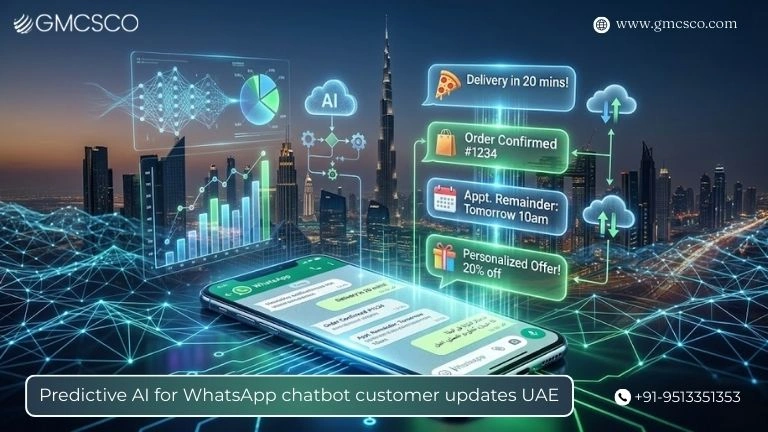
Predictive AI WhatsApp chatbot for automated customer updates and notifications in UAE

Predictive AI for WhatsApp Chatbot Customer Updates UAE

Introduction: Why Businesses in the UAE Are Struggling with Customer Updates Every business leader in the UAE knows the pressure. Customers expect instant updates. They want real time order confirmations. They want delivery notifications. They want appointment reminders. They want proactive communication before they even ask. At the same time, operational teams are overwhelmed. Customer support inboxes are full. Sales teams are chasing follow ups manually. Logistics teams are handling constant status requests. The result is predictable. Delayed responses. Frustrated customers. Rising support costs. Lost revenue. This is exactly where Predictive AI for WhatsApp chatbot customer updates UAE is transforming the way modern businesses operate. Instead of reacting to customer inquiries, companies are now predicting what customers need and sending updates automatically through WhatsApp. The platform customers already use every day. For business owners, marketing leaders, and enterprise decision makers, this shift is not just about convenience. It is about competitive survival. The Real Industry Problem: Reactive Communication Is Costly Let us address the core issue. Most companies still operate in reactive mode. A customer places an order. They do not receive an update. They contact support. The support team checks manually. They respond hours later. Multiply that by hundreds or thousands of customers daily. This creates: High customer support costs Slower response times Low customer satisfaction Poor customer retention Increased churn rates In fast moving markets like Dubai, Abu Dhabi, and the broader UAE, customers have choices. If communication feels slow, they switch brands. Industries most affected include: Ecommerce businesses Real estate developers Healthcare providers Logistics companies Financial services Hospitality groups Education institutions Without AI driven communication automation, scaling becomes chaotic. Also Read About AI Chatbot and Automation Trends Ready to Reduce Manual Support Load? If your team is spending hours answering repetitive update questions, it is time to explore AI automation solutions tailored for UAE businesses. GMCSCO helps companies move from reactive to predictive communication seamlessly. Why This Topic Matters in the UAE Business Environment The UAE is one of the most digitally advanced markets in the world. WhatsApp penetration is extremely high across residents and businesses. Customers in the UAE prefer messaging over email. Many prefer WhatsApp over phone calls. Add to this: Rapid ecommerce growth Smart city initiatives Government digital transformation High customer service expectations Strong competition in every sector Businesses cannot afford outdated communication systems. Predictive AI integrated with WhatsApp Business API allows companies to deliver proactive customer updates, automate workflows, and create personalized communication at scale. In the UAE market, speed and personalization are everything. Companies that adopt AI powered customer engagement platforms gain a serious advantage. What Is Predictive AI for WhatsApp Chatbot Customer Updates? Let us simplify the concept. Predictive AI is artificial intelligence that uses customer data, behavior patterns, and business logic to anticipate what a customer will need next. When integrated into a WhatsApp chatbot, it can: Predict when a customer expects a delivery update Trigger reminders before appointments Notify customers about payment due dates Send proactive restock alerts Provide real time order tracking updates Offer renewal reminders before subscription expiry Instead of waiting for customers to ask, the system sends updates automatically. This combines: Machine learning algorithms Customer behavior analytics CRM integration ERP system integration WhatsApp Business API Automated workflow engines The result is intelligent, proactive communication. For decision makers, this means fewer support tickets and higher customer satisfaction. Also Read About CRM Integration with WhatsApp Business API for UAE & KSA 2026 How Predictive AI Works in Business Terms Many executives hear the term predictive AI and assume it is complex or experimental. In reality, the process is structured and practical. Step 1: Data Collection The system gathers historical customer data such as purchase behavior, inquiry patterns, and service timelines. Step 2: Pattern Analysis Machine learning models identify trends and recurring customer actions. Step 3: Trigger Identification The system determines when a customer is likely to request an update. Step 4: Automated WhatsApp Communication The chatbot sends a proactive message at the right time. Step 5: Two Way Interaction Customers can reply instantly and receive further automated responses or escalation to human agents. This is AI customer support automation in action. Real World Use Cases in the UAE Ecommerce Businesses in Dubai An online retailer integrates predictive AI with WhatsApp. When a customer places an order: Order confirmation is sent immediately Shipping notification is triggered automatically Delivery update is sent on dispatch If delivery is delayed, a proactive explanation is sent After delivery, feedback is requested Customer support tickets drop by 40 percent. Real Estate Developers in Abu Dhabi Property developers use WhatsApp chatbot automation UAE to: Send construction progress updates Notify buyers about milestone payments Schedule handover appointments Send documentation reminders Buyers feel informed without repeatedly contacting sales teams. Healthcare Clinics Clinics use predictive analytics for customer communication to: Send appointment reminders Share test results notifications Provide follow up care instructions Alert patients for prescription refills Missed appointments decrease significantly. Also Read About WhatsApp Chatbot TDRA Regulations UAE 2026 Want Similar Results in Your Business? GMCSCO specializes in implementing enterprise chatbot solutions UAE that integrate with your existing CRM and operational systems to deliver measurable ROI. Step by Step Implementation for Businesses If you are considering Predictive AI for WhatsApp chatbot customer updates UAE, here is how implementation typically works. Step 1: Business Process Mapping Identify high volume customer update scenarios such as: Order tracking Payment confirmations Appointment reminders Service status updates Renewal notifications Step 2: System Integration Connect: CRM systems ERP platforms Ecommerce platforms Booking systems Payment gateways Seamless integration ensures accurate real time customer updates via WhatsApp. Step 3: AI Model Configuration Define predictive triggers such as: Time based triggers Behavior based triggers Transaction based triggers Step 4: WhatsApp Business API Setup Ensure compliance with WhatsApp policies and template approval processes. Step 5: Testing and Optimization Monitor performance metrics such as: Response rate Engagement rate Reduction in support queries Customer satisfaction scores Step 6: Continuous Improvement Use analytics dashboards to refine predictive models. Key

Predictive AI for WhatsApp Chatbot Customer Updates UAE Read More »

Scroll to Top