GMCSCO Media Group

Author name: Yash

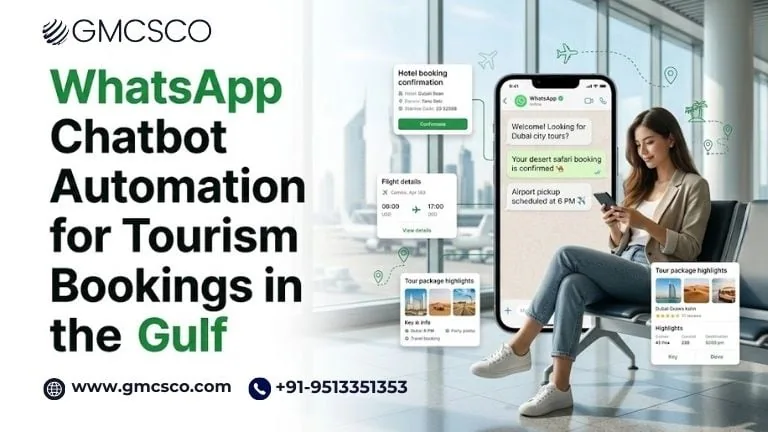
WhatsApp chatbot automation for tourism bookings Gulf

WhatsApp chatbot automation for tourism bookings Gulf

Imagine this: It’s peak season in Dubai, and your tourism agency’s phone lines are jammed. Potential customers from Riyadh to Muscat are scrolling through their phones, eager to book a desert safari or a luxury yacht cruise, but they’re hitting roadblocks. Long wait times, clunky websites, and fragmented communication are turning excitement into frustration. As a business owner in the competitive Gulf tourism market, you’ve felt this pinch. The good news? WhatsApp chatbot automation for tourism bookings in the Gulf is changing the game, turning those missed opportunities into seamless conversions. In my 15 years as an SEO content strategist and AI optimization expert, I’ve seen firsthand how mobile-first tools like these can transform B2B operations. For marketing leaders and startup founders eyeing growth in the UAE or Saudi Arabia, this isn’t just tech hype. It’s a practical way to boost customer engagement while cutting operational headaches. Let’s dive into why this matters and how you can make it work for your business. What Challenges Are Tourism Businesses Facing in the Gulf Today? The Gulf’s tourism sector is booming, with visitor numbers projected to hit 100 million annually by 2030. Yet, behind the glitz of Burj Khalifa views and Formula 1 races lies a web of operational woes. Manual booking processes eat up hours, leading to errors and lost revenue. Think about it: A tour operator in Abu Dhabi might spend half the day confirming availability via email or phone, only for the customer to bail because the response took too long. Customer expectations have shifted too. Travelers now demand instant replies, much like they get from ride-sharing apps. In a region where WhatsApp reigns supreme – with over 90% penetration – ignoring mobile messaging means ignoring your audience. For enterprise decision makers, this translates to higher churn rates and strained teams. I’ve consulted with agencies where peak-season overload led to 30% booking drop-offs simply because inquiries went unanswered. These aren’t isolated issues. They’re symptoms of outdated systems clashing with a digital-savvy market. Automation isn’t a luxury here; it’s survival. Book Your Free Consultation Why Does WhatsApp Chatbot Automation Matter Now in the UAE and Beyond? In today’s UAE and global business landscape, speed wins. The post-pandemic travel surge has amplified this, with Gulf countries like the UAE and Saudi Arabia investing billions in tourism tech to diversify economies. Vision 2030 in Saudi Arabia, for instance, spotlights digital innovation, making tools like WhatsApp bots essential for staying compliant and competitive. This matters because it bridges the gap between aspiration and execution. Businesses that automate via WhatsApp see response times drop from hours to seconds, fostering trust and loyalty. For companies seeking AI automation, it’s about reclaiming time for what counts: crafting unforgettable experiences. Globally, the travel industry loses $64 billion yearly to abandoned bookings – much of it preventable with conversational AI. In the Gulf, where cultural nuances demand personalized interactions, these bots shine. They handle multilingual queries effortlessly, aligning with the region’s diverse expat and tourist base. As an industry consultant, I’ve advised firms that ignoring this trend risk falling behind nimble startups leveraging WhatsApp integration for tour operators. If you’re a marketing leader pondering customer engagement platforms, consider this your cue. Exploring AI solutions now positions your brand as forward-thinking in a market hungry for efficiency. What Exactly Is WhatsApp Chatbot Automation for Tourism Bookings? At its core, WhatsApp chatbot automation is a smart, AI-powered system that lets customers book tours, hotels, or flights directly through WhatsApp chats. No more navigating complex apps or waiting on hold. Picture a traveler messaging your bot: “Hi, I need a 3-day itinerary in Ras Al Khaimah for two.” The bot responds instantly, pulling real-time availability, suggesting options, and finalizing payments – all within the familiar WhatsApp interface. Built on the WhatsApp Business API, these chatbots use natural language processing to understand queries, much like a human agent. They’re customizable, integrating with your CRM or booking software for seamless data flow. For Gulf tourism, this means handling Arabic-English switches or time-sensitive deals without breaking a sweat. It’s not magic; it’s engineered simplicity. As someone who’s optimized content for AI search engines, I appreciate how these tools democratize access. Small tour operators get enterprise-level capabilities, leveling the playing field. Also Read About WhatsApp Chatbot for Travel Agencies Real-World Use Cases: How Gulf Tourism Businesses Are Thriving with Chatbots Let’s ground this in reality. Take a mid-sized hotel chain in Dubai. They implemented WhatsApp bots for travel industry bookings, allowing guests to reserve spa sessions or room upgrades mid-stay. Result? A 25% uptick in ancillary revenue, as impulse decisions became effortless. Or consider a startup in Bahrain specializing in eco-tours. Their bot handles group bookings for pearl-diving trips, sending personalized itineraries via rich media like photos and videos. Customers love the convenience, and the agency slashed admin time by 40%. In Saudi Arabia, a Riyadh-based operator uses these for Hajj and Umrah prep, guiding pilgrims through visa-linked reservations. It’s a prime example of tourism booking automation UAE-style, blending tech with sensitivity. These aren’t outliers. I’ve seen enterprise clients in Qatar integrate bots with loyalty programs, boosting repeat visits by 18%. The key? Tailoring to local vibes – quick, respectful, and value-packed. Ready to see this in action for your team? A quick chat with an expert on business automation consulting could uncover tailored fits. How Do You Implement WhatsApp Chatbot Automation Step by Step? Adopting this tech doesn’t require a tech overhaul. Start with assessment: Audit your current booking flow. Where do drop-offs happen? For most Gulf firms, it’s inquiry response. Next, choose a platform. Look for ones offering easy WhatsApp Business API integration. As a WhatsApp business solution provider, reliable partners ensure compliance with Meta’s guidelines. Step three: Design the bot’s flow. Map common queries – availability checks, payment gateways, cancellations – using simple decision trees. Test with sample interactions to refine. Integration follows: Link to your backend systems. Tools like Zapier speed this up for non-coders. Launch with a soft rollout.

WhatsApp chatbot automation for tourism bookings Gulf Read More »
WhatsApp Business API chatbot for education notifications UAE

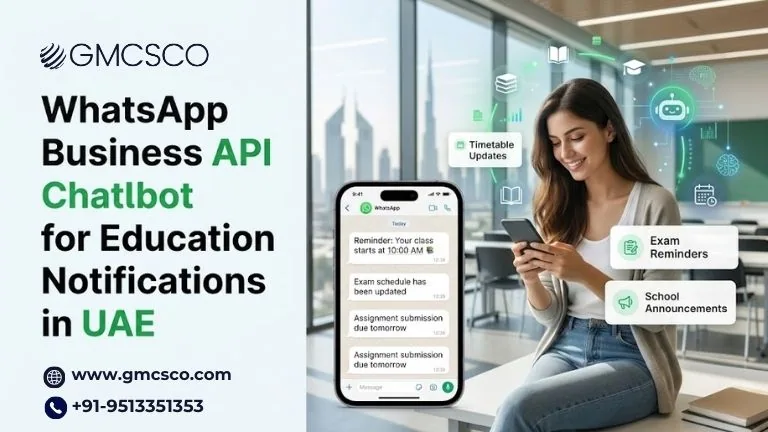
WhatsApp Business API chatbot for education notifications UAE

Picture this. A parent in Abu Dhabi opens their phone at 7 am and sees a clear message from their child’s school. Attendance confirmed for today. Exam results ready to view. Fee reminder with a one click payment link. No email buried in spam. No missed calls during work hours. Just instant reliable information on the app every family already uses every day. This is not a future vision. It is exactly what forward thinking educational institutions across the UAE are achieving right now with a WhatsApp Business API chatbot for education notifications UAE. Business owners running private schools, marketing leaders in larger education groups, startup founders building edtech platforms, and enterprise decision makers overseeing university operations all face the same pressure. Parents expect real time updates. Staff drown in repetitive tasks. Compliance rules get stricter every year. The right chatbot solution cuts through all of that. In the following guide I share everything you need to know as a decision maker. We will cover the real challenges, how the technology actually works, practical examples that deliver results, clear implementation steps, measurable business impact, and what the future holds. By the end you will understand exactly why this technology has become essential for any education provider serious about parent engagement and operational efficiency in the UAE. Book Free Consultation The Daily Operational Pain Points Every UAE School Still Faces Education leaders in the UAE know the struggle all too well. Traditional notification methods simply do not keep up anymore. Emails disappear into crowded inboxes with open rates often below 20 percent. SMS costs add up quickly when you send thousands of messages each month. Phone calls tie up administrative staff for hours and still miss parents who work different shifts or live across emirates. Printed notices get lost. Group chats on personal numbers create chaos and compliance risks. In a country where families come from over 200 nationalities, language barriers make the problem worse. A single missed fee reminder can delay cash flow. A late emergency alert about school closure due to weather can create unnecessary panic. Attendance tracking done manually wastes valuable teaching time. Marketing leaders see the impact too. Prospective parents researching admissions expect instant answers yet many institutions still rely on slow email responses or outdated forms. Startup founders scaling online learning platforms struggle to keep students engaged without constant manual follow up. Enterprise decision makers overseeing multiple campuses watch small inefficiencies multiply into major operational costs. These are not minor inconveniences. They directly affect enrollment numbers, parent satisfaction, staff retention, and ultimately the bottom line. Why WhatsApp Business API Chatbot Technology Matters Right Now in the UAE The UAE continues its rapid digital transformation. The government pushes smart education initiatives under Vision 2031 and beyond. Families here live on their phones. WhatsApp penetration exceeds 97 percent among smartphone users. Parents check it dozens of times daily. At the same time regulators tighten rules around data privacy and electronic communications. The Telecommunications and Digital Government Regulatory Authority expects clear consent and proper handling of personal information. Schools that ignore these realities risk fines or loss of trust. Globally the education sector moves toward automation. Institutions that adopt intelligent notification systems see higher parent involvement, faster payments, and reduced administrative workload. In the UAE this shift happens even faster because of the young tech savvy population and competitive private education market. A well designed WhatsApp Business API chatbot for education notifications UAE meets parents where they already are. It delivers information in Arabic or English. It works 24 hours a day. It scales from a small nursery to a network of universities without adding headcount. That combination of convenience, compliance, and efficiency explains why adoption grows so quickly among serious education providers. If your institution still relies mainly on email and phone for parent communication it may be time to explore AI automation solutions that can transform these processes. Also Read About WhatsApp API for EdTech automation in educational institutions Understanding WhatsApp Business API Chatbot Technology in Simple Terms Let us break it down without the jargon. The WhatsApp Business API is the official enterprise version created by Meta. Unlike the regular WhatsApp Business app you download on your phone, the API connects directly to your existing systems such as student information software, payment gateways, or learning management platforms. A chatbot built on this API acts as an intelligent assistant. It sends approved notification templates for things like fee reminders or exam schedules. It answers common questions automatically. When a parent needs to speak with a human it hands over the conversation smoothly. Everything stays secure with end to end encryption. Messages use pre approved templates for proactive notifications which keeps everything compliant. Parents must give explicit permission to receive messages which protects both sides. The chatbot understands context. It can confirm a child’s attendance, share a progress report, collect document uploads, or guide someone through an admission inquiry all within the same conversation. This creates a single reliable channel instead of scattered emails, portals, and calls. Talk to Automation Expert Real World Examples of Success in UAE Education Settings Several types of institutions already see strong results. Private schools use automated attendance alerts sent each morning. Parents receive confirmation their child arrived safely. Teachers save hours previously spent chasing updates. One large Dubai group reported fewer late arrivals after implementing daily check-ins. Universities and training centers automate admissions. Prospective students message the official number with questions about programs. The chatbot immediately sends brochures, schedules a counseling call, and tracks application progress. Follow up reminders for missing documents keep the pipeline moving without manual chasing. Fee collection improves dramatically. Instead of generic reminders institutions send personalized messages with exact amounts due, payment links, and easy confirmation once paid. Cash flow becomes more predictable. Late payments drop because parents act immediately when the message arrives on their most used app. Emergency notifications work perfectly for weather closures or transport delays. Read receipts confirm every parent saw the alert.

WhatsApp Business API chatbot for education notifications UAE Read More »

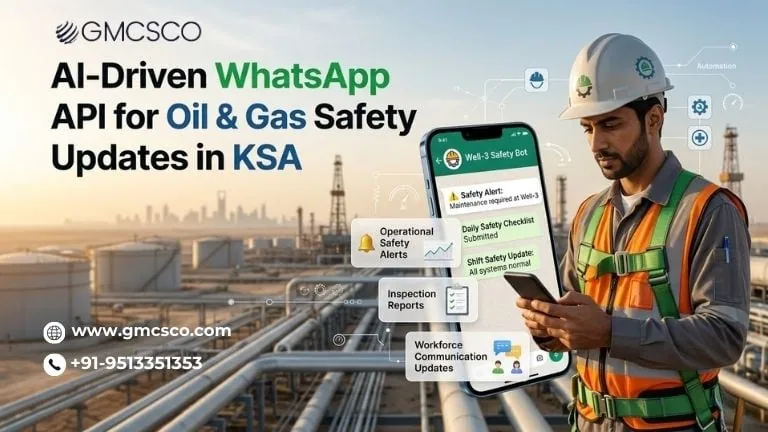
AI-driven WhatsApp API for oil & gas safety updates KSA

AI-driven WhatsApp API for oil & gas safety updates KSA

Introduction: Why Safety Communication is Becoming a Strategic Priority in the Oil and Gas Industry The oil and gas sector has always operated in high risk environments. From offshore drilling platforms to refinery operations and pipeline networks, safety communication is not simply a regulatory requirement. It is a business critical function. In Saudi Arabia, where the energy sector plays a central role in economic growth and global supply chains, the scale of operations is enormous. Large workforces operate across refineries, exploration sites, transportation infrastructure, and offshore platforms. Managing safety communication across such distributed environments can be extremely challenging. Traditional communication systems such as emails, radio channels, and internal portals often struggle to reach workers in real time. Field technicians and engineers may not always have access to computers or enterprise systems while working on site. Delays in receiving safety alerts can increase operational risk and slow down emergency response. This is where intelligent messaging platforms are changing the landscape. The emergence of AI driven WhatsApp API solutions is enabling energy companies to deliver instant safety updates directly to employees’ mobile devices. Since WhatsApp is already widely used across Saudi Arabia, integrating safety notifications into this familiar platform improves response time, accessibility, and workforce engagement. More importantly, when artificial intelligence is integrated into these communication systems, companies gain the ability to automate alerts, predict potential risks, and distribute real time operational updates. For companies operating in high risk industrial environments, this shift is becoming a key component of digital transformation. Book Free Safety Consultation The Safety Communication Challenges Faced by Oil and Gas Companies Energy companies manage some of the most complex operations in the world. Safety communication must function across multiple layers of operations. These challenges typically include: Distributed Workforce Across Large Facilities Oil and gas operations often span multiple locations including: Refineries Drilling sites Pipeline networks Shipping terminals Offshore platforms Ensuring that every worker receives timely safety information is extremely difficult when teams are geographically dispersed. Limited Access to Enterprise Systems in the Field Field engineers and technicians often work in environments where accessing enterprise dashboards or internal portals is not practical. Mobile based communication platforms become essential in these environments. Delayed Incident Communication When an incident occurs, companies must immediately notify teams about: Gas leaks Equipment failure Operational hazards Evacuation instructions Weather alerts Even a few minutes of delay in communication can impact safety outcomes. Also Read About Highly Relevant – AI + WhatsApp Automation Compliance and Regulatory Requirements Saudi Arabia’s oil and gas sector follows strict safety and compliance standards. Companies must ensure that safety protocols are communicated clearly and consistently across the workforce. Manual communication systems often struggle to maintain the speed and accuracy required for compliance. A Quick Insight for Energy Companies Organizations exploring digital transformation in industrial safety communication are increasingly integrating AI powered messaging platforms to reduce response time and improve workforce coordination. Exploring intelligent automation tools early can help energy companies build more resilient safety communication frameworks. Why This Topic Matters in the Saudi Arabia Energy Market Saudi Arabia is one of the largest energy producers in the world. The country’s oil and gas operations are undergoing significant technological transformation as part of Vision 2030. Digital innovation is playing a growing role in operational safety, predictive maintenance, and workforce communication. Several trends are driving this shift: Increased Adoption of Industrial AI Artificial intelligence is being used for predictive risk analysis, equipment monitoring, and incident detection. Growing Mobile Workforce Many industrial workers rely on smartphones for communication, documentation, and reporting. Focus on Real Time Operational Intelligence Companies are investing in systems that enable real time decision making across operations. Strong Regulatory Focus on Safety Safety compliance and workforce protection remain top priorities for energy companies operating in the region. Integrating AI driven WhatsApp communication into safety workflows aligns perfectly with these trends. Talk to Automation Expert What Is an AI Driven WhatsApp API Safety Alert System An AI driven WhatsApp API safety system is a digital communication platform that allows companies to automatically send safety alerts, incident updates, and operational notifications through WhatsApp. This system connects enterprise safety monitoring tools with messaging infrastructure. Artificial intelligence analyzes incoming data and triggers alerts based on predefined safety conditions. For example, the system can automatically send alerts for: Equipment malfunction Gas leakage detection Weather hazards Emergency evacuation instructions Maintenance warnings Employees receive these alerts instantly on WhatsApp. Since WhatsApp is already widely used, workers can easily read alerts without needing additional training or software. Many energy companies work with a WhatsApp business API Saudi Arabia implementation partner to deploy these systems within their operations. How AI Enhances Safety Communication Artificial intelligence adds intelligence and automation to safety alerts. Here is how AI improves operational communication. Predictive Risk Notifications AI systems analyze operational data and identify patterns that may indicate potential safety risks. When certain thresholds are detected, the system automatically sends alerts to relevant teams. Intelligent Routing of Alerts Different types of alerts are sent to specific teams. Maintenance teams receive equipment alerts Safety officers receive compliance warnings Site supervisors receive operational alerts AI ensures that messages reach the right people instantly. Multilingual Communication Saudi Arabia’s industrial workforce is diverse. AI driven messaging platforms can automatically translate alerts into multiple languages. This ensures that safety instructions are understood clearly by all workers. Automated Incident Escalation If a safety alert is not acknowledged within a certain timeframe, the system can automatically escalate the message to supervisors or management teams. Operational Leaders Should Consider This Companies that rely on manual safety communication systems often experience delays in incident response. Exploring automated messaging frameworks can significantly improve workforce safety and operational resilience. Also Read About Enterprise WhatsApp API Use Cases Practical Use Cases in the Oil and Gas Industry AI driven WhatsApp safety alerts can support several operational scenarios in the energy sector. Refinery Safety Notifications Refineries handle complex chemical processes where safety conditions must be monitored constantly. AI systems can send alerts for: temperature fluctuations pressure anomalies chemical

AI-driven WhatsApp API for oil & gas safety updates KSA Read More »

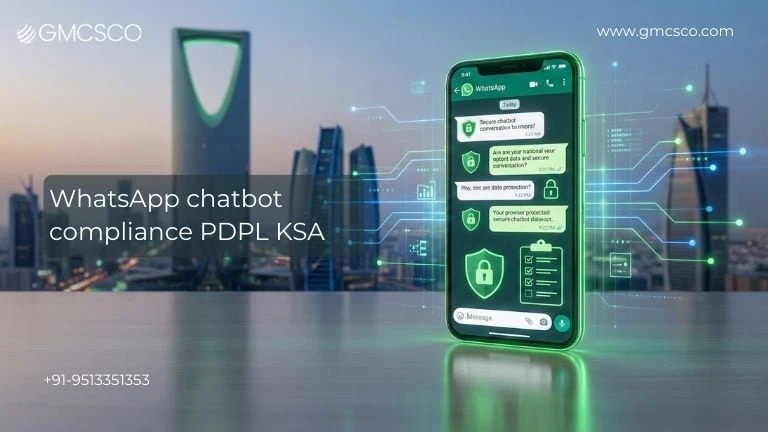
WhatsApp chatbot PDPL compliance in Saudi Arabia with secure customer data protection features

WhatsApp Chatbot PDPL Compliance KSA

Complete 2026 Guide for Secure WhatsApp Automation in Saudi Arabia and UAE In 2026, customer communication has entered a privacy first era. Businesses across Saudi Arabia and the UAE are rapidly adopting WhatsApp chatbots to manage customer interactions, automate support, and improve engagement. However, with the implementation of strict data protection regulations, compliance is no longer optional. Saudi Arabia’s Personal Data Protection Law, commonly known as PDPL, has transformed how enterprises collect, process, store, and manage customer information. Organizations using WhatsApp automation must ensure they follow these regulations to avoid penalties, legal risks, and reputational damage. This is why WhatsApp chatbot PDPL compliance KSA has become one of the most important concerns for enterprises operating in the region. This comprehensive guide explains everything enterprises need to know about building secure, compliant WhatsApp chatbot systems that align with PDPL regulations in Saudi Arabia. Understanding PDPL in Saudi Arabia The Personal Data Protection Law is Saudi Arabia’s primary data privacy regulation. It is designed to protect personal data of individuals and ensure organizations handle data responsibly. PDPL governs how businesses collect personal data, store it, process it, share it, and secure it. For enterprises using WhatsApp chatbots, this means strict rules must be followed when collecting customer information such as names, phone numbers, transaction details, preferences, and communication history. Failure to comply can result in heavy fines, legal actions, and operational restrictions. This makes WhatsApp chatbot data privacy compliance Saudi Arabia a critical requirement for any enterprise using messaging automation. Also Read About WhatsApp Business API Compliance Saudi Arabia 2026 Why PDPL Compliance Matters for WhatsApp Chatbots WhatsApp chatbots process sensitive customer data daily. This includes customer contact details, transaction information, service requests, personal identifiers, and behavioral data. Without proper compliance, enterprises risk violating data protection laws. PDPL ensures customers have control over their personal information and businesses remain accountable for how data is handled. This is why enterprises must invest in PDPL compliant WhatsApp chatbot Saudi Arabia solutions that guarantee secure data handling and regulatory compliance. What PDPL Requires from WhatsApp Chatbot Systems PDPL introduces several mandatory requirements that enterprises must follow when using WhatsApp Business API automation. Organizations must obtain clear customer consent before collecting data. They must inform users about how their data will be used. They must implement strong data security measures. They must allow customers to request deletion of their data. They must ensure data is not stored outside approved regions without authorization. These rules directly impact how WhatsApp Business API PDPL compliance KSA is implemented in enterprise chatbot systems. Key Features of a PDPL Compliant WhatsApp Chatbot Secure Data Encryption A compliant WhatsApp chatbot must ensure end to end encryption for all conversations. This prevents unauthorized access and protects sensitive customer information. Secure encryption is one of the core requirements of WhatsApp chatbot security and compliance KSA. User Consent Management Before collecting personal information, chatbots must obtain explicit consent from users. Consent messages must clearly explain why data is collected and how it will be used. This is essential for WhatsApp automation PDPL compliance Saudi Arabia. Also Read About WhatsApp Business API Guide Data Storage Localization PDPL requires certain types of personal data to be stored within Saudi Arabia unless special permission is granted. A compliant enterprise WhatsApp chatbot PDPL compliant solution must ensure data storage follows these rules. Access Control and Authentication Only authorized personnel should be able to access customer data. Strong authentication systems must be implemented to prevent data misuse. Data Retention and Deletion Policies Businesses must define how long customer data will be stored. Users must have the ability to request deletion of their personal data. This requirement is crucial for WhatsApp chatbot provider Saudi Arabia PDPL compliant systems. Audit Logs and Monitoring A compliant WhatsApp chatbot system should maintain detailed logs of data processing activities. This ensures transparency and accountability in case of audits. WhatsApp Business API and PDPL Compliance The WhatsApp Business API is designed with enterprise level security and compliance capabilities. It supports encrypted messaging, secure integrations, and controlled data access. However, enterprises must implement additional compliance layers to align with PDPL. This is why organizations prefer working with a PDPL compliant WhatsApp Business API provider KSA that understands local regulations and can build compliant automation systems. Risks of Non Compliant WhatsApp Chatbots Enterprises using non compliant chatbot systems face serious risks. They may incur heavy financial penalties. They may lose customer trust. They may face operational restrictions. They may experience data breaches. They may damage brand reputation. These risks highlight the importance of implementing secure WhatsApp chatbot services KSA PDPL compliant solutions. Also Read About CRM Integration with WhatsApp Business API for UAE/KSA 2026 Benefits of PDPL Compliant WhatsApp Chatbots Enhanced Customer Trust Customers feel more confident interacting with businesses that protect their data. Legal Risk Protection Compliance protects organizations from regulatory penalties. Secure Data Handling Businesses can safely manage sensitive customer information. Improved Brand Reputation Privacy compliant companies build stronger market credibility. Long Term Business Sustainability Compliance ensures uninterrupted operations. Industries That Need PDPL Compliant WhatsApp Chatbots Banking and finance institutions handling transaction data. Healthcare providers managing patient information. Ecommerce companies processing customer orders. Government agencies communicating with citizens. Insurance companies handling sensitive policy data. Telecommunication providers managing subscriber information. How Enterprises Can Achieve WhatsApp Chatbot PDPL Compliance Enterprises must follow a structured approach to compliance. They must conduct data privacy assessments. They must implement secure data storage solutions. They must define clear consent mechanisms. They must establish access control policies. They must train staff on data privacy requirements. They must partner with experienced compliance focused providers. Also Read About WhatsApp Business API Chatbot Features for Enterprises in 2026 Why Enterprises in Saudi Arabia Choose Professional Compliance Providers Implementing PDPL compliant chatbot systems requires technical expertise, legal understanding, and local regulatory knowledge. This is why enterprises prefer working with experienced providers who specialize in WhatsApp chatbot security and compliance KSA solutions. How GMCSCO Provides PDPL Compliant WhatsApp Chatbot Solutions GMCSCO is a trusted digital automation and

WhatsApp Chatbot PDPL Compliance KSA Read More »

Scroll to Top