GMCSCO Media Group

Author name: Yash

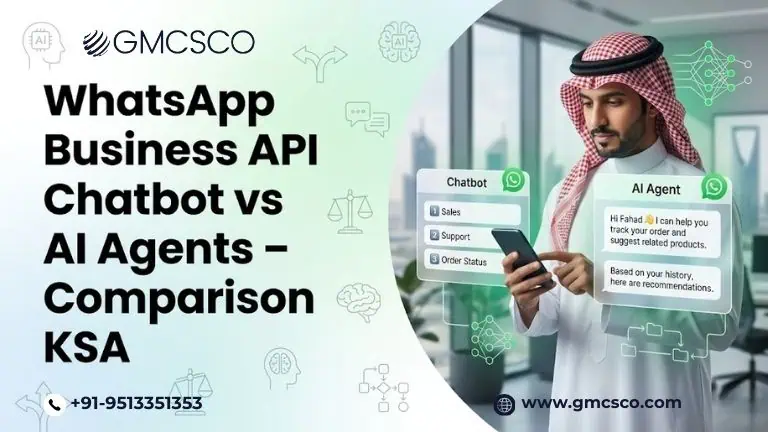
Saudi businessman using WhatsApp Business API chatbot vs AI agent comparison

WhatsApp Business API chatbot vs AI agents comparison KSA

Imagine running a bustling e-commerce store in Riyadh. Your team handles hundreds of customer inquiries daily, from order updates to product recommendations. But as your business grows, so do the delays in responses, leading to frustrated customers and lost sales. In Saudi Arabia’s fast-paced market, where digital transformation is key to staying competitive, choosing the right automation tool can make all the difference. This is where comparing WhatsApp Business API chatbots and AI agents becomes crucial. Both promise to streamline customer interactions, but they serve different needs. In this article, we will break down the differences, benefits, and practical applications to help you decide what fits your business best. Industry Problems and Operational Challenges Businesses in Saudi Arabia face unique hurdles in customer service. With the Kingdom’s Vision 2030 pushing for economic diversification, companies in retail, finance, and logistics are under pressure to scale efficiently. Traditional customer support methods, like phone calls or emails, often lead to long wait times and high operational costs. For instance, handling peak-hour queries during Ramadan or major sales events can overwhelm teams, resulting in errors and dissatisfaction. Moreover, data privacy regulations under the Personal Data Protection Law add complexity. Businesses must ensure secure, compliant communication while maintaining high engagement. Without automation, these challenges escalate, leading to higher churn rates and missed revenue opportunities. Many startups and enterprises struggle with inconsistent response times, especially across time zones or with multilingual customers speaking Arabic and English. Also Read About WhatsApp Business API Chatbot Setup Why This Topic Matters in Today’s KSA and Global Business Environment In Saudi Arabia, the adoption of digital tools aligns directly with national goals for innovation. The AI market in the Kingdom is projected to grow significantly, driven by initiatives like the National Strategy for Data and AI. Globally, customer expectations have shifted toward instant, personalized interactions, with messaging apps like WhatsApp leading the charge. Over 80 percent of Saudis use WhatsApp daily, making it a prime channel for business communication. Comparing WhatsApp Business API chatbots and AI agents is timely because it addresses the need for scalable solutions in a market where e-commerce is booming. For KSA businesses, this means better compliance with local regulations, enhanced customer loyalty, and a competitive edge in the Middle East. Ignoring these tools could mean falling behind as competitors leverage automation for faster growth. If you are exploring ways to optimize your customer interactions, consider consulting experts in AI automation solutions. They can provide tailored advice to align with your goals. Clear Explanation of the Concept in Simple Terms At its core, a WhatsApp Business API chatbot is a programmed tool that automates responses on WhatsApp. It uses predefined rules or scripts to handle basic queries, like greeting customers or sending order confirmations. Think of it as a reliable assistant for routine tasks, integrated directly with the WhatsApp Business Platform. On the other hand, AI agents represent a more advanced evolution. These are intelligent systems powered by machine learning and natural language processing. Unlike chatbots, AI agents can understand context, learn from interactions, and perform complex actions, such as integrating with CRM systems or making decisions based on real-time data. The key difference lies in capability. Chatbots follow fixed paths, while AI agents adapt dynamically, offering a more human-like experience. Also Read About AI Chatbot & Automation Trends on WhatsApp API Practical Business Examples and Use Cases In Saudi Arabia, retail giants use WhatsApp Business API chatbots for simple tasks like broadcasting promotions or tracking deliveries. For example, a Jeddah-based fashion store might set up a chatbot to answer FAQs about sizes and returns, freeing up staff for in-store duties. AI agents shine in more intricate scenarios. A Riyadh bank could deploy an AI agent to handle loan inquiries, pulling data from customer accounts to provide personalized advice. In logistics, AI agents manage end-to-end processes, like rerouting shipments based on weather updates or customer preferences. Another use case is in healthcare. Clinics in Dammam use chatbots for appointment reminders, but AI agents go further by analyzing symptoms and suggesting preliminary consultations, all while ensuring compliance with KSA health regulations. Step by Step Adoption or Implementation Explanation Adopting these tools starts with assessing your needs. First, evaluate your customer query volume and complexity. For basic automation, begin with WhatsApp Business API setup. Step one: Register for a WhatsApp Business Account and verify your business through Meta’s platform. This ensures compliance with KSA regulations. Step two: Choose a Business Solution Provider to integrate the API. They handle technical aspects like message templates for marketing or utility purposes. Step three: Design your chatbot flows. Use tools to create scripts for common interactions, testing them for accuracy. For AI agents, the process is more involved. Step four: Integrate advanced AI models, perhaps using platforms that support natural language understanding. Step five: Train the system with your data, ensuring privacy compliance. Monitor performance and iterate based on analytics. Finally, launch with a pilot group of customers to gather feedback before full rollout. Ready to implement? Exploring customer engagement platforms can help you map out a smooth transition without disrupting operations. Business Benefits Including Efficiency and ROI Impact Both tools boost efficiency, but in different ways. WhatsApp chatbots reduce response times by up to 80 percent for simple queries, cutting labor costs. In KSA’s competitive market, this translates to higher customer satisfaction scores. AI agents deliver even greater ROI. They resolve 65 to 75 percent of support tickets autonomously, as seen in global benchmarks. For Saudi businesses, this means savings on staffing and faster scaling. One study shows AI-driven automation can increase revenue by 15 percent through personalized upsells. Measurable outcomes include lower churn and higher net promoter scores. In finance, AI agents detect fraud in real time, saving millions annually. Common Mistakes Businesses Make Without This Solution Without automation, companies often rely on manual processes, leading to errors like delayed responses. In Saudi Arabia, this can violate service level agreements and damage reputation. Another pitfall is ignoring data insights.

WhatsApp Business API chatbot vs AI agents comparison KSA Read More »
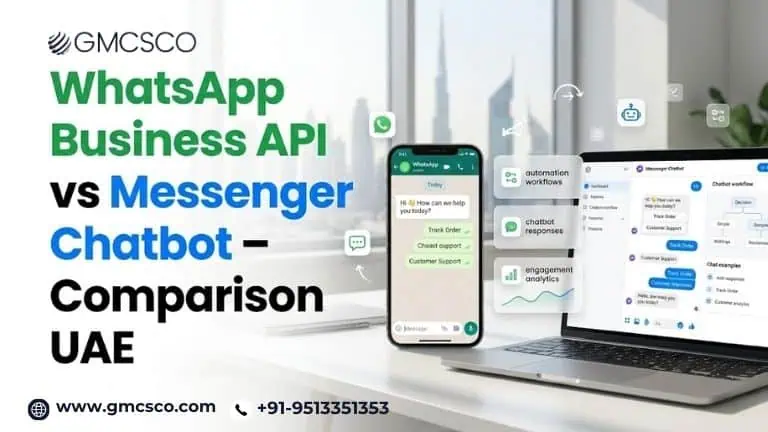
WhatsApp Business API vs Messenger chatbot comparison for UAE businesses

WhatsApp Business API vs Messenger chatbot comparison UAE

Imagine this: It’s a bustling Friday afternoon in Dubai, and your phone lights up with a flurry of customer messages. One asks about order status, another needs product recommendations, and a third is venting about a delivery delay. As a business owner in the UAE, you know the drill. Responding promptly isn’t just polite, it’s essential for keeping customers loyal in a market where everyone expects instant gratification. But with teams stretched thin and inboxes overflowing, how do you scale without hiring an army of support staff? That’s where tools like the WhatsApp Business API and Messenger chatbots come in. In this deep dive, we’ll compare these two powerhouses head to head, tailored to the unique pulse of UAE businesses. Whether you’re a startup founder juggling growth pains or an enterprise leader eyeing efficiency gains, understanding WhatsApp Business API vs Messenger chatbot comparison UAE can transform how you connect with customers. Let’s unpack it all, from core features to real world wins, so you can make a choice that boosts engagement and drives revenue. What Challenges Are UAE Businesses Facing with Customer Communication Today? Running a business in the UAE means navigating a fast paced digital landscape. With over 99 percent smartphone penetration and a young, tech savvy population, customers demand seamless interactions. Yet, many companies still rely on email threads or phone calls that feel outdated and slow. Consider the operational headaches. Support teams drown in repetitive queries, leading to burnout and delays. In a 2026 UAE digital trends report, businesses reported average response times of over two hours for non urgent messages, costing them potential sales. For marketing leaders, fragmented channels mean missed opportunities to nurture leads. And for startups, every delayed reply risks losing ground to agile competitors. These aren’t just annoyances; they’re revenue killers. Poor communication erodes trust, with studies showing that 70 percent of UAE consumers switch brands after a single bad experience. Enter automated messaging solutions. They promise to bridge these gaps, but which one fits your setup? That’s the question we’ll tackle next. Claim Your Free Consultation Why Does WhatsApp Business API vs Messenger Chatbot Matter in the UAE Market? The UAE’s business environment thrives on speed and personalization. As the region’s digital hub, Dubai and Abu Dhabi see explosive growth in e commerce and services, fueled by a mobile first culture. WhatsApp alone boasts over 20 million users here, making it the go-to for everyday chats, while Facebook Messenger taps into social discovery. This topic hits home because customer engagement UAE style is all about immediacy. With the digital ad spend projected to hit $2.64 billion by 2026, businesses can’t afford siloed tools. Choosing between WhatsApp Business API UAE and a Messenger chatbot boils down to reach, compliance, and scalability. Globally, conversational commerce is exploding, but locally, factors like TDRA regulations and Arabic language support add layers. Think about it: In a multicultural market like ours, tools that handle multilingual queries and integrate with local payment gateways win big. This comparison isn’t academic; it’s a roadmap to staying competitive amid rising AI automation demands. If you’re sensing these pain points in your operations, it might be time to audit your current setup. Exploring AI chatbot solutions UAE could reveal quick wins for your team. What Exactly Is the WhatsApp Business API? Let’s break it down simply. The WhatsApp Business API is Meta’s robust backend tool for larger scale messaging. Unlike the free WhatsApp Business app, which suits solo entrepreneurs with basic profiles and catalogs, the API unlocks enterprise level features. At its core, it’s an interface that lets you send and receive messages programmatically. Picture integrating it with your CRM to automate notifications or trigger support flows. Key perks include end to end encryption for secure chats, broadcast lists for targeted campaigns, and rich media support like images and PDFs. In the UAE context, it’s a game changer. With strict data privacy laws, the API’s compliance features shine, ensuring messages align with local standards. Setup requires a business verification, but once live, it handles unlimited agents and high volumes without hiccups. Also Read About WhatsApp Chatbot for E-commerce How Does a Messenger Chatbot Work for Businesses? On the flip side, a Messenger chatbot leverages Facebook’s ecosystem to create automated conversations within the Messenger app. It’s essentially an AI powered script that responds to user inputs, guiding them through queries or funnels. Built via platforms like Many Chat or native Messenger tools, it excels in social commerce. Users discover your brand on Facebook, then slide into Messenger for seamless handoffs. Features include quick replies, carousels for product browsing, and payment integrations. For UAE enterprises, Messenger taps into Facebook’s massive ad targeting, ideal for lead gen. However, it’s more casual, suiting e commerce or entertainment brands over high trust sectors like finance. No phone number verification needed, so onboarding is quicker, but it lacks WhatsApp’s universal penetration. WhatsApp Business API vs Messenger Chatbot: A Side by Side Breakdown Now, the meat of our WhatsApp Business API vs Messenger chatbot comparison UAE. We’ll look at reach, features, costs, and fit for local businesses. First, user base. WhatsApp dominates with 95 percent adoption in the UAE, per recent digital reports. It’s the default for personal and professional chats, giving API users an edge in organic reach. Messenger, while strong among younger demographics, hovers around 60 percent, better for targeted social campaigns. On features, WhatsApp Business API UAE pulls ahead in security and scalability. End to end encryption protects sensitive data, crucial for UAE’s regulated industries. It supports chatbots via third party builders, enabling AI driven flows like order tracking or appointment booking. Messenger chatbots shine in interactivity, with built in buttons and stories integration, but they feel less private. Cost wise, both use conversation based pricing from Meta, starting at about $0.01 per message. WhatsApp adds setup fees through providers, while Messenger is often free to start via Facebook’s tools. For ROI, WhatsApp’s higher open rates, 98 percent, mean better engagement per dirham spent. Integration

WhatsApp Business API vs Messenger chatbot comparison UAE Read More »

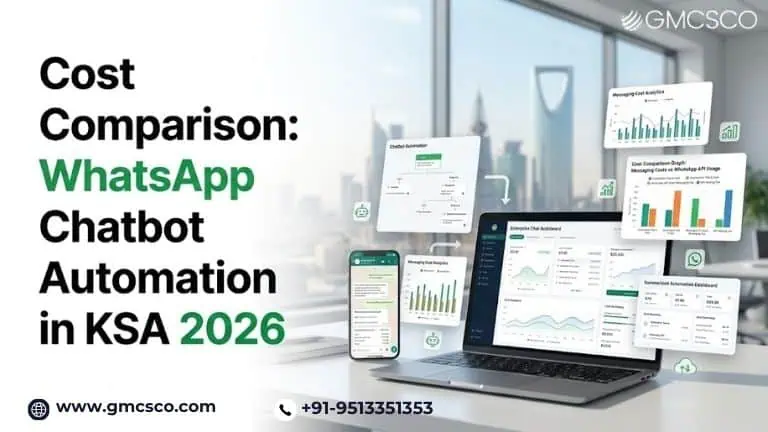
Cost comparison of WhatsApp chatbot automation in KSA 2026

Cost comparison WhatsApp chatbot automation KSA 2026

Why Saudi Businesses Are Re evaluating Customer Communication Costs Customer communication is changing rapidly across the Middle East. In Saudi Arabia, WhatsApp has become the most dominant digital channel for business conversations. From ecommerce stores and healthcare providers to banks and real estate companies, customers increasingly expect instant responses directly inside WhatsApp. However, for many companies the cost of handling thousands of daily messages through human agents is becoming unsustainable. Customer support teams struggle with rising labor expenses, slow response times, and inconsistent service quality. This is where WhatsApp chatbot automation enters the conversation. By 2026, many organizations in the Kingdom of Saudi Arabia are expected to transition from manual WhatsApp communication to AI powered automation platforms that can respond instantly, qualify leads, answer customer questions, and support sales teams. But a key question continues to dominate executive discussions: What is the real cost comparison between traditional WhatsApp support and automated WhatsApp chatbot solutions in KSA? This article explores the full financial picture. We will break down the costs, operational impact, and long term return on investment of WhatsApp chatbot automation. You will also learn how forward thinking businesses are implementing these systems and how technology partners such as GMCSCO help organizations deploy scalable automation solutions. Understanding the Current Customer Communication Challenge in KSA Saudi Arabia has one of the highest smartphone and messaging adoption rates in the world. WhatsApp is the primary digital communication platform for both personal and business interactions. Businesses now receive customer requests across many scenarios such as: Customer support inquiries Order tracking questions Product availability checks Appointment bookings Service requests Lead generation conversations The problem is that most companies still rely heavily on human agents to handle these interactions. This creates several operational challenges. Schedule Your Free Consultation 1. Rising Customer Support Costs Hiring and maintaining a customer support team requires salaries, training, management overhead, and operational infrastructure. For businesses handling large volumes of inquiries, the cost multiplies quickly. 2. Slow Response Times Customers expect quick replies. A delayed response often results in lost leads or abandoned purchases. Manual teams struggle during peak traffic periods. 3. Limited Scalability Human teams cannot instantly scale when message volume spikes during campaigns, holidays, or product launches. 4. Inconsistent Customer Experience Different agents often provide different answers. This inconsistency reduces trust and affects brand reputation. As Saudi Arabia accelerates its Vision 2030 digital transformation agenda, companies are now searching for automation technologies that improve both efficiency and customer experience. WhatsApp chatbot automation has emerged as one of the most effective solutions. Also Read About WhatsApp API vs SMS comparison for Gulf businesses What Is WhatsApp Chatbot Automation? A WhatsApp chatbot is an AI powered system integrated with the official WhatsApp Business API that can automatically interact with customers through messages. Instead of waiting for a human agent, customers receive immediate responses based on intelligent conversation flows. Modern AI chatbots can perform several business functions. Answer frequently asked questions Provide product recommendations Capture customer leads Book appointments Send order updates Route complex requests to human agents Support marketing campaigns The automation works around the clock without increasing operational costs. This technology has evolved significantly in recent years due to advancements in artificial intelligence, natural language processing, and conversational AI platforms. For businesses in Saudi Arabia, the ability to automate thousands of conversations simultaneously creates a massive cost advantage compared to traditional support models. Claim Your Free Consultation Cost Comparison: Manual WhatsApp Support vs Automated Chatbots To understand the true financial impact, we must compare both models across several cost categories. 1. Human Customer Support Team Costs A traditional WhatsApp support operation often includes: Customer support agents Supervisors and managers Training and onboarding Office infrastructure Operational tools Let us consider a typical example for a mid size business in KSA. The average monthly salary of a support agent in Saudi Arabia can range from SAR 4000 to SAR 7000 depending on industry and experience. If a company employs ten agents to manage WhatsApp inquiries, the monthly cost might look like this. Agent salaries approximately SAR 50,000 Management overhead approximately SAR 15,000 Training and HR expenses approximately SAR 5,000 Infrastructure and software approximately SAR 5,000 Estimated monthly cost: SAR 75,000 Estimated yearly cost: SAR 900,000 And this cost only covers working hours. Night shifts or extended support require additional staff. Also Read About WhatsApp automation tools comparison for enterprises 2. WhatsApp Chatbot Automation Costs A chatbot system typically includes the following components. WhatsApp Business API messaging charges Chatbot platform subscription AI training and setup Integration with CRM or internal systems Maintenance and optimization For many businesses, the approximate cost structure looks like this. Platform and automation system monthly cost between SAR 3000 and SAR 8000 depending on complexity. WhatsApp conversation charges depend on message volume. Implementation cost may range from SAR 20,000 to SAR 80,000 as a one time investment. Even with messaging charges included, many organizations find that the yearly automation cost is significantly lower than maintaining a full support team. In many cases, businesses reduce operational communication costs by 50 to 70 percent. Example Business Scenario: Ecommerce Store in Saudi Arabia To illustrate the cost difference, consider a growing ecommerce company operating in Riyadh. The store receives around 2500 WhatsApp inquiries each day. These messages include: Order status questions Delivery tracking requests Return inquiries Product availability questions Manual Support Model The company employs 12 agents to handle inquiries. Monthly operational cost exceeds SAR 90,000. Average response time during peak hours reaches 15 to 20 minutes. Some leads abandon the conversation before receiving a reply. Chatbot Automation Model After implementing WhatsApp chatbot automation: The chatbot handles 80 percent of routine inquiries automatically. Human agents handle complex conversations. Support team size reduces from 12 agents to 4 agents. Average response time drops to under 5 seconds. Customer satisfaction improves significantly. Operational cost reduces by nearly SAR 50,000 per month. Over a year this creates savings of more than SAR 600,000. Many organizations discover significant operational savings once they evaluate automation opportunities

Cost comparison WhatsApp chatbot automation KSA 2026 Read More »

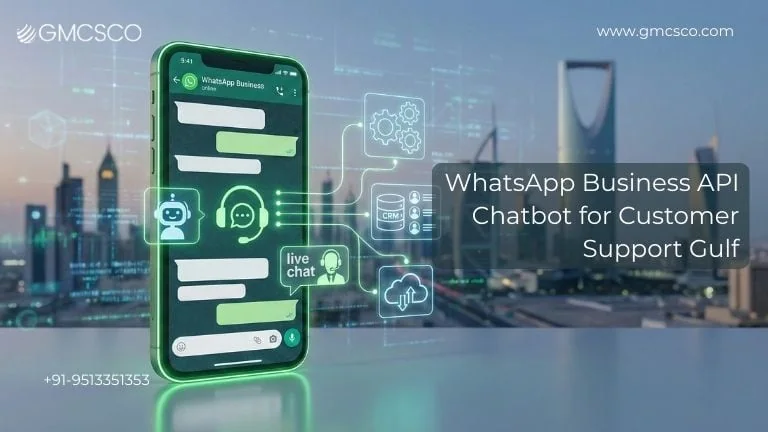
WhatsApp Business API chatbot for GCC customer support with automation, live chat and CRM integration

WhatsApp Business API Chatbot for Customer Support in the Gulf (2026 Guide): The Ultimate Automation Solution for UAE, Saudi, Qatar & GCC Businesses

Customer expectations across the Gulf region have changed dramatically over the past few years. Today’s customers in the UAE, Saudi Arabia, Qatar, Kuwait, Bahrain, and Oman expect: Instant replies 24/7 support availability Personalized service Seamless digital communication Traditional support channels like email, call centers, and live chat are no longer sufficient. This is why businesses across the GCC are rapidly adopting: WhatsApp Business API chatbot for customer support Gulf In fact, WhatsApp has become the #1 customer communication platform in the Middle East, with over 90% user penetration in most Gulf countries. Companies that implement WhatsApp support automation are seeing: 70% faster response times 50% reduction in support costs 3X higher customer satisfaction This guide explains everything businesses need to know about implementing WhatsApp chatbot customer support solutions in the Gulf — including benefits, use cases, pricing insights, and how to choose the right provider. Why WhatsApp is the Future of Customer Support in the Gulf Region The Gulf market has unique digital behavior patterns. Highest WhatsApp Usage in the World Countries like UAE and Saudi Arabia rank among the top globally in WhatsApp adoption. Customers prefer messaging over: Emails Phone calls Website forms This makes WhatsApp the most effective support channel. Mobile-First Consumer Culture Gulf customers primarily interact with businesses via smartphones. WhatsApp provides a convenient, real-time support experience. Demand for Instant Customer Service Customers expect immediate responses, especially in sectors like: E-commerce Banking Healthcare Travel Real estate This demand is driving adoption of WhatsApp customer support automation services Gulf. What is WhatsApp Business API Chatbot for Customer Support? A WhatsApp Business API chatbot is an AI-powered automation system that handles customer inquiries directly on WhatsApp. It enables businesses to: Automate support responses Manage large volumes of queries Provide 24/7 assistance Reduce support workload Improve customer experience This technology forms the backbone of WhatsApp customer support chatbot Gulf region solutions. Also Read About High Volume Messaging Strategies How WhatsApp Customer Support Automation Works The system operates through multiple integrated layers. Step 1: WhatsApp Business API Setup Businesses connect their official WhatsApp number to Meta’s API. Step 2: Chatbot Automation Engine AI chatbot handles: FAQs Support tickets Product inquiries Order tracking Step 3: CRM Integration Customer data is stored and synced for personalized service. Step 4: Human Agent Escalation Complex issues are automatically transferred to live agents. Step 5: Analytics & Reporting Businesses track performance metrics and optimize workflows. This end-to-end system defines WhatsApp Business API support automation Gulf. Also Read About WhatsApp Business API for Gulf Key Benefits of WhatsApp Chatbot Customer Service in GCC 24/7 Customer Support Availability Unlike human teams, chatbots operate continuously without downtime. This ensures customers receive instant assistance at any time. Reduced Operational Costs Businesses can automate up to 80% of support queries, reducing the need for large support teams. Faster Response Times WhatsApp chatbots respond instantly, improving customer satisfaction. Personalized Customer Experience Integration with CRM allows: Customer history access Personalized responses Context-aware communication Higher Customer Retention Rates Fast, reliable support builds trust and loyalty. Industries Benefiting from WhatsApp Customer Support Chatbots in the Gulf E-Commerce & Retail Automates: Order tracking Refund requests Product support Banking & Financial Services Handles: Balance inquiries Transaction alerts Fraud reporting Healthcare Supports: Appointment scheduling Patient follow-ups Prescription reminders Travel & Hospitality Automates: Booking confirmations Travel updates Customer assistance Real Estate Provides: Property details Viewing schedules Lead management Also Read About CRM Integration WhatsApp API UAE Enterprise WhatsApp Chatbot Customer Support Gulf: Advanced Capabilities Large organizations require enterprise-grade automation. Key features include: Multi-language support (Arabic & English) High-volume message handling AI intent detection Omnichannel integration Advanced analytics dashboards These solutions are categorized as Enterprise WhatsApp chatbot customer support Gulf. WhatsApp Chatbot Customer Service UAE Saudi Qatar: Regional Use Cases Each Gulf country has unique support needs. UAE Focus on: E-commerce automation Tourism support Banking services Saudi Arabia High demand for: Government services Healthcare automation Retail customer support Qatar Businesses prioritize: Luxury customer experiences High-touch support automation WhatsApp Support Automation Platform Gulf: Key Features to Look For Businesses should choose platforms offering: Official WhatsApp API access AI chatbot automation CRM integration Workflow automation Security compliance Real-time analytics How WhatsApp Customer Support Automation Improves ROI Businesses see measurable ROI improvements. Typical results include: 60% reduction in support costs 3X faster issue resolution Increased customer satisfaction scores Higher support team productivity Also Read About WhatsApp API for Modern Banking WhatsApp Business API Customer Support Provider Gulf: How to Choose Selecting the right provider is critical. Key Selection Criteria Official Meta Partnership Ensures reliable API access. Regional Experience Provider should understand Gulf market dynamics. Custom Automation Capabilities Solutions must be tailored to business needs. Integration Support CRM and ERP compatibility is essential. Ongoing Technical Support Continuous optimization ensures long-term success. Why GMCSCO is the Leading WhatsApp Chatbot Customer Support Provider in the Gulf If you want real business results — not just software — choosing the right partner matters. At GMCSCO, we specialize in delivering ROI-driven WhatsApp support automation solutions for Gulf businesses. What Makes GMCSCO Different? Official WhatsApp Business API Expertise We provide fully compliant API setup. Advanced AI Chatbot Development Our chatbots handle complex customer interactions seamlessly. Custom CRM Integration We connect WhatsApp with your existing systems for full automation. Local Gulf Market Experience We understand customer behavior in UAE, Saudi, Qatar, and GCC. Conversion-Focused Automation Strategy Our solutions don’t just support customers — they increase sales. Results Our Clients Achieve Businesses using GMCSCO solutions experience: Up to 80% reduction in support workload 3X faster response times Higher customer satisfaction rates Increased revenue through automation Also Read About WhatsApp Chatbot Integration with CRM KSA Future of WhatsApp Customer Support Automation in the Gulf (2026–2030) Upcoming trends include: AI voice chatbots Predictive support automation Advanced analytics dashboards Hyper-personalized customer journeys Omnichannel automation platforms These innovations will further strengthen WhatsApp’s dominance in customer support. FAQs – WhatsApp Customer Support Chatbots in the Gulf Q: What is WhatsApp Business API customer support automation? It allows businesses to automate customer service using AI chatbots

WhatsApp Business API Chatbot for Customer Support in the Gulf (2026 Guide): The Ultimate Automation Solution for UAE, Saudi, Qatar & GCC Businesses Read More »

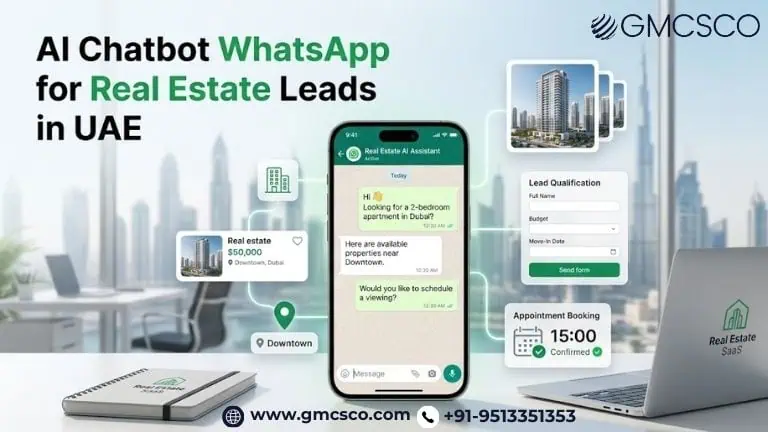
AI chatbot on WhatsApp for real estate lead generation in UAE

AI chatbot WhatsApp for real estate leads UAE

The Real Estate Lead Problem Most Companies Are Facing Real estate companies in the UAE generate thousands of property inquiries every month. These leads come from property portals, Google ads, social media campaigns, referral networks, and direct website visits. But generating leads is only the first step. The real challenge begins after the inquiry arrives. Many real estate firms struggle with slow response times, missed WhatsApp messages, unqualified leads, and overworked sales teams trying to manually respond to every property question. A potential buyer might send a message asking about an apartment in Dubai Marina at midnight. If the response arrives the next morning, the buyer may already be speaking with a competitor. Speed, convenience, and personalization now define the real estate buying journey. This is exactly why more real estate companies in the UAE are adopting AI chatbot WhatsApp solutions to capture, qualify, and nurture property leads automatically. Instead of relying entirely on manual responses, businesses are deploying intelligent conversational systems that engage potential buyers instantly through WhatsApp. And the results are transforming how property companies manage leads, close deals, and scale their marketing operations. Get WhatsApp Automation Plan Why Real Estate Companies in the UAE Need AI Powered WhatsApp Automation The UAE real estate market is one of the most competitive property ecosystems in the world. Cities like Dubai and Abu Dhabi attract global investors, international buyers, and high demand for both residential and commercial properties. With such a dynamic market, customer expectations have evolved rapidly. Buyers now expect instant communication, detailed information, and seamless digital experiences. Here are some of the most common operational challenges real estate companies face today. Slow Response to Property Inquiries Property buyers usually contact multiple real estate companies at the same time. The company that responds first often wins the conversation. Without automation, sales teams cannot realistically respond to every inquiry instantly. Sales Teams Spending Time on Low Quality Leads Not every property inquiry is a serious buyer. Sales representatives often spend hours answering repetitive questions from prospects who are still researching. This reduces time spent on high value prospects. Lead Management Across Multiple Platforms Leads come from many channels including: Property portals Google Ads campaigns Social media messages Website forms Direct WhatsApp messages Managing all these inquiries manually becomes inefficient. Repetitive Questions from Buyers Most property inquiries involve similar questions: What is the price? Is the apartment available? Can I schedule a viewing? Is financing available? What amenities are included? Handling these questions manually wastes valuable sales resources. Lost Leads After Business Hours Real estate inquiries often arrive late at night or during weekends. Without automated responses, potential buyers lose interest quickly. This is where AI powered WhatsApp chatbots are changing the entire lead management process. Businesses that want to improve response time, qualify property buyers faster, and manage high lead volumes efficiently should begin exploring how AI powered WhatsApp automation can transform customer communication. Also Read About WhatsApp Chatbot for Real Estate Lead Generation What Is an AI Chatbot WhatsApp System for Real Estate? An AI chatbot WhatsApp system is an automated conversational platform integrated with WhatsApp Business that allows real estate companies to interact with property buyers instantly. Instead of relying on manual responses from agents, the chatbot automatically handles inquiries, provides property information, and qualifies leads. The system uses conversational AI technology to understand customer questions and provide intelligent responses. Here is what the chatbot typically handles. Instant Lead Response When a potential buyer sends a WhatsApp message, the AI chatbot responds immediately. Property Information Sharing The chatbot can provide details such as: Property price Location information Amenities Availability Project brochures Floor plans Lead Qualification The chatbot can ask qualifying questions such as: Are you looking for investment or personal use Preferred location Budget range Property type Appointment Scheduling Interested buyers can book viewing appointments directly through the chatbot. Lead Routing to Sales Teams Once a lead shows high interest, the system transfers the conversation to a human sales agent. This combination of automation and human interaction significantly improves the buyer journey. Get Property Lead Automation Why WhatsApp Is the Most Powerful Channel for Real Estate Lead Generation WhatsApp is the most widely used communication platform in the UAE. Property buyers already use WhatsApp daily for personal communication, making it the most natural channel for real estate conversations. Here are several reasons WhatsApp automation works exceptionally well for property businesses. High Message Open Rates WhatsApp messages have extremely high open rates compared to email marketing. Most messages are read within minutes. Immediate Buyer Engagement Buyers feel comfortable asking questions through messaging instead of filling long forms. Faster Communication Conversations happen in real time which increases engagement. Multimedia Property Sharing Real estate companies can send images, videos, brochures, and location maps directly within WhatsApp. Personalized Customer Experience AI chatbots can provide tailored responses based on buyer preferences. This combination makes WhatsApp one of the most powerful tools for real estate lead conversion. If your real estate business receives frequent WhatsApp inquiries but struggles to respond consistently, implementing AI automation can significantly improve lead engagement and customer experience. Also Read About WhatsApp Marketing for Real Estate Agents Real World Use Cases of AI WhatsApp Chatbots in Real Estate Many forward thinking property companies are already using AI chatbots to improve operational efficiency. Here are several practical use cases. Property Inquiry Automation A potential buyer is asking about a two bedroom apartment in Downtown Dubai. The chatbot instantly responds with: Available listings Price range Images Property brochure Viewing options Smart Lead Qualification Instead of sending every lead to sales agents, the chatbot asks qualifying questions. Budget range Preferred location Investment or residence Purchase timeline Qualified leads are then routed to the appropriate agent. Automated Property Recommendations Based on the buyer’s preferences, the chatbot suggests relevant properties. This improves the customer experience and increases the chances of closing a deal. Viewing Appointment Booking Buyers can select available viewing slots directly through WhatsApp. The system updates the real estate CRM automatically. Investor Engagement

AI chatbot WhatsApp for real estate leads UAE Read More »

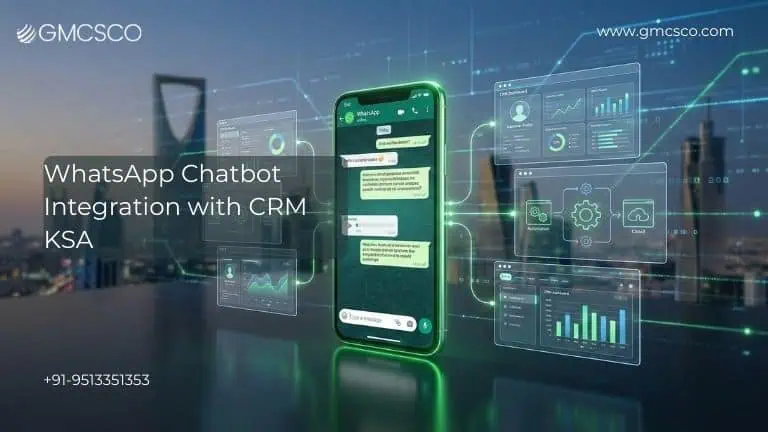
WhatsApp chatbot integration with CRM in KSA for Saudi business automation and customer data management

WhatsApp Chatbot Integration with CRM KSA (2026 Guide): Complete Business Automation Blueprint for Saudi Companies

Saudi Arabia is experiencing one of the fastest digital transformations in the Middle East. With Vision 2030 accelerating business modernization, companies across Riyadh, Jeddah, and Dammam are rapidly adopting AI-driven communication tools. Among these technologies, one solution stands out as a game-changer for customer engagement and automation: WhatsApp chatbot integration with CRM systems Businesses are no longer using WhatsApp only for messaging. Instead, they are transforming it into a fully automated sales, marketing, and customer support platform connected directly to their CRM systems. What is WhatsApp Chatbot CRM Integration? At its core, WhatsApp chatbot CRM integration Saudi Arabia refers to connecting WhatsApp Business API with a Customer Relationship Management (CRM) system. This integration allows businesses to: Automatically capture leads from WhatsApp Store customer data inside CRM Automate follow-ups and nurturing Track customer journeys Sync conversations in real time Trigger workflows and campaigns In simple terms:         WhatsApp becomes the front-end communication channel         CRM becomes the backend automation engine Together, they create a complete customer lifecycle management system. Also Read About CRM Integration with WhatsApp Business API Why WhatsApp CRM Integration is Booming in Saudi Arabia Several market factors are driving adoption across KSA. Massive WhatsApp Usage in Saudi Arabia Saudi Arabia has one of the highest WhatsApp penetration rates globally — over 85% of the population actively uses it. This makes WhatsApp the primary customer communication platform. Vision 2030 Digital Transformation Saudi government initiatives encourage businesses to adopt: AI automation Digital customer engagement Smart communication systems CRM-integrated WhatsApp automation perfectly aligns with this national strategy. Shift Toward Conversational Commerce Consumers in KSA prefer: Messaging over phone calls Instant responses Personalized experiences This is where WhatsApp chatbot CRM automation for businesses in KSA plays a crucial role. How WhatsApp Business API CRM Integration Works Understanding the technical flow is important before implementation. Step-by-Step Workflow Step 1: WhatsApp Business API Setup A verified API account is created through an official provider. Step 2: CRM Connection via Middleware Integration platforms connect: WhatsApp API CRM software Automation workflows Step 3: Chatbot Automation Layer AI chatbot handles: Lead qualification Customer queries Routing Step 4: Real-Time Data Sync Customer data is automatically: Stored in CRM Updated in pipelines Assigned to sales teams Step 5: Workflow Automation CRM triggers: Follow-ups Campaigns Notifications This entire process defines WhatsApp Business API CRM integration Saudi Arabia. Key Benefits of WhatsApp Chatbot CRM Integration Automated Lead Capture Every WhatsApp conversation automatically becomes a CRM lead. This eliminates manual entry and reduces errors. Faster Sales Conversions Sales teams receive instant lead notifications. This improves response time and close rates. Personalized Customer Experience CRM data allows chatbots to: Address customers by name Recommend relevant products Provide contextual responses Centralized Customer Data All communication history is stored in one place. This improves customer relationship management. Smart Workflow Automation Businesses can automate: Appointment scheduling Order updates Customer onboarding Feedback collection Also Read About WhatsApp Business API Chatbot Features for Enterprises in 2026 How to Integrate WhatsApp Chatbot with CRM KSA (Step-by-Step Guide) Businesses often ask: How to integrate WhatsApp chatbot with CRM KSA? Here’s a simplified process. Step 1: Choose WhatsApp Business API Provider You must select an official BSP offering: Secure hosting Local compliance support Reliable messaging infrastructure Step 2: Select CRM Platform Popular CRM choices in Saudi Arabia include: Salesforce HubSpot Zoho Microsoft Dynamics Step 3: Build Chatbot Automation Design chatbot workflows based on: Sales funnels Customer journeys Support requirements Step 4: Configure Data Sync Set rules for: Lead creation Contact updates Activity tracking Step 5: Test & Deploy Perform end-to-end testing before going live. WhatsApp Chatbot Integration with Salesforce Saudi Arabia Salesforce is one of the most widely used enterprise CRMs in KSA. Integration benefits include: Automatic lead creation Opportunity tracking Sales pipeline automation Case management sync This integration enables advanced Enterprise WhatsApp chatbot CRM integration Saudi Arabia for large organizations. WhatsApp Chatbot HubSpot Integration Saudi Arabia HubSpot is popular among SMEs and mid-sized businesses. Key advantages: Marketing automation sync Lead nurturing workflows Contact segmentation Campaign tracking This integration is ideal for growing businesses seeking scalable automation. Also Read About WhatsApp Business API Compliance Saudi Arabia 2026 Industries Using WhatsApp CRM Integration in KSA Real Estate Agents use integration to: Capture property inquiries Schedule viewings Track buyer journeys Healthcare Hospitals automate: Appointment bookings Patient follow-ups Medical reminders E-Commerce Retailers automate: Order confirmations Cart recovery Customer support Education Institutes use integration for: Student enrollment Course inquiries Fee reminders Enterprise WhatsApp Chatbot CRM Integration Saudi Arabia Large enterprises require advanced integration capabilities. Key features include: Multi-department workflows ERP integration AI analytics dashboards High-volume automation Role-based access control Enterprise integrations provide maximum scalability. WhatsApp CRM and Chatbot Integration Provider KSA: How to Choose Businesses should evaluate providers based on: Official Meta Partnership Ensures compliance and reliability. Local Saudi Compliance Expertise Important for data privacy regulations. AI Automation Capabilities Advanced NLP improves chatbot performance. Integration Flexibility Supports multiple CRM platforms. Support & Maintenance Services 24/7 technical assistance is crucial. ROI of WhatsApp Chatbot CRM Integration in Saudi Arabia Businesses typically see: 60% faster response times 3X higher lead conversions 40% reduction in operational costs Improved customer retention These benefits make integration a high-ROI investment. Also Read About Enterprise Use Cases for WhatsApp Business API in KSA Future Trends: WhatsApp CRM Integration in KSA (2026–2030) Upcoming innovations include: AI predictive lead scoring Voice-enabled chatbots Advanced analytics dashboards Omnichannel CRM automation Hyper-personalized messaging These trends will further increase adoption across Saudi industries. Why GMCSCO is the Best WhatsApp Business API CRM Integration Company Saudi Arabia At GMCSCO, we specialize in delivering end-to-end WhatsApp CRM automation solutions tailored for Saudi businesses. Our expertise includes: Official WhatsApp Business API setup Custom chatbot development CRM integration (Salesforce, HubSpot, Zoho) Automation workflow design Compliance-ready solutions Performance optimization We help businesses transform WhatsApp into a powerful revenue-generating platform. FAQs – WhatsApp Chatbot Integration with CRM KSA Q: What is WhatsApp chatbot CRM integration? It connects WhatsApp Business API with CRM software to automate lead management,

WhatsApp Chatbot Integration with CRM KSA (2026 Guide): Complete Business Automation Blueprint for Saudi Companies Read More »

Scroll to Top