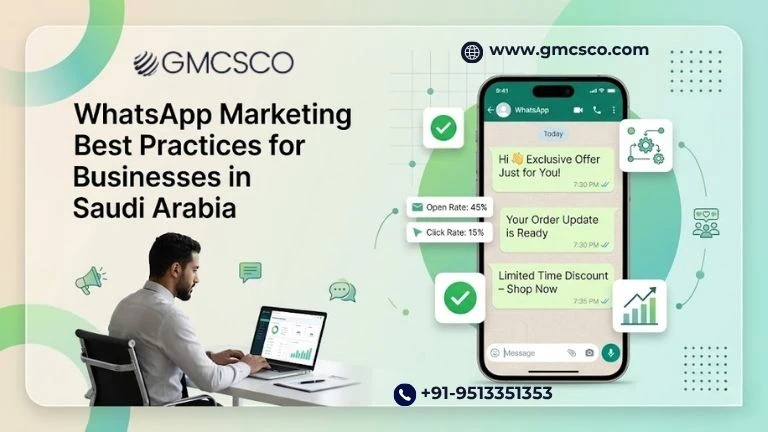
WhatsApp Marketing Best Practices for Businesses in Saudi Arabia
If you’re a business operating in Saudi Arabia today, you’ve probably noticed one thing very clearly. Traditional marketing channels are losing their effectiveness. Emails go unopened. Ads are ignored. Cold calls rarely convert. Meanwhile, your customers are actively using WhatsApp every single day. In fact, WhatsApp has become one of the most dominant communication platforms in Saudi Arabia, used across all age groups for both personal and business interactions. This shift has created a massive opportunity for companies. But here’s the catch. Most businesses are still using WhatsApp in a basic, unstructured way. They respond manually, send random messages, and lack a clear strategy. That’s where WhatsApp marketing in Saudi Arabia best practices come into play. When done right, WhatsApp can become a powerful channel for lead generation, customer engagement, sales conversion, and retention. This article will break down exactly how businesses in Saudi Arabia can leverage WhatsApp effectively, avoid common mistakes, and build scalable communication systems. Book Free Consultation today The Real Problem: Why Most Businesses Fail at WhatsApp Marketing in Saudi Arabia Before diving into strategies, it’s important to understand what’s going wrong. Many companies assume that simply being present on WhatsApp is enough. It’s not. Here are the most common issues businesses face: No structured messaging strategy Manual handling of customer queries Slow response times Lack of personalization No automation or segmentation Poor tracking of conversations and performance This results in missed opportunities, frustrated customers, and inefficient teams. In a market like Saudi Arabia, where customer expectations are rising rapidly, this gap can directly impact revenue. Why WhatsApp Marketing Matters in Saudi Arabia Today Saudi Arabia is undergoing a massive digital transformation under Vision 2030. Businesses are investing heavily in technology, customer experience, and automation. At the same time, consumers are becoming more digital-first. WhatsApp sits right at the intersection of these two trends. Here’s why it matters: High WhatsApp penetration across the population Strong preference for conversational communication Faster response expectations from customers Growing demand for personalized interactions Increasing competition across industries Globally, conversational marketing is becoming a key driver of business growth. In Saudi Arabia, this trend is even more pronounced. Companies that adapt early will gain a significant competitive advantage. Also Read About WhatsApp marketing strategy integration for Saudi businesses What Is WhatsApp Marketing in Simple Terms In Saudi Arabia WhatsApp marketing is the use of WhatsApp as a channel to communicate with customers for: Promotions and campaigns Customer support Order updates and notifications Lead nurturing Feedback collection But modern WhatsApp marketing goes beyond simple messaging. It involves: Automation using WhatsApp Business API AI-powered chatbots Customer segmentation Data-driven communication strategies In simple terms, it transforms WhatsApp from a messaging app into a complete customer engagement platform. Talk to Automation Expert Key Use Cases for WhatsApp Marketing in Saudi Businesses Lead Generation and Qualification Businesses can capture leads directly through WhatsApp ads or website integrations. Automated flows can qualify leads instantly by asking relevant questions. Customer Support Automation Instead of relying solely on human agents, businesses can use WhatsApp chatbot for business to handle common queries. This reduces response time and improves customer satisfaction. Order Updates and Notifications Ecommerce and service businesses can send: Order confirmations Delivery updates Payment reminders This builds trust and transparency. Personalized Marketing Campaigns Unlike email, WhatsApp messages have significantly higher open rates. Businesses can send targeted offers based on customer behavior. Appointment Scheduling Healthcare, salons, and service providers can automate booking confirmations and reminders. If you’re exploring how to implement these use cases effectively, it’s worth evaluating AI driven automation tools that can scale communication without increasing manpower. Also Read About WhatsApp Business API compliance in Saudi Arabia Step by Step Guide to Implement WhatsApp Marketing Step 1: Define Your Objectives Start with clarity. Ask yourself: Do you want more leads? Better customer support? Higher sales conversions? Your strategy will depend on your goals. Step 2: Choose the Right WhatsApp Solution There are two main options: WhatsApp Business App for small businesses WhatsApp API Saudi Arabia for scaling operations For serious growth, the API is essential. Step 3: Build Customer Segments Not all customers are the same. Segment based on: Purchase history Location Interests Behavior This allows more personalized communication. Step 4: Design Conversation Flows Plan how conversations will happen. For example: Greeting message Menu options Automated replies Escalation to human agents This is where business automation plays a crucial role. Step 5: Integrate AI Chatbots AI chatbots can: Answer FAQs Capture leads Recommend products Handle support queries This significantly reduces operational workload. Step 6: Launch Campaigns and Monitor Performance Track: Open rates Response rates Conversion rates Continuously optimize based on data. Businesses that invest in structured WhatsApp business automation early often see faster ROI and improved customer experience. Get WhatsApp Strategy Business Benefits of WhatsApp Marketing in Saudi Arabia Higher Engagement Rates WhatsApp messages are opened and read much faster than emails. Faster Customer Response Real-time communication improves customer satisfaction. Improved Conversion Rates Personalized conversations lead to better sales outcomes. Cost Efficiency Automation reduces dependency on large support teams. Stronger Customer Relationships Conversational interactions feel more human and direct. Scalable Communication With automation, businesses can handle thousands of conversations simultaneously. If your goal is to improve customer engagement WhatsApp KSA strategies, focusing on automation and personalization is key. Common Mistakes Businesses Must Avoid Even though WhatsApp is powerful, misuse can harm your brand. Sending Too Many Messages Over messaging leads to customer irritation and opt outs. Lack of Consent Always ensure users have opted in before sending messages. Generic Messaging Mass messaging without personalization reduces effectiveness. Ignoring Automation Manual handling limits scalability. No Clear Strategy Random messaging without goals leads to poor results. Businesses that treat WhatsApp as a strategic channel rather than a casual tool see significantly better outcomes. Also Read About WhatsApp marketing campaign ideas for Saudi businesses Future Trends in WhatsApp Marketing The future of WhatsApp marketing in Saudi Arabia is closely tied to AI and automation. Here are key trends to watch: AI Powered
WhatsApp Marketing Best Practices for Businesses in Saudi Arabia Read More »