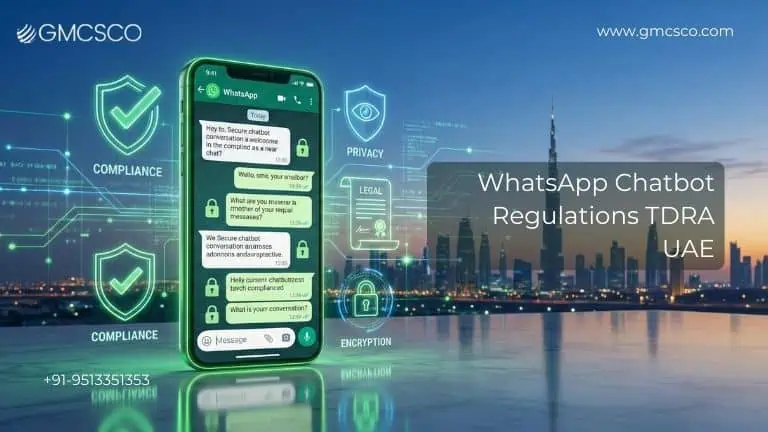
WhatsApp Chatbot Regulations TDRA UAE: The Ultimate 2026 Compliance Guide Every Business Needs
Hello to every UAE business owner, marketing head, or operations manager reading this. I remember sitting with a Dubai-based e-commerce client back in late 2024. They’d rolled out a slick WhatsApp chatbot that answered queries in Arabic and English, booked deliveries, and even upsold products. Within three weeks they got a warning letter from their telecom provider, followed by a AED 75,000 fine threat. The issue? They’d skipped proper opt-in consent and were sending promotional messages without TDRA-aligned records. That story plays out more often than you’d think. In 2026, WhatsApp chatbots are powerful but only if you treat WhatsApp chatbot regulations TDRA UAE with the respect they deserve. I’ve spent the last decade helping companies across the Gulf (including many GMCSCO clients) build compliant WhatsApp Business API systems that actually drive revenue instead of regulatory headaches. Today I’m laying out everything you need, straight talk, no fluff, latest 2025–2026 updates included so you can launch or fix your chatbot the right way. Whether you’re in retail, real estate, healthcare, logistics, or banking in Dubai, Abu Dhabi, or Sharjah, this guide covers the exact rules, step-by-step setup, common traps, and how to turn compliance into a competitive advantage. Let’s dive in. Why TDRA Regulations Matter for WhatsApp Chatbots in 2026 The Telecommunications and Digital Government Regulatory Authority (TDRA) isn’t just another bureaucracy, they’re the watchdog protecting UAE residents from spam, data misuse, and shady digital practices. With over 1.2 billion spam messages blocked in 2025 alone, TDRA has sharpened its focus on all electronic communications, including automated ones. WhatsApp itself isn’t banned (messaging works fine; voice/video calls are restricted unless using approved apps like BOTIM). But when you automate it with a chatbot especially via the official WhatsApp Business API you enter regulated territory. Key Reasons this matter right now: UAE’s digital economy is exploding. Consumers expect instant, personalized support on WhatsApp. PDPL (Personal Data Protection Law) enforcement is tightening even while executive regulations are finalized. Fines, number blocks, and reputational damage hit hard. One blocked Business API number can kill months of lead flow. Compliant chatbots actually convert better trust builds when customers know their data is safe. In short: Ignore TDRA WhatsApp compliance and you risk everything. Get it right and you unlock scalable, 24/7 customer engagement that feels personal. Also Read About WhatsApp Business API Compliance Saudi Arabia 2026 The Regulatory Framework: What Actually Governs WhatsApp Chatbots There isn’t one single “WhatsApp Chatbot Law.” Instead, four interlocking pieces apply in 2026: TDRA Unsolicited Electronic Communications Regulatory Policy (2022 – still fully in force) Primarily written for SMS but the principles explicitly cover “electronic communications with a UAE link.” Industry practice and TDRA guidance extend this to WhatsApp Business API marketing messages. Core rule: No unsolicited messages. You must prove explicit opt-in. Federal Decree-Law No. 45 of 2021 – Personal Data Protection Law (PDPL) Applies to any processing of personal data via electronic systems (yes, every chatbot conversation counts). Executive regulations are still pending as of February 2026, but the law itself is active and TDRA/Central Bank expect preparation. Consent must be informed, specific, and withdrawn. Data subjects have clear rights to access, correct, delete, and object to automated processing. WhatsApp Business Platform Policies (Meta’s rules) Mandatory for API users: approved message templates for proactive outreach, 24-hour customer service window for free-form replies, block-rate monitoring and strict prohibited content categories. Supporting Laws Federal Decree-Law No. 34 of 2021 on Combating Rumors and Cybercrimes (anti-spam, privacy invasion). Consumer Protection Law (no unauthorized marketing use of data). TDRA Consumer Protection Regulations. Bottom line: If your chatbot collects phone numbers, names, order details, or any personal info and especially if it sends marketing or automated replies you must comply with all four. Specific Compliance Requirements for WhatsApp Chatbots in UAE (2026) 1. Explicit Consent & Opt-In Double opt-in is the gold standard. Example: Customer fills a website form → receives WhatsApp message “Reply YES to chat with our team” → you record timestamp, content, and number. For marketing messages: Upload proof to your BSP’s consent system (many now integrate with TDRA-style logging). Every message must include a clear “STOP” or unsubscribe option. Keep records for minimum 2 years (TDRA policy) + PDPL retention rules. 2. Approved Message Templates All proactive (business-initiated) messages need WhatsApp pre-approval. Categories: Utility, Authentication, Marketing. No spammy language. No prohibited sectors (gambling, adult content, unapproved health claims). Cultural sensitivity: Respect UAE timing (no messages 9pm–7am where possible), Arabic/English balance, and local values. 3. Data Protection under PDPL Appoint a data protection officer or responsible person (recommended even if not yet mandatory). Privacy notice in your chatbot flow: “We process your data per PDPL. View our policy [link].” Store data securely — prefer UAE/GCC servers for sensitive info. Allow customers to request deletion (“Type DELETE MY DATA”). If using AI in your chatbot, disclose it clearly (Dubai Police guidance on AI chatbots). 4. Technical & Provider Requirements Must use official WhatsApp Business API through an authorised Business Solution Provider (BSP) — not the free WhatsApp Business App for scale. BSPs in UAE are TDRA-aware and help with compliance logging. No hosting on non-compliant servers that could bypass UAE content rules. 5. Record-Keeping & Reporting Consent logs, template approvals, conversation histories (where required), opt-out lists. Be ready to provide evidence to TDRA or Meta within days. Also Read About Your Simple Guide to WhatsApp API Compliance 2026 Step-by-Step: How to Launch a Fully Compliant WhatsApp Chatbot in UAE Choose the Right Partner: Work with a Meta-approved BSP experienced in Gulf compliance. (At GMCSCO we handle end-to-end — more on that below.) Get Your Business Verified: Official Business Account + green badge. Build Consent Mechanisms: Website pop-up, QR code at stores, double opt-in flow. Design Compliant Flows: Greeting template Menu options Human handover within SLA Privacy & unsubscribe at every branch Integrate with CRM/ERP: Secure API connections that respect data residency. Test & Audit: Run internal compliance check + third-party review. Go Live & Monitor: Track block rate (<1%