GMCSCO Media Group

Author name: Yash

WhatsApp automation tools comparison for enterprises in the Gulf region

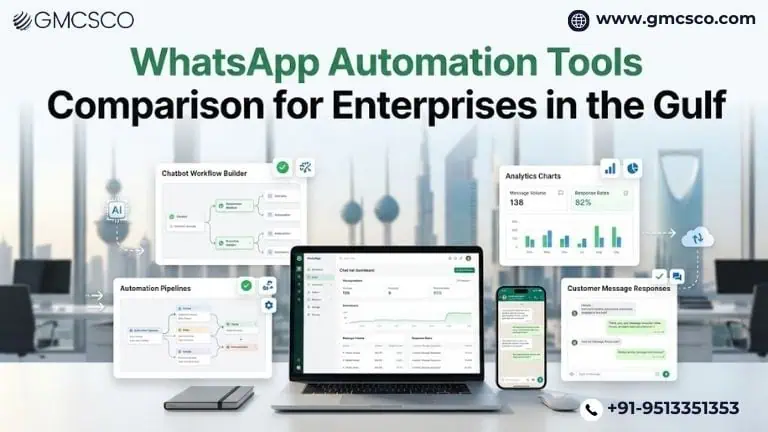
WhatsApp Automation Tools Comparison for Enterprises in the Gulf

Introduction: Why Gulf Enterprises Are Rapidly Adopting WhatsApp Automation Across the Gulf region, the way customers interact with businesses has changed dramatically. Traditional communication channels such as phone calls, emails, and website forms are no longer enough to meet modern expectations. Customers now want immediate responses, simple conversations, and convenient communication through messaging apps. In countries such as the UAE, Saudi Arabia, and Qatar, WhatsApp has become the most preferred communication channel for both personal and business interactions. Customers often contact businesses directly on WhatsApp to ask questions, request quotes, book services, or track orders. For small businesses, responding to these messages manually may still be manageable. However, for growing companies and large enterprises, handling hundreds or thousands of WhatsApp conversations every day quickly becomes overwhelming. Sales teams miss opportunities. Support teams struggle to respond quickly. Customers become frustrated with delayed replies. This is exactly why enterprises across the Gulf are investing in WhatsApp automation tools. These platforms combine the official WhatsApp Business API with artificial intelligence, chatbots, and automated workflows to help businesses manage customer conversations at scale. But choosing the right platform is not always straightforward. There are multiple tools in the market, each offering different capabilities. For decision makers, understanding how these platforms compare and which solution fits enterprise requirements is critical. This guide explains the key differences between WhatsApp automation tools, how enterprises in the Gulf are using them, and what businesses should consider before implementing automation. The Rise of Messaging Driven Customer Engagement in the Gulf Digital transformation initiatives across the Gulf Cooperation Council countries have significantly accelerated in recent years. Governments are investing heavily in smart cities, digital services, and AI technologies. At the same time, consumers across the region are among the most digitally connected populations in the world. Smartphone penetration in the UAE exceeds ninety percent. Messaging apps have become the primary communication channel for daily interactions. For businesses, this shift creates both an opportunity and a challenge. The opportunity is clear. WhatsApp allows companies to communicate with customers directly on a platform they already use daily. The challenge comes from scale. As customer inquiries increase, manual responses become inefficient and costly. Companies across sectors such as retail, real estate, healthcare, banking, travel, and education are now using messaging automation to manage customer engagement more effectively. Businesses that adopt automation early often see improvements in response times, customer satisfaction, and operational efficiency. Organizations exploring digital customer engagement strategies should evaluate how messaging automation can support both marketing and customer support functions. Also Read About WhatsApp Business API Providers Comparison for AI Automation What Are WhatsApp Automation Tools? WhatsApp automation tools are software platforms that allow businesses to automate conversations with customers through the official WhatsApp Business API. Instead of responding to every message manually, businesses can deploy intelligent chatbots and automated workflows that interact with customers in real time. These platforms typically include several important capabilities. AI powered chatbots that understand customer questions Automated responses triggered by customer messages Lead qualification workflows for sales teams Customer support automation Marketing broadcast messaging CRM integration for managing customer data Conversation analytics and performance tracking In simple terms, these platforms transform WhatsApp into a scalable customer engagement system. Businesses can respond to thousands of customer inquiries simultaneously while maintaining fast response times and consistent communication. For enterprises managing large volumes of customer interactions, automation becomes essential to maintain service quality and operational efficiency. Companies looking to improve digital customer experience often begin with messaging automation because it delivers quick and measurable results. Book Your Free Consultation Why Enterprises in the Gulf Are Prioritizing WhatsApp Automation There are several reasons why WhatsApp automation is gaining momentum among enterprises across the Gulf. Customer Expectations for Instant Communication Customers expect immediate responses when they send messages. Long response times often lead to lost sales opportunities. Automation ensures that customers receive quick responses even outside business hours. Rapid Growth of Digital Inquiries Businesses investing in online advertising campaigns frequently receive a large number of inquiries through WhatsApp. Chatbots help manage these inquiries efficiently. Rising Operational Costs Hiring large support teams to manage messaging manually increases operational expenses. Automation allows companies to scale communication without increasing staffing costs. Need for Consistent Customer Experience Automated systems ensure that customers receive accurate and consistent information every time they interact with the business. Data Driven Decision Making Automation platforms provide insights into customer behavior, conversation trends, and engagement patterns. This data helps companies improve marketing and service strategies. For organizations planning long term digital transformation, messaging automation has become an essential component of modern customer engagement. Businesses evaluating automation strategies should analyze how WhatsApp can support their sales, marketing, and support teams simultaneously. Also Read About Best WhatsApp Chatbot Tools Comparison for Businesses Key Features Enterprises Should Evaluate in WhatsApp Automation Platforms Not all WhatsApp automation platforms offer the same capabilities. Enterprises should evaluate several factors before choosing a solution. Conversational AI Capabilities Advanced platforms use artificial intelligence to understand customer intent and deliver meaningful responses. Basic rule based chatbots often struggle with complex conversations. CRM and System Integration Enterprises typically rely on CRM systems to manage customer relationships. Automation platforms should integrate seamlessly with these systems. Omnichannel Communication Many modern platforms support multiple communication channels such as WhatsApp, web chat, Instagram, and SMS. This allows businesses to manage conversations from a single interface. Marketing Campaign Automation Businesses often use WhatsApp to send promotional messages, product updates, and event announcements. Platforms should support targeted broadcast messaging. Workflow Automation Advanced tools allow companies to automate customer journeys based on specific triggers such as purchases, inquiries, or abandoned carts. Security and Compliance Enterprises must ensure that platforms comply with WhatsApp policies and regional data protection standards. Companies planning to implement messaging automation should evaluate these features carefully to ensure the solution supports long term scalability. Get WhatsApp Automation Advice Popular WhatsApp Automation Platforms Used by Businesses Several platforms provide WhatsApp automation capabilities. Each platform offers different strengths depending on business requirements. Twilio Twilio is

WhatsApp Automation Tools Comparison for Enterprises in the Gulf Read More »
WhatsApp Business API providers comparison for AI automation in UAE

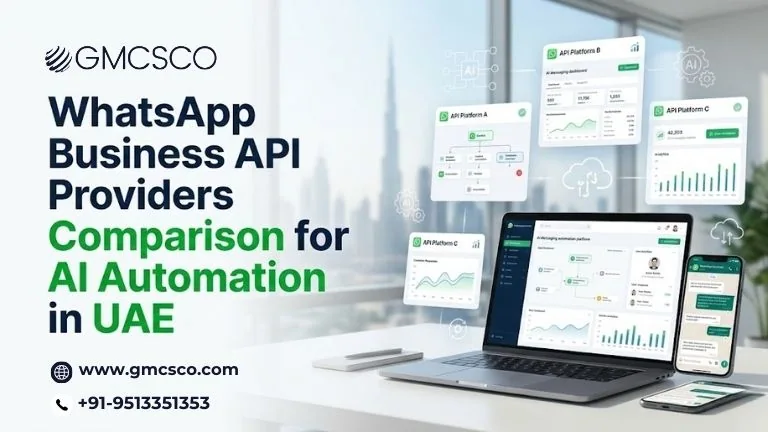
WhatsApp Business API Providers Comparison for AI Automation UAE

Introduction: Why Businesses Are Rethinking Customer Communication Across the Gulf region, businesses are undergoing rapid digital transformation. Governments, including Saudi Arabia through Vision 2030 initiatives, are encouraging organizations to modernize customer engagement, automate operations, and adopt artificial intelligence driven solutions. At the same time, customer expectations have changed dramatically. People no longer want to wait hours for support responses. They expect instant answers, seamless conversations, and personalized interactions across the channels they already use every day. One platform dominates this space in the Middle East. WhatsApp. With extremely high adoption across Saudi Arabia and the wider GCC, WhatsApp has become one of the most powerful business communication channels available today. Companies are increasingly moving beyond simple messaging and deploying advanced automation using the WhatsApp Business API. However, implementing WhatsApp automation at enterprise scale requires the right technology partner. Businesses must evaluate different WhatsApp Business API providers carefully to ensure reliability, compliance, AI capabilities, and seamless integration with their systems. This guide explores how WhatsApp Business API platforms work, how they enable AI automation, and how organizations in Saudi Arabia and the UAE can choose the right provider. If your organization is considering automation but unsure where to begin, this article will help you evaluate the landscape strategically. Why This Topic Matters for Businesses in Saudi Arabia and the GCC Saudi Arabia is currently experiencing one of the fastest digital transformation shifts in the region. Several factors are driving this change: Growing investment in artificial intelligence Strong push for digital services under Vision 2030 Expanding ecommerce and online services  Rising demand for instant customer communication At the same time, WhatsApp usage in Saudi Arabia is among the highest in the world. Many customers prefer messaging over phone calls or email. For businesses, this creates a major opportunity. Instead of relying on call centers or fragmented communication channels, organizations can deploy automated messaging solutions powered by AI directly inside WhatsApp. These solutions can handle customer inquiries, generate leads, process service requests, and even automate transactions. However, the success of such systems depends heavily on choosing the right WhatsApp Business API providers. Not all platforms offer the same level of scalability, AI capabilities, or enterprise integration. Before implementing automation, businesses should carefully evaluate their operational readiness, technology stack, and customer engagement goals. Get Free Consultation What Is WhatsApp Business API Providers WhatsApp Business API providers are authorized technology platforms that enable companies to integrate WhatsApp messaging into enterprise systems such as CRM, ERP, customer support tools, and AI automation platforms. These providers allow businesses to automate conversations, manage high message volumes, deploy chatbots, and create scalable customer engagement workflows. How WhatsApp Business API Automation Works in Real Business Environments Many organizations assume WhatsApp automation is simply about sending automated replies. In reality, enterprise implementations are far more sophisticated. A typical system works through several integrated components. 1. WhatsApp Business API Platform Businesses connect to WhatsApp through an official provider. This platform enables message delivery, conversation management, and compliance with WhatsApp policies. 2. AI Chatbot or Conversational Engine An AI chatbot interprets customer messages and responds intelligently. These bots can understand Arabic and English, which is critical for businesses operating in Saudi Arabia and the wider GCC. 3. CRM Integration Customer data is synchronized with platforms like Salesforce, HubSpot, or custom CRM systems. This allows the chatbot to personalize conversations using customer history and profile information. 4. ERP and Backend System Integration Operational workflows such as order tracking, appointment scheduling, billing inquiries, and service requests are connected to ERP systems. This ensures customers receive real time updates automatically. 5. Human Agent Handoff When a conversation becomes complex, the system transfers the chat to a human support agent while preserving the conversation history. 6. Analytics and Performance Monitoring Businesses track customer interactions, conversion rates, response time, and automation performance to continuously improve engagement. When implemented correctly, WhatsApp automation becomes a powerful operational engine for customer communication. Also Read About WhatsApp API vs Chatbot Comparison Real World Use Cases in the Saudi Market Many industries in Saudi Arabia are already adopting WhatsApp automation to improve operational efficiency and customer experience. Retail and Ecommerce Retail companies use WhatsApp automation for: Product inquiries Order tracking Automated promotions Personalized product recommendations AI driven conversational commerce enables customers to browse products, receive offers, and complete purchases directly through messaging. Healthcare Hospitals and clinics use WhatsApp automation for: Appointment scheduling Patient reminders Prescription refill requests Basic symptom guidance This reduces administrative workload while improving patient communication. Logistics and Delivery Logistics providers use automated WhatsApp notifications for: Shipment tracking Delivery confirmations Address verification Customer service support Customers receive real time updates without needing to call support centers. Real Estate Real estate agencies use WhatsApp chatbots for: Property inquiries Lead qualification Viewing appointment scheduling Automated follow up messaging This significantly increases lead conversion rates. Financial Services Banks and fintech platforms deploy WhatsApp automation for: Account updates Transaction notifications Loan inquiries Customer support Security compliant integrations ensure customer data protection. Enterprise Services Large organizations use WhatsApp automation for: IT service requests HR inquiries Internal support workflows Customer service management These systems reduce operational friction and streamline communication. Also Read About WhatsApp API Automation vs SMS Comparison Business Benefits and ROI Impact Organizations adopting WhatsApp automation typically experience measurable improvements across several business metrics. Faster Customer Response Automated systems respond instantly to customer inquiries, dramatically reducing response time. This improves customer satisfaction and builds trust. Reduced Operational Costs Automation significantly lowers the need for large call center teams handling repetitive queries. Support agents can focus on complex issues while chatbots manage routine interactions. Higher Customer Engagement WhatsApp has extremely high open rates compared to email or SMS. Businesses achieve stronger engagement through conversational messaging. Increased Revenue Opportunities AI powered messaging can recommend products, capture leads, and guide customers through purchase journeys. This transforms messaging into a revenue channel. Scalable Customer Communication As businesses grow, automation platforms handle increasing conversation volumes without expanding support teams. This scalability is essential for fast growing organizations. If your

WhatsApp Business API Providers Comparison for AI Automation UAE Read More »

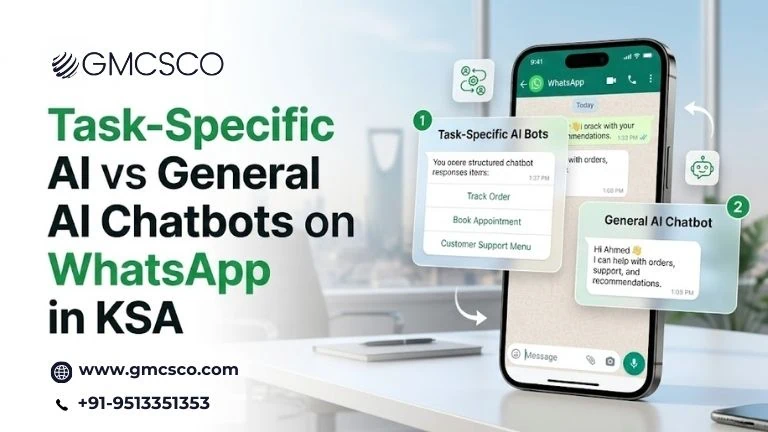
Task specific AI chatbots vs general AI chatbots on WhatsApp in Saudi Arabia

Task Specific AI Chatbots: The Future of WhatsApp Automation in Saudi Arabia

The Business Communication Challenge Facing Saudi Companies Across Saudi Arabia, customer expectations are evolving faster than most organizations can adapt. Consumers now expect: Immediate responses Personalized engagement Seamless digital communication Support through their preferred messaging platforms And in Saudi Arabia, that preferred platform is overwhelmingly WhatsApp. For businesses, this creates a major operational challenge. Customer service teams struggle with increasing message volumes. Sales teams miss opportunities because responses are delayed. Marketing teams cannot scale personalized engagement. At the same time, Saudi Arabia is accelerating digital transformation under Vision 2030, pushing companies to modernize operations, adopt AI technologies, and build digital customer experiences. Traditional chatbots helped automate simple responses. But many enterprises are now realizing that general AI chatbots alone cannot fully support complex business workflows. This is where task specific AI chatbots are becoming a powerful solution. They go beyond answering questions. They complete business actions. They book appointments. Process orders. Qualify leads. Track shipments. Handle service requests. And they do it directly inside WhatsApp conversations. For organizations across retail, healthcare, logistics, financial services, and enterprise services, this shift is redefining how customer engagement works. Before investing in automation, however, companies must understand the difference between general AI chatbots and task specific AI systems. Understanding that difference can determine whether an AI deployment becomes a strategic asset or a costly experiment. Also Read About WhatsApp AI Chatbot Automation for Gulf Enterprises Why This Topic Is Critical for Saudi Businesses Saudi Arabia is experiencing one of the fastest digital adoption rates in the Middle East. Several factors make AI powered messaging automation especially important in the Saudi market. WhatsApp Dominates Business Communication WhatsApp penetration in Saudi Arabia is among the highest globally. Millions of consumers use the platform daily for personal and business communication. For many customers, WhatsApp is the first channel they use to interact with brands. Companies that cannot respond quickly risk losing customers to competitors. AI Adoption Is Accelerating Organizations across Saudi Arabia are investing heavily in: artificial intelligence digital transformation initiatives automation platforms customer engagement technology Enterprise leaders are now exploring how AI chatbots integrated with WhatsApp Business API can streamline operations. Customer Experience Is Becoming a Competitive Advantage In industries such as retail, healthcare, logistics, and real estate, response time directly affects revenue. Businesses that provide instant support through WhatsApp are seeing higher customer satisfaction and stronger loyalty. Those relying on manual messaging are struggling to scale. Digital Transformation Is a National Priority Under Vision 2030, Saudi companies are expected to adopt advanced technology to improve efficiency and service delivery. AI powered automation aligns directly with this objective. Organizations that modernize their customer communication infrastructure today will gain a long term competitive advantage. For business leaders exploring automation, this is the right moment to evaluate readiness for AI powered WhatsApp engagement platforms. What Are Task Specific AI Chatbots Task specific AI chatbots are artificial intelligence systems designed to complete defined business actions such as booking appointments, processing orders, generating leads, or resolving service requests through conversational interfaces. Unlike general AI assistants that primarily generate responses, task specific AI chatbots integrate with enterprise systems and execute operational workflows directly within messaging platforms like WhatsApp. Also Read About AI Powered WhatsApp Chatbot for Saudi Businesses Task Specific AI vs General AI Chatbots Understanding the difference between these two approaches is essential for enterprises planning automation. General AI Chatbots General AI chatbots are designed for open ended conversation. Examples include conversational assistants powered by large language models. They are capable of: answering general questions generating text responses assisting with knowledge based queries However, they typically lack deep integration with enterprise systems. They may understand a request but cannot complete a business process such as placing an order or retrieving CRM data without additional infrastructure. Task Specific AI Chatbots Task specific AI chatbots are designed around business workflows. Their core purpose is not just conversation but execution of specific operational tasks. They integrate directly with enterprise platforms including: CRM systems ERP platforms  inventory management tools appointment scheduling systems payment gateways This allows them to automate real actions within a conversation. For example, a task specific AI chatbot on WhatsApp can: check order status from ERP schedule a clinic appointment qualify a sales lead initiate a support ticket send payment links confirm delivery updates The conversation becomes an automated service channel. For enterprises in Saudi Arabia, this capability unlocks far greater operational value than simple AI chat responses. Also Read About Enterprise Use Cases for WhatsApp Business API in KSA How Task Specific AI Chatbots Work in Real Saudi Business Environments Deploying task specific AI chatbots within WhatsApp involves several integrated technologies. 1. WhatsApp Business API Integration Businesses use the WhatsApp Business API to connect messaging infrastructure with enterprise platforms. This allows automated systems to manage high volumes of conversations securely. 2. Conversational AI Engine A conversational AI engine interprets customer messages and identifies intent. The system supports Arabic and English communication, which is essential for businesses operating across Saudi Arabia. Language understanding ensures that customers can interact naturally. 3. Business Logic Layer Once intent is detected, the chatbot executes the appropriate workflow. Examples include: retrieving customer data initiating a support request processing a booking generating a quote 4. CRM and ERP Integration Enterprise integrations allow the chatbot to access real time data. For example: retrieving customer profiles from CRM checking product availability in ERP accessing delivery status from logistics systems 5. Automated Response and Action Execution After processing the request, the chatbot performs the task and confirms the outcome. The entire experience feels like a natural conversation. This approach transforms WhatsApp from a simple messaging tool into a fully functional business service channel. Also Read About WhatsApp Chatbot for E-Commerce Stores Real World Use Cases in the Saudi Market Task specific AI chatbots are already transforming customer engagement across multiple industries in Saudi Arabia. Retail and E Commerce Retail companies use WhatsApp automation to: recommend products process orders send payment links track deliveries manage returns Customers receive instant service

Task Specific AI Chatbots: The Future of WhatsApp Automation in Saudi Arabia Read More »

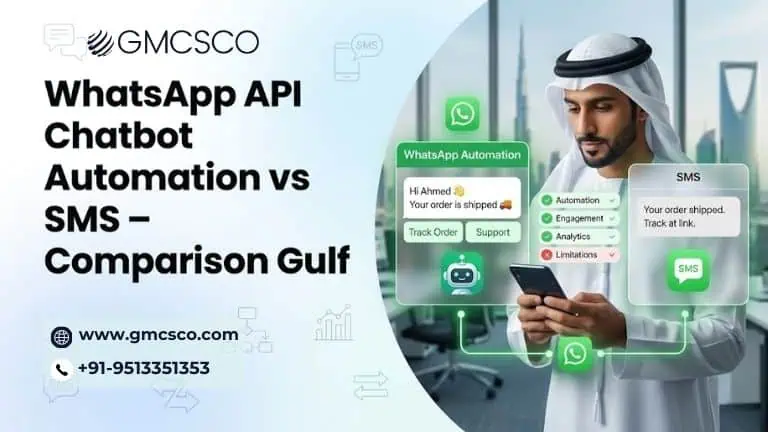
WhatsApp API chatbot automation vs SMS comparison for Gulf businesses

WhatsApp API Chatbot Automation vs SMS Comparison for Gulf Businesses

The Growing Communication Challenge Facing Saudi Businesses Saudi Arabia is experiencing one of the fastest digital transformations in the world. Under Vision 2030, organizations across retail, banking, logistics, healthcare, real estate, and government aligned sectors are rapidly modernizing customer engagement channels. Customers today expect immediate responses, personalized communication, and seamless digital experiences in Arabic and English. Traditional communication models are struggling to keep up. Many Saudi companies still rely heavily on manual SMS campaigns, call centers, or fragmented communication tools. These systems create operational inefficiencies, slow response times, and rising customer acquisition costs. At the same time, customer expectations have fundamentally changed. Consumers want conversations, not notifications. This shift is why enterprise leaders across the Gulf are evaluating WhatsApp API chatbot automation as a strategic alternative to SMS based communication. Before making that decision, businesses must clearly understand how both technologies compare in real operational environments. Why This Comparison Matters for Businesses in Saudi Arabia Saudi Arabia has one of the highest smartphone and messaging adoption rates globally. WhatsApp usage penetration exceeds most global markets, making it a dominant communication channel for both personal and business interactions. For enterprises in Riyadh, Jeddah, Dammam, and across the Kingdom, messaging channels are no longer marketing tools alone. They are becoming core infrastructure for customer experience. Several market forces are accelerating this shift: Rapid AI adoption across Saudi enterprises Rising customer service expectations Growth of digital commerce and mobile transactions Demand for automated customer journeys Need for scalable bilingual engagement Organizations evaluating messaging automation today are essentially deciding between legacy communication efficiency and intelligent conversational engagement. Businesses planning automation initiatives should begin by assessing whether their current communication model supports long term scalability and AI driven interaction. A structured automation readiness evaluation often reveals significant hidden opportunities. What Is WhatsApp API Chatbot Automation WhatsApp API chatbot automation is an enterprise messaging system that uses the official WhatsApp Business API combined with artificial intelligence to automatically manage customer conversations, service requests, notifications, and transactions through intelligent chat interactions without human intervention. Unlike traditional messaging tools, it enables two way conversational engagement integrated with business systems. How WhatsApp API Chatbot Automation Works in Saudi Business Environments In real enterprise deployments across Saudi Arabia, automation operates as part of a connected digital ecosystem rather than a standalone chatbot. Step 1: Business System Integration The WhatsApp Business API connects directly with: CRM platforms ERP systems Customer databases Order management platforms Payment gateways This allows conversations to access real customer data instantly. For example, a logistics company in Riyadh can automatically send shipment updates pulled directly from its ERP system. Also Read About WhatsApp automation for business Step 2: AI Conversation Engine AI powered chatbots understand customer intent in both Arabic and English. Customers can ask questions such as: Where is my order Book an appointment Request invoice copy Apply for financing The system responds instantly using structured workflows. Step 3: Automated Customer Journeys Automation manages entire interaction lifecycles including: Lead qualification Customer onboarding Service requests Payment reminders Support escalation Human agents intervene only when necessary. Step 4: Analytics and Optimization Enterprise dashboards measure: Response time Conversion rates Customer satisfaction Operational efficiency Saudi organizations increasingly rely on these insights for CX strategy improvement. Also Read About WhatsApp Business API for Gulf enterprises SMS Messaging in Gulf Enterprises SMS has historically been the default communication channel for businesses across GCC markets. It remains useful for basic alerts such as OTP verification or urgent system notifications. However SMS operates as a one direction communication model. Typical SMS limitations include: No conversational capability Limited personalization No media support Minimal automation intelligence Poor customer interaction tracking While SMS still serves operational purposes, enterprises seeking scalable engagement increasingly find it insufficient for modern customer expectations. WhatsApp API Chatbot Automation vs SMS Comparison Customer Engagement Experience SMS delivers messages. WhatsApp creates conversations. Customers can respond, ask questions, upload documents, and complete actions directly inside the chat interface. This dramatically improves engagement rates. Communication Richness WhatsApp supports: Images Documents Interactive buttons Catalogs Location sharing Voice notes SMS supports text only communication. For industries like real estate or healthcare, visual interaction significantly increases response quality. book your free consultation today. Automation Capability SMS automation typically stops at scheduled messaging. WhatsApp chatbot automation enables intelligent workflows powered by AI decision making. Businesses can automate entire customer journeys instead of isolated notifications. Cost Efficiency Over Time While SMS may appear cheaper initially, large scale enterprises often experience rising costs due to repeated campaigns and manual handling. Automation reduces dependency on call centers and manual operations, creating stronger long term ROI. Customer Trust and Brand Experience Verified WhatsApp business profiles increase credibility and brand trust. Customers recognize official communication instantly, reducing fraud concerns which are increasingly important within regulated Saudi sectors. Also Read About AI chatbot automation with WhatsApp API Real World Use Cases Across the Saudi Market Retail and Ecommerce Retail brands use automation for: Order confirmations Product recommendations Cart recovery Delivery updates A conversational approach increases repeat purchases and improves loyalty. Healthcare Providers Hospitals and clinics automate: Appointment booking Patient reminders Lab result notifications Insurance verification Automation reduces missed appointments and administrative workload. Logistics and Supply Chain Logistics companies deploy messaging automation to provide: Real time shipment tracking Delivery confirmations Driver coordination Customer updates Operational visibility improves dramatically. Real Estate Developers Property companies automate: Lead qualification Property sharing Viewing scheduling Buyer engagement Sales teams receive pre qualified leads rather than cold inquiries. Financial Services Banks and fintech organizations use AI chatbots for: Account notifications Loan inquiries Customer onboarding Service requests Secure conversational engagement enhances customer confidence. Also Read About WhatsApp API pricing and cost structure Enterprise Service Organizations Large enterprises streamline internal and external communication workflows through centralized messaging automation platforms. Business Benefits and ROI Impact Adopting WhatsApp API chatbot automation delivers measurable business value. Operational Efficiency Automation handles thousands of conversations simultaneously without increasing workforce size. Faster Customer Response Instant responses significantly reduce waiting time, a major CX differentiator in Saudi markets. Reduced Communication Costs

WhatsApp API Chatbot Automation vs SMS Comparison for Gulf Businesses Read More »

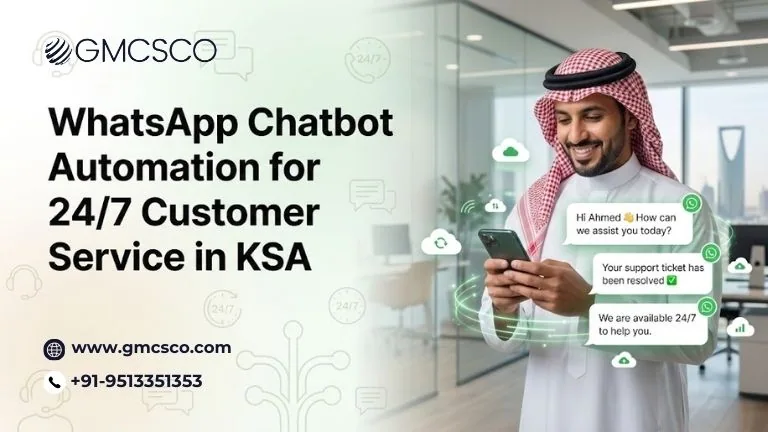
WhatsApp chatbot automation for 24/7 customer service in KSA

WhatsApp Chatbot Automation for 24/7 Customer Service KSA

Customer expectations in Saudi Arabia have changed dramatically over the past few years. Today’s customers expect instant replies. They message businesses late at night, during weekends, and even outside traditional working hours. Whether it is retail, healthcare, real estate, banking, logistics, or ecommerce, customers prefer messaging instead of calling or emailing. And one platform dominates business communication in the Kingdom. WhatsApp. For many companies in KSA, WhatsApp has quietly become the primary customer interaction channel. Sales inquiries, service requests, order tracking, appointment bookings, and complaints all arrive through one messaging window. The challenge is simple but serious. Businesses cannot keep human teams online 24 hours every day without increasing operational costs significantly. Missed messages lead to lost revenue. Slow responses reduce trust. Manual handling limits growth. This is where WhatsApp chatbot automation for 24/7 customer service KSA is transforming how modern organizations operate. Instead of hiring larger support teams, companies are deploying intelligent automation that responds instantly, qualifies leads, resolves queries, and supports customers around the clock. This article explains how businesses in Saudi Arabia are using WhatsApp automation strategically and how decision makers can implement it successfully. The Growing Customer Service Problem in Modern Businesses Most companies experience similar operational pain points before adopting automation. Increasing Message Volume As digital adoption grows across Saudi Arabia, customer conversations multiply quickly. Marketing campaigns, online ads, and ecommerce growth push thousands of conversations into WhatsApp daily. Manual teams struggle to keep up. Delayed Customer Responses Studies consistently show that customers expect responses within minutes. Waiting hours often means customers move to competitors. High Operational Costs Scaling human support teams requires recruitment, training, supervision, and infrastructure investment. Inconsistent Customer Experience Different agents provide different answers. Information gaps create confusion and reduce brand credibility. Limited Availability Traditional customer service operates during office hours while customers interact anytime. These challenges directly affect revenue growth and customer satisfaction. Businesses now need systems that work continuously without operational fatigue. Also Read About AI chatbot automation with WhatsApp API A Smart Move Many Saudi Businesses Are Exploring Organizations across retail, fintech, education, and healthcare sectors are now evaluating AI automation solutions that integrate directly with customer messaging platforms. Exploring conversational automation early allows companies to improve responsiveness while controlling operational expenses as they scale. Why WhatsApp Automation Matters in the Saudi and Global Business Environment Saudi Arabia is undergoing one of the fastest digital transformations globally under Vision 2030 initiatives. Consumers are mobile first. Messaging adoption rates are among the highest in the region. Several factors make WhatsApp automation especially relevant in KSA. Messaging Is the Preferred Communication Channel Customers trust messaging more than traditional communication channels. It feels personal, fast, and convenient. Multilingual Customer Base Businesses serve Arabic and English speaking audiences. Automation enables consistent multilingual communication without hiring large teams. Rapid E-commerce Expansion Online shopping growth demands instant customer assistance related to orders, payments, delivery updates, and returns. Competitive Market Landscape Companies that respond faster often win customers even when pricing is similar. Globally, AI driven customer engagement has shifted from innovation to operational necessity. Saudi companies adopting automation early gain measurable competitive advantage. Advisory Insight for Business Leaders If customer conversations already happen on WhatsApp, automation should not be viewed as future technology. It should be considered infrastructure for modern customer operations. What Is WhatsApp Chatbot Automation in Simple Terms A WhatsApp chatbot is an AI powered virtual assistant connected to WhatsApp Business API that automatically communicates with customers. It can understand customer questions, provide answers, guide conversations, and perform actions without human intervention. Think of it as a digital customer service representative available every second of the day. A well designed chatbot can: Answer frequently asked questions Capture and qualify leads Book appointments Provide product recommendations Track orders Route complex issues to human agents Send automated notifications Support sales conversations Modern conversational AI systems learn patterns from interactions and continuously improve response quality. The goal is not replacing humans. The goal is allowing human teams to focus on high value conversations while automation handles repetitive requests. Also Read About 24/7 WhatsApp AI support Real Business Use Cases of WhatsApp Chatbot Automation in KSA Retail and Ecommerce Companies Customers frequently ask about product availability, pricing, delivery timelines, and return policies. Automation instantly answers these questions and even recommends products based on customer intent. Result: faster conversions and reduced support workload. Real Estate Developers Property inquiries arrive day and night. Chatbots collect buyer preferences, budget range, and location interest before forwarding qualified leads to sales teams. Sales productivity improves significantly. Healthcare Providers Hospitals and clinics automate appointment booking, reminders, doctor availability checks, and patient instructions. Administrative workload drops while patient satisfaction increases. Banking and Financial Services Customers receive automated updates about account services, documentation requirements, or application status securely through messaging. Education and Training Institutes Institutions automate admission inquiries, course details, fee structures, and enrollment guidance. Lead response time reduces from hours to seconds. Practical Recommendation Companies seeing repeated customer questions daily usually achieve the fastest ROI after implementing messaging automation. book your free consultation today. Step by Step Guide to Implement WhatsApp Chatbot Automation Adoption becomes easier when approached strategically rather than technically. Step 1: Identify Customer Interaction Points Analyze incoming conversations. Common questions Support requests Sales inquiries Booking processes These become automation opportunities. Step 2: Define Business Objectives Decide what success looks like. Lead generation Customer support efficiency Sales automation Customer retention improvement Clear goals shape chatbot design. Step 3: Choose WhatsApp Business API Integration Enterprise level automation requires official API integration rather than basic WhatsApp Business apps. This ensures scalability and compliance. Step 4: Design Conversation Flow Effective chatbots feel natural. Conversation mapping includes greetings, intent recognition, decision paths, and escalation scenarios. Step 5: Integrate Business Systems The strongest automation connects with CRM platforms, ecommerce systems, payment gateways, and customer databases. This creates personalized conversations. Step 6: Train AI Models AI learns customer intent using real queries and language variations common in Saudi markets. Step 7: Launch and Optimize Continuous improvement based

WhatsApp Chatbot Automation for 24/7 Customer Service KSA Read More »

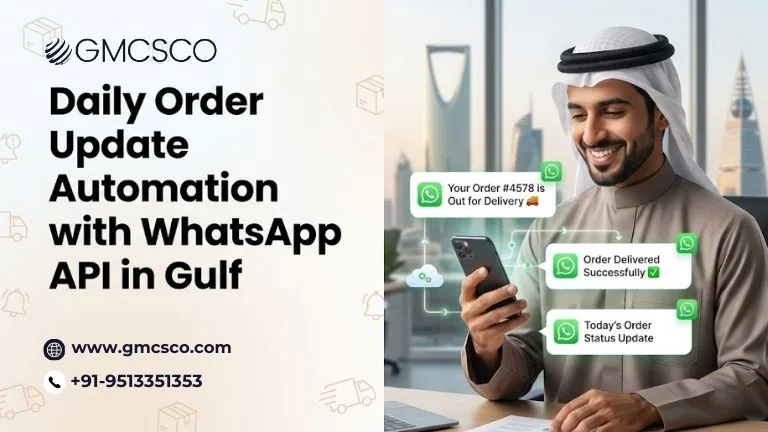
Daily order update automation with WhatsApp API in the Gulf showing delivery and status notifications

Daily Order Update Automation WhatsApp API Gulf

Introduction: Why Businesses Are Struggling With Daily Order Communication Every growing business eventually faces the same operational bottleneck. Orders increase. Customers expect faster updates. Support teams become overwhelmed answering repetitive questions like: Where is my order? Has my shipment been dispatched? When will delivery arrive? Across the Gulf region, especially in UAE, Saudi Arabia, Qatar, and Kuwait, customer expectations have shifted dramatically. Buyers now expect instant communication similar to global ecommerce leaders. Email updates often go unread. SMS lacks interaction. Manual customer service responses slow operations and increase costs. This is where daily order update automation using WhatsApp API in the Gulf is transforming how companies operate. Instead of teams manually sending updates, businesses now automate order confirmations, dispatch alerts, delivery tracking, payment reminders, and status notifications directly through WhatsApp, the most used communication platform in the region. For decision makers, this is no longer a technology experiment. It is becoming an operational necessity. The Growing Operational Challenges Businesses Face Today Modern businesses operate in an environment where speed defines competitiveness. Yet many organizations still rely on fragmented communication systems. Common Operational Problems Customer support teams answering repetitive order queries daily Delayed order status communication causing customer frustration High operational cost due to manual follow ups Missed delivery coordination between logistics and customers Poor visibility across order lifecycle stages Low customer satisfaction despite strong products In logistics, ecommerce, retail distribution, healthcare delivery, and B2B supply chains, communication delays directly impact revenue. When customers do not receive proactive updates, they contact support. When support volume increases, operational efficiency drops. The issue is rarely logistics itself. The real problem is communication automation. Businesses reviewing digital transformation initiatives should evaluate customer communication workflows first. Automating repetitive engagement often produces faster ROI than large system overhauls. Also Read About WhatsApp Business API automation for daily updates Why This Topic Matters in Today’s UAE and Gulf Business Environment The Gulf region is experiencing one of the fastest digital commerce expansions globally. Several regional factors make WhatsApp automation uniquely powerful here. 1. WhatsApp Dominates Business Communication In GCC countries, WhatsApp is the primary communication channel for both personal and business conversations. Customers prefer receiving updates there rather than logging into portals. 2. Rapid Ecommerce and Delivery Growth Same day delivery expectations have increased pressure on operational teams. Automated updates reduce uncertainty during fulfillment. 3. Multinational Customer Base Businesses serve customers speaking different languages. Automated WhatsApp systems can instantly deliver localized updates. 4. Government Driven Digital Transformation UAE and Saudi initiatives promoting smart business ecosystems encourage automation adoption. Organizations adopting conversational automation early gain long term competitive advantages. Strategic Consideration Executives evaluating customer engagement platforms should prioritize channels customers already trust instead of introducing new apps or portals. What Is Daily Order Update Automation Using WhatsApp API? In simple terms, this system automatically sends order related updates to customers via WhatsApp without human intervention. It connects your internal systems such as ecommerce platforms, ERP software, CRM systems, or logistics tools with the official WhatsApp Business API. Once integrated, communication becomes automatic. Example Workflow Customer places an order System confirms purchase instantly on WhatsApp Warehouse updates dispatch status Customer receives shipping notification automatically Delivery partner updates arrival time Customer receives live delivery update Post delivery feedback message is triggered All messages are sent automatically based on system events. No manual messaging required. Also Read About WhatsApp chatbot for customer order updates How WhatsApp API Automation Actually Works Many business leaders assume automation requires complex infrastructure. In reality, modern API based automation simplifies deployment. Step 1: WhatsApp Business API Setup Businesses obtain verified messaging access designed for medium and large scale communication. Step 2: System Integration The API connects with platforms such as: Ecommerce systems Order management software Inventory platforms Logistics tracking systems Customer databases Step 3: Workflow Automation Design Triggers are defined for events like: Order confirmation Payment success Shipment dispatch Out for delivery notification Delivery completion Delay alerts Step 4: Intelligent Messaging Logic Messages adapt dynamically using customer data. Names, order IDs, delivery times, and tracking links personalize communication automatically. Step 5: Analytics and Optimization Businesses track delivery rates, engagement, response actions, and operational improvements. Organizations exploring AI automation solutions often begin with order update workflows because implementation is practical and results appear quickly across customer satisfaction metrics. Real Business Use Cases Across the Gulf Region Ecommerce Companies Online retailers automate thousands of daily customer updates without expanding support teams. Result Reduced inquiry volume by up to 60 percent. Logistics and Courier Companies Delivery firms send automated arrival notifications reducing failed deliveries. Result Higher first attempt delivery success. Retail Distribution Businesses Wholesale distributors inform partners about shipment status automatically. Result Improved B2B coordination. Healthcare Supply Providers Medical suppliers notify hospitals about shipment movements and arrival schedules. Result Operational transparency and trust. Food and Quick Commerce Brands Real time preparation and delivery updates enhance customer experience. Result Stronger brand loyalty. Step by Step Adoption Guide for Business Leaders Step 1: Audit Current Communication Flow Identify how order updates are currently handled. Measure support tickets related to order tracking. Step 2: Identify Automation Opportunities Focus on repetitive communication stages first. Confirmation Dispatch Delivery updates Customer feedback Step 3: Select Scalable API Infrastructure Choose enterprise grade WhatsApp automation architecture capable of handling growth. Step 4: Design Customer Journeys Map communication experience from purchase to delivery completion. Step 5: Implement AI Chatbot Layer Allow customers to check order status instantly through conversational interaction. Step 6: Monitor Performance Metrics Track measurable improvements such as: Customer response time Support workload reduction Delivery success rates Customer satisfaction scores Also Read About WhatsApp automation workflows in the Gulf Advisory Insight Automation adoption works best when operations, marketing, and customer experience teams collaborate rather than treating messaging as an IT project alone. Business Benefits and ROI Impact Executives often ask one question. Does automation actually improve profitability? The answer is consistently yes when implemented correctly. Operational Efficiency Automated notifications eliminate manual coordination tasks. Teams focus on higher value work. Customer Experience Improvement Proactive updates reduce

Daily Order Update Automation WhatsApp API Gulf Read More »

Scroll to Top