GMCSCO Media Group

Author name: Admin

AI-powered WhatsApp chatbot in KSA 2026 for smart customer engagement and business automation

AI-Powered WhatsApp Chatbot KSA 2026: The Smartest Way Saudi Businesses Win Customers

Saudi Arabia is moving fast. From giga-projects like NEOM to national AI programs led by Saudi Data and Artificial Intelligence Authority, the Kingdom is building a future powered by artificial intelligence. Now here’s the reality in 2026: If your business in Saudi Arabia is not using an AI-powered WhatsApp chatbot, you are losing customers every single day. This isn’t hype. It’s happening across Riyadh, Jeddah, Dammam, and beyond. Let’s break it down in simple terms — what it is, why it matters, and how it can completely transform your business. Why WhatsApp Is King in Saudi Arabia In KSA, WhatsApp isn’t just a messaging app. It’s: A customer support channel A sales machine A booking system A payment gateway A marketing tool More than 85% of smartphone users in Saudi Arabia actively use WhatsApp. Customers prefer sending a message instead of calling. They don’t want to wait. They don’t want to fill long forms. They want instant replies. And that’s exactly where AI changes the game. What Is an AI-Powered WhatsApp Chatbot? An AI-powered WhatsApp chatbot is an intelligent system connected to the official WhatsApp Business API that can: Understand customer questions Reply instantly in Arabic or English Recommend products Book appointments Send invoices Process orders Escalate complex cases to humans This is not the old “Press 1 for English” bot. In 2026, AI chatbots in Saudi Arabia can understand Najdi dialect, Hijazi Arabic, and even Roman Arabic (Arabizi). They analyze intent, detect urgency, and respond naturally. It feels human — but works 24/7. Also Read About AI Chatbot & Automation Trends on WhatsApp API for Gulf Markets Why Saudi Businesses Are Rapidly Adopting AI Chatbots Saudi Arabia’s Vision 2030 is pushing digital transformation at full speed. Government ministries like the Ministry of Communications and Information Technology are actively supporting AI adoption across sectors. This has created a powerful shift: Customers expect fast digital service Businesses must reduce operational costs Competition is increasing AI chatbots solve all three. Real Example: A Riyadh E-commerce Store Let’s say you own an online perfume brand in Riyadh. Before AI: Customers message you manually Staff replies during office hours only Delays cause lost sales After AI chatbot implementation: Customer asks: “Is Oud Royal available?” Bot checks inventory instantly Shows product image Offers discount code Sends payment link Confirms delivery details All within 60 seconds. Result? Sales increase. Customer satisfaction increases. Staff workload decreases. Industries in Saudi Arabia Benefiting the Most E-Commerce & Retail AI handles product inquiries, order tracking, returns, and abandoned cart reminders. Healthcare Hospitals use chatbots for appointment booking, insurance verification, and follow-up reminders. Real Estate Bots qualify leads, schedule viewings, and send brochures instantly. Banking & Fintech Secure AI bots assist with balance checks, KYC processes, and loan eligibility screening. Education Universities automate admission inquiries and document submissions. Any industry with customer interaction can benefit. Cost Savings: The Numbers Make Sense Imagine you employ 6 customer support agents earning SAR 5,000 each monthly. That’s SAR 30,000 per month. An AI-powered WhatsApp chatbot can automate up to 60–70% of repetitive queries. Businesses in Saudi Arabia are reporting: 40% reduction in support costs 3–5x faster response times Higher lead-to-sale conversion Most companies recover their investment within 3–6 months. That’s not an expense. That’s an asset. Schedule your consultation Today Arabic Language Advantage in 2026 Earlier chatbots struggled with Arabic complexity. Now, advanced conversational AI supports: Gulf dialects Slang Voice message recognition Context-based understanding Customers feel understood. That builds trust. And trust builds revenue. Compliance and Data Protection in KSA Saudi Arabia has strict data protection laws under the Personal Data Protection Law (PDPL), supervised by Saudi Data and Artificial Intelligence Authority. When implementing a WhatsApp chatbot, businesses must ensure: Secure hosting Customer consent Encrypted communication Local compliance Working with a provider that understands Saudi regulations is critical. Security is not optional. The 2026 Trends Shaping AI Chatbots in Saudi Arabia 1. In-Chat Payments Customers can complete purchases inside WhatsApp without visiting a website. 2. Voice AI Bots can understand and reply to voice messages. 3. Predictive Messaging AI sends reminders before customers ask. 4. Emotion Detection The system identifies frustration and transfers to a human instantly. 5. Omnichannel Integration WhatsApp connected with Instagram, websites, and CRM systems. The future is seamless. Also Read About WhatsApp Business API Chatbot Features for Enterprises in 2026 Why Customers Trust WhatsApp More Than Websites Think about it. Would you rather: Fill out a form and wait 24 hours? Or Send a WhatsApp message and get a reply in seconds? WhatsApp feels personal. Direct. Immediate. And in Saudi culture, quick and respectful communication matters. How to Choose the Right AI Chatbot Provider in Saudi Arabia Before investing, ask these questions: Is the solution connected to the official WhatsApp Business API? Does it support Arabic dialects? Is it compliant with Saudi data laws? Can it integrate with your CRM or ERP? Do they provide local support? Don’t just buy software. Invest in a long-term automation partner. Voice Search Style Answers What is the best AI-powered WhatsApp chatbot solution in Saudi Arabia in 2026? The best solution is one that is officially integrated with WhatsApp Business API, supports Arabic dialects, complies with Saudi data laws, and offers CRM integration with measurable ROI. Frequently Asked Questions Q: Is an AI WhatsApp chatbot expensive in Saudi Arabia? It depends on complexity. Basic automation setups may start at a few thousand riyals, while advanced AI systems with CRM integration cost more. However, most Saudi businesses see ROI within months due to cost savings and increased conversions. Q: Can small businesses use AI chatbots? Yes. In fact, small businesses benefit the most. They can provide 24/7 support without hiring large teams, compete with bigger brands, and increase customer trust instantly. Q: Is WhatsApp automation legal in Saudi Arabia? Yes, as long as it follows Saudi data protection regulations and uses the official WhatsApp Business API. Compliance with PDPL guidelines is essential. Q: Do AI chatbots replace human staff? No. They handle repetitive tasks.

AI-Powered WhatsApp Chatbot KSA 2026: The Smartest Way Saudi Businesses Win Customers Read More »
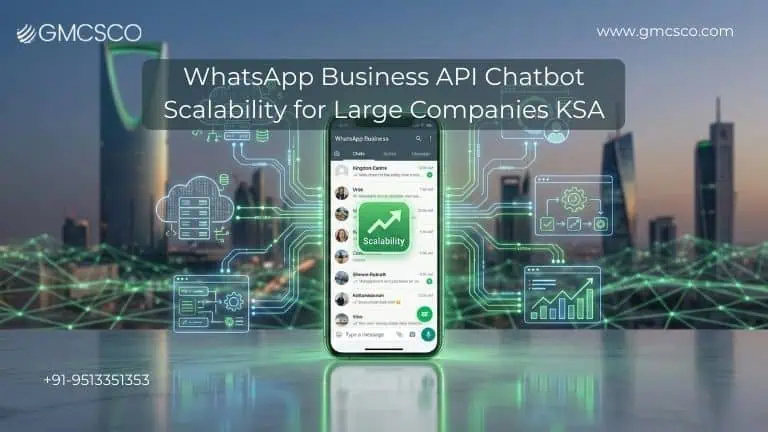
WhatsApp Business API chatbot scalability for large companies in KSA with enterprise automation features

WhatsApp Business API Chatbot Scalability for Large Companies KSA: The Complete 2026 Enterprise Guide

Hello from Victor Langford here. If you run operations for a major bank in Riyadh, a nationwide retail chain, or a logistics giant moving thousands of shipments daily across the Kingdom, you already know the pressure. Your customers expect instant answers on WhatsApp at any hour. One slow response or missed update and they switch to a competitor. Yet scaling that experience across hundreds of thousands of conversations without chaos or compliance headaches feels impossible with ordinary tools. That is exactly where WhatsApp business API chatbot scalability for large companies KSA becomes the game changer in 2026. I have spent the past year helping several of the biggest names in Saudi enterprise move from scattered support teams to fully automated, high volume systems that handle millions of messages every month while keeping quality ratings green and costs under control. Today I am sharing the exact playbook we use with GMCSCO clients so you can achieve the same results without trial and error. Whether your team already runs WhatsApp at modest scale or you are just evaluating the move to enterprise level, this guide covers the latest 2026 mechanics, real limits, KSA specific rules, proven steps, and the mistakes that quietly kill scaling efforts. Let us get straight into what actually works right now. Why Scalability Has Become Non Negotiable for Large Saudi Companies in 2026 Saudi Arabia sits at the heart of Vision 2030 digital transformation with over thirty three million active WhatsApp users checking the app more than thirty times a day. Open rates hover around ninety eight percent and response rates reach seventy percent. Compare that with email or traditional SMS and you see why every forward thinking enterprise now treats WhatsApp as the primary customer channel. For large companies the volume quickly becomes overwhelming. A single telecom operator might need to send bill reminders and support queries to hundreds of thousands daily. A retail group with two hundred stores wants to broadcast personalized offers, handle order tracking, and manage returns without hiring dozens of extra agents. Without proper WhatsApp business api chatbot scalability you hit walls fast: delayed replies, rising block rates, quality rating drops, and sudden throttling from Meta. The good news is that 2026 updates from Meta have removed many old bottlenecks. Portfolio level limits now start at one hundred thousand unique users per day after verification and can scale automatically to unlimited based on engagement. Cloud infrastructure handles five hundred messages per second and upgrades to one thousand when you prove consistent high volume. AI chatbots manage eighty percent of routine queries in Arabic including local Saudi dialect leaving your human teams free for complex issues. Large enterprises that get this right report sixty percent lower support costs, three times higher conversion on offers, and dramatically better customer satisfaction scores. Those who ignore scalability watch their numbers get restricted while competitors pull ahead. Also Read About WhatsApp Business API at Scale in GCC Enterprises How WhatsApp Business API Delivers True Enterprise Scalability in 2026 The platform now works at a completely different level compared with even twelve months ago. Here is what powers WhatsApp business API scalability for large companies KSA today. First the messaging limits operate across your entire business portfolio rather than per number. Once your company completes business verification and maintains a strong quality rating you unlock one hundred thousand daily unique recipients for business initiated template messages. Meta checks performance every six hours and automatically raises the ceiling when engagement stays high. Top performers reach unlimited capacity within weeks. Throughput follows the same upward curve. The recommended Cloud API starts at eighty messages per second and scales smoothly to one thousand when you consistently send over one hundred thousand messages in a twenty four hour window outside service windows. This means Black Friday style campaigns or monthly billing runs for millions of customers become routine instead of risky. Chatbot intelligence has matured too. Modern systems combine rule based flows with narrow task specific AI that understands intent, handles voice notes, processes payments, updates orders in your ERP, and escalates only when truly needed. Bilingual support including Saudi dialect keeps conversations natural. Multi agent inboxes let hundreds of team members work from the same official number without overlap or customer confusion. Integration depth is where the real power shows for large organizations. Connect directly to Salesforce, SAP, Oracle, local POS systems, delivery platforms, or custom CRMs so every message triggers or updates the right record automatically. No more copy paste between systems. Analytics dashboards track everything from response times to conversion rates giving leadership clear visibility at scale. KSA Specific Factors That Make or Break Scalability Operating at enterprise level in the Kingdom adds important layers. The Personal Data Protection Law demands explicit documented consent for every marketing or notification flow. You must store proof with timestamps and give users easy opt out plus data deletion rights. Fines can reach five million SAR for serious breaches so compliance cannot be an afterthought. The Communications and Information Technology Commission sets quiet hours and respects do not disturb lists. Smart enterprises send between eleven in the morning and eight at night and always include clear business identification. Data residency preferences under national guidelines favor keeping sensitive customer information inside Saudi borders where possible. Choose Business Solution Providers with local cloud options and encryption that meets NCA standards. Arabic language handling at scale requires tested natural language processing trained on Saudi expressions and slang. Generic bots fail here and damage quality ratings fast. Portfolio pacing introduced in 2026 helps enormously. Instead of blasting large batches at once the system sends small test groups first then accelerates based on real time feedback. This keeps block rates below one percent even at one million plus daily volume. Also Read About CRM Integration with WhatsApp Business API for UAE/KSA 2026 Step by Step Process to Build Scalable WhatsApp Operations Achieving reliable WhatsApp business API chatbot scalability follows a clear sequence that we repeat with every GMCSCO

WhatsApp Business API Chatbot Scalability for Large Companies KSA: The Complete 2026 Enterprise Guide Read More »

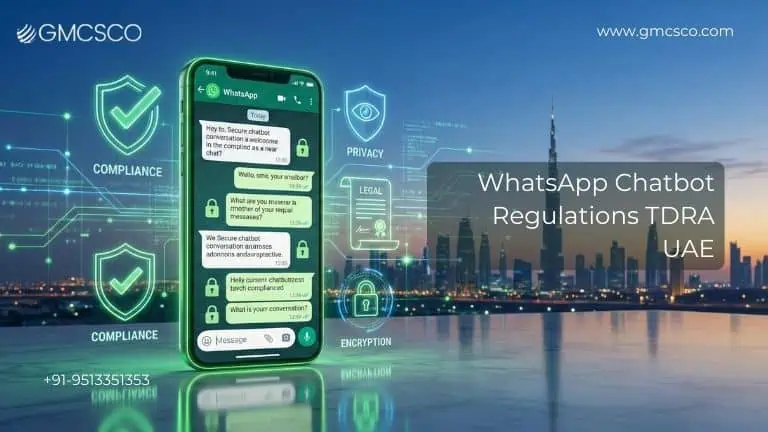
WhatsApp chatbot TDRA regulations UAE 2026 compliance guide for secure business messaging

WhatsApp Chatbot Regulations TDRA UAE: The Ultimate 2026 Compliance Guide Every Business Needs

Hello to every UAE business owner, marketing head, or operations manager reading this. I remember sitting with a Dubai-based e-commerce client back in late 2024. They’d rolled out a slick WhatsApp chatbot that answered queries in Arabic and English, booked deliveries, and even upsold products. Within three weeks they got a warning letter from their telecom provider, followed by a AED 75,000 fine threat. The issue? They’d skipped proper opt-in consent and were sending promotional messages without TDRA-aligned records. That story plays out more often than you’d think. In 2026, WhatsApp chatbots are powerful but only if you treat WhatsApp chatbot regulations TDRA UAE with the respect they deserve. I’ve spent the last decade helping companies across the Gulf (including many GMCSCO clients) build compliant WhatsApp Business API systems that actually drive revenue instead of regulatory headaches. Today I’m laying out everything you need, straight talk, no fluff, latest 2025–2026 updates included so you can launch or fix your chatbot the right way. Whether you’re in retail, real estate, healthcare, logistics, or banking in Dubai, Abu Dhabi, or Sharjah, this guide covers the exact rules, step-by-step setup, common traps, and how to turn compliance into a competitive advantage. Let’s dive in. Why TDRA Regulations Matter for WhatsApp Chatbots in 2026 The Telecommunications and Digital Government Regulatory Authority (TDRA) isn’t just another bureaucracy, they’re the watchdog protecting UAE residents from spam, data misuse, and shady digital practices. With over 1.2 billion spam messages blocked in 2025 alone, TDRA has sharpened its focus on all electronic communications, including automated ones. WhatsApp itself isn’t banned (messaging works fine; voice/video calls are restricted unless using approved apps like BOTIM). But when you automate it with a chatbot especially via the official WhatsApp Business API you enter regulated territory. Key Reasons this matter right now: UAE’s digital economy is exploding. Consumers expect instant, personalized support on WhatsApp. PDPL (Personal Data Protection Law) enforcement is tightening even while executive regulations are finalized. Fines, number blocks, and reputational damage hit hard. One blocked Business API number can kill months of lead flow. Compliant chatbots actually convert better trust builds when customers know their data is safe. In short: Ignore TDRA WhatsApp compliance and you risk everything. Get it right and you unlock scalable, 24/7 customer engagement that feels personal. Also Read About WhatsApp Business API Compliance Saudi Arabia 2026 The Regulatory Framework: What Actually Governs WhatsApp Chatbots There isn’t one single “WhatsApp Chatbot Law.” Instead, four interlocking pieces apply in 2026: TDRA Unsolicited Electronic Communications Regulatory Policy (2022 – still fully in force) Primarily written for SMS but the principles explicitly cover “electronic communications with a UAE link.” Industry practice and TDRA guidance extend this to WhatsApp Business API marketing messages. Core rule: No unsolicited messages. You must prove explicit opt-in. Federal Decree-Law No. 45 of 2021 – Personal Data Protection Law (PDPL) Applies to any processing of personal data via electronic systems (yes, every chatbot conversation counts). Executive regulations are still pending as of February 2026, but the law itself is active and TDRA/Central Bank expect preparation. Consent must be informed, specific, and withdrawn. Data subjects have clear rights to access, correct, delete, and object to automated processing. WhatsApp Business Platform Policies (Meta’s rules) Mandatory for API users: approved message templates for proactive outreach, 24-hour customer service window for free-form replies, block-rate monitoring and strict prohibited content categories. Supporting Laws Federal Decree-Law No. 34 of 2021 on Combating Rumors and Cybercrimes (anti-spam, privacy invasion). Consumer Protection Law (no unauthorized marketing use of data). TDRA Consumer Protection Regulations. Bottom line: If your chatbot collects phone numbers, names, order details, or any personal info and especially if it sends marketing or automated replies you must comply with all four. Specific Compliance Requirements for WhatsApp Chatbots in UAE (2026) 1. Explicit Consent & Opt-In Double opt-in is the gold standard. Example: Customer fills a website form → receives WhatsApp message “Reply YES to chat with our team” → you record timestamp, content, and number. For marketing messages: Upload proof to your BSP’s consent system (many now integrate with TDRA-style logging). Every message must include a clear “STOP” or unsubscribe option. Keep records for minimum 2 years (TDRA policy) + PDPL retention rules. 2. Approved Message Templates All proactive (business-initiated) messages need WhatsApp pre-approval. Categories: Utility, Authentication, Marketing. No spammy language. No prohibited sectors (gambling, adult content, unapproved health claims). Cultural sensitivity: Respect UAE timing (no messages 9pm–7am where possible), Arabic/English balance, and local values. 3. Data Protection under PDPL Appoint a data protection officer or responsible person (recommended even if not yet mandatory). Privacy notice in your chatbot flow: “We process your data per PDPL. View our policy [link].” Store data securely — prefer UAE/GCC servers for sensitive info. Allow customers to request deletion (“Type DELETE MY DATA”). If using AI in your chatbot, disclose it clearly (Dubai Police guidance on AI chatbots). 4. Technical & Provider Requirements Must use official WhatsApp Business API through an authorised Business Solution Provider (BSP) — not the free WhatsApp Business App for scale. BSPs in UAE are TDRA-aware and help with compliance logging. No hosting on non-compliant servers that could bypass UAE content rules. 5. Record-Keeping & Reporting Consent logs, template approvals, conversation histories (where required), opt-out lists. Be ready to provide evidence to TDRA or Meta within days. Also Read About Your Simple Guide to WhatsApp API Compliance 2026 Step-by-Step: How to Launch a Fully Compliant WhatsApp Chatbot in UAE Choose the Right Partner: Work with a Meta-approved BSP experienced in Gulf compliance. (At GMCSCO we handle end-to-end — more on that below.) Get Your Business Verified: Official Business Account + green badge. Build Consent Mechanisms: Website pop-up, QR code at stores, double opt-in flow. Design Compliant Flows: Greeting template Menu options Human handover within SLA Privacy & unsubscribe at every branch Integrate with CRM/ERP: Secure API connections that respect data residency. Test & Audit: Run internal compliance check + third-party review. Go Live & Monitor: Track block rate (<1%

WhatsApp Chatbot Regulations TDRA UAE: The Ultimate 2026 Compliance Guide Every Business Needs Read More »

WhatsApp Business API chatbot features for enterprises in 2026 – automation, analytics, cloud integration and business messaging solutions

WhatsApp Business API Chatbot Features for Enterprises in 2026

The Ultimate Guide for Large Businesses in Saudi Arabia and UAE In 2026, customer communication has completely transformed. Enterprises are no longer relying on emails, call centers, or traditional CRM systems alone. Today, customers expect instant responses, personalized support, and seamless communication across channels. This shift has made WhatsApp Business API chatbot for enterprises one of the most powerful tools for large organizations operating in competitive markets like Saudi Arabia and the UAE. With WhatsApp having one of the highest engagement rates globally and extremely strong adoptions across the Middle East, enterprises are now investing heavily in automation platforms that can manage millions of customer interactions efficiently. This guide will help you understand everything about enterprise WhatsApp chatbot solutions, including features, benefits, integrations, automation capabilities, and why they are essential for large scale businesses in 2026. Why Enterprises Are Adopting WhatsApp Chatbots in 2026 Large organizations deal with massive customer communication daily. From inquiries and support requests to sales follow ups and transaction notifications, managing this manually is no longer practical. An enterprise WhatsApp chatbot platform allows businesses to automate conversations while maintaining personalization and compliance with global messaging standards. In Saudi Arabia and the UAE, WhatsApp usage is among the highest in the world. Customers prefer messaging over phone calls or emails because it is faster, more convenient, and available anytime. Enterprises are adopting WhatsApp Business API enterprise solution because it helps them achieve three major goals. First, reducing customer support costs through automation. Second, improving response time and customer satisfaction. Third, increasing sales conversions through real time engagement. What is WhatsApp Business API for Enterprises WhatsApp Business API is not the same as the regular WhatsApp Business app. It is designed specifically for medium to large enterprises that need advanced automation, integrations, and scalability. It enables organizations to connect WhatsApp with CRM systems, help desks, marketing platforms, and enterprise software. A WhatsApp chatbot system for enterprise businesses works through AI powered automation that can handle thousands of conversations simultaneously without human intervention. Unlike basic chatbots, enterprise solutions are capable of managing complex workflows, secure transactions, multilingual communication, and personalized customer journeys. Also Read About Mastering WhatsApp Business API in 2026 Key Features of WhatsApp Business API Chatbots for Enterprises 1. AI Powered Conversational Intelligence Modern WhatsApp chatbot for large businesses uses advanced AI and natural language processing to understand customer intent accurately. This allows chatbots to provide human like responses instead of rigid scripted answers. AI enables businesses to offer personalized recommendations, answer complex questions, and guide customers through purchasing decisions. 2. Multi Language Support for Middle East Markets In Saudi Arabia and the UAE, customers speak multiple languages including Arabic, English, Urdu, and Hindi. An enterprise WhatsApp chatbot platform supports multilingual conversations automatically. This ensures businesses can communicate effectively with diverse customer segments without hiring multilingual support teams. 3. Seamless CRM Integration One of the most powerful features of WhatsApp chatbot integration for enterprises is the ability to connect directly with CRM systems. This allows enterprises to access customer history, purchase records, preferences, and past interactions instantly. It helps businesses deliver highly personalized experiences and improve customer retention. 4. Advanced Automation Workflows WhatsApp Business API automation for enterprises enables organizations to create sophisticated automation workflows. These workflows can include lead qualification, order tracking, appointment scheduling, payment reminders, and customer onboarding. Automation ensures that no customer inquiry goes unanswered and significantly reduces operational workload. 5. Real Time Customer Support Automation Large enterprises often struggle with support delays due to high inquiry volumes. Enterprise WhatsApp chatbot services provide instant responses to frequently asked questions, troubleshooting steps, and service updates. This reduces dependency on call centers and improves customer satisfaction rates. 6. Broadcast Messaging with Compliance Enterprises can send targeted promotional campaigns, transactional notifications, and service alerts through WhatsApp automation platform for enterprises. Unlike spam messaging, these campaigns are highly regulated and permission based, ensuring compliance with WhatsApp policies. This results in significantly higher open and engagement rates. 7. Secure Payment and Transaction Support Modern enterprise WhatsApp chatbot solutions can integrate secure payment gateways. Customers can complete purchases, pay invoices, or renew subscriptions directly within WhatsApp conversations. This creates a frictionless buying experience and boosts revenue. 8. Analytics and Performance Tracking Enterprise level WhatsApp chatbot system for enterprise businesses includes advanced analytics dashboards. These dashboards provide insights into customer behavior, response rates, conversion metrics, and chatbot performance. Businesses can continuously optimize their automation strategies based on real time data. Also Read About WhatsApp Business API Pricing 2026 Benefits of WhatsApp Chatbot Solutions for Enterprises 1. Improved Customer Experience Customers receive instant responses 24 hours a day, leading to faster issue resolution and better engagement. 2. Reduced Operational Costs Automation significantly reduces the need for large customer support teams, saving enterprises substantial operational expenses. 3. Increased Sales and Conversions Real time interaction with customers improves lead nurturing and boosts conversion rates. 4. Enhanced Customer Retention Personalized communication strengthens customer relationships and loyalty. 5. Scalable Communication Enterprises can manage millions of conversations simultaneously without increasing workforce. Why WhatsApp Chatbots Are Essential for Saudi Arabia and UAE Enterprises The Middle East market has unique characteristics that make WhatsApp particularly powerful. Mobile first consumer behavior is extremely strong. WhatsApp is the most trusted communication platform in the region. Customers prefer instant messaging over traditional communication channels. High smartphone penetration ensures accessibility across all demographics. These factors make WhatsApp Business API enterprise solution an essential tool for enterprises operating in Saudi Arabia and the UAE. Industries Using Enterprise WhatsApp Chatbots in 2026 Banking and financial services use chatbots for transaction alerts and customer support. Retail and ecommerce companies use them for order updates and promotions. Healthcare organizations use them for appointment reminders and patient communication. Travel companies use them for booking confirmations and itinerary updates. Real estate firms use them for lead qualification and property inquiries. Education institutions use them for admissions support and student engagement. Also Read About CRM Integration with WhatsApp Business API Key Components of an Enterprise WhatsApp Chatbot Platform AI

WhatsApp Business API Chatbot Features for Enterprises in 2026 Read More »

Best WhatsApp chatbot providers in UAE 2026 – business automation dashboard with WhatsApp integration and Dubai skyline

Best WhatsApp Chatbot Providers UAE (2026 Guide for Businesses)

Introduction: Why WhatsApp Chatbots Are Dominating UAE Businesses in 2026 The UAE has rapidly become one of the most digitally advanced markets in the world. With smartphone penetration above 95% and WhatsApp being the most widely used messaging platform across Dubai, Abu Dhabi, and other Emirates, businesses are shifting their communication strategies toward automation and conversational marketing. Today, customers in the UAE don’t want to fill forms, wait on emails, or sit on long phone calls. They want instant responses — preferably on WhatsApp. That’s exactly why demand for a WhatsApp chatbot service provider UAE has skyrocketed in recent years. From real estate agencies in Dubai to healthcare providers in Abu Dhabi and e-commerce brands across the GCC region, companies are investing heavily in WhatsApp automation to generate leads, support customers, and increase conversions. What Is a WhatsApp Chatbot? A WhatsApp chatbot is an automated messaging system that communicates with customers on WhatsApp using AI, predefined workflows, or rule-based automation. It works through the official WhatsApp Business API chatbot UAE, which allows businesses to: Send automated replies Manage customer conversations at scale Integrate CRM systems Run marketing campaigns Generate and nurture leads Unlike the regular WhatsApp Business App, the API is designed for companies handling large volumes of customer interactions. Businesses in UAE must partner with an official WhatsApp Business Solution Provider (BSP) to access the API. Why UAE Businesses Need WhatsApp Chatbot Solutions in 2026 High WhatsApp Usage in UAE WhatsApp is the most commonly used communication tool in the UAE. Even though voice and video calls may have restrictions, business messaging via the API remains fully allowed and widely used. This makes it the most effective channel for customer engagement. Instant Customer Expectations UAE customers expect: Instant replies Personalized communication 24/7 support Manual teams cannot handle this at scale, but WhatsApp chatbot solutions UAE can. Lead Generation Power Businesses using WhatsApp automation report: Faster response time Higher conversion rates Increased customer engagement This is because personalized messaging on WhatsApp significantly boosts ROI. Scalability Through Automation The WhatsApp Business API enables: Multi-agent support Automated workflows High-volume messaging It is designed specifically for large-scale business communication. Also Read About WhatsApp Business API Guide Types of WhatsApp Chatbots in UAE Understanding chatbot types helps businesses choose the right WhatsApp chatbot platform UAE. Rule-Based Chatbots These follow predefined workflows and are ideal for: FAQ automation Appointment booking Lead qualification AI-Powered Chatbots These use natural language processing and machine learning. Best for: Complex conversations Personalized responses Customer support automation Hybrid Chatbots Combination of automation + human support. Most popular in UAE businesses. Also Read About WhatsApp Business API Services for UAE/KSA Key Features to Look for in a WhatsApp Chatbot Company UAE Before selecting a provider, businesses should evaluate these critical factors: Official WhatsApp API Access The provider must be an official Meta-approved BSP. This ensures:         Compliance         Security         Message delivery reliability Automation Capabilities A good WhatsApp automation services UAE provider should offer: Workflow automation Campaign management AI chatbot integration CRM Integration Integration with CRM systems helps manage leads and track customer journeys effectively. Analytics and Reporting Important for measuring campaign performance and ROI. Local Compliance Knowledge Providers must understand UAE regulations related to: Data protection Business verification Telecom laws Also Read About How to Create a WhatsApp Chatbot Top WhatsApp Chatbot Providers UAE (2026 List) Here are some well-known providers operating in UAE. Global Enterprise Providers These companies offer enterprise-level solutions. Infobip Omnichannel communication platform widely used in UAE. Twilio Developer-friendly API with customizable workflows. Sinch Enterprise-grade messaging infrastructure. These global providers are known for high scalability and secure messaging delivery. UAE-Focused WhatsApp Platforms These include: WATI Rasayel GMCSCO YCloud Direct7 Networks They provide localized WhatsApp Business automation tools tailored to UAE businesses. Dubai-Based WhatsApp Solution Providers Some local agencies offering WhatsApp chatbot integration UAE include: Digital Gravity Prism Digital Convex Interactive Webotix These companies specialize in regional business solutions. Emerging WhatsApp Automation Companies Other providers include: Clickatell Tyntec Karix 360Dialog They focus on automation, CRM integration, and omnichannel communication. Why GMCSCO Is Among the Best WhatsApp Chatbot Providers UAE GMCSCO stands out as a reliable WhatsApp chatbot company UAE because it offers: End-to-End WhatsApp Automation From API setup to chatbot development and campaign management. Industry-Specific Chatbot Solutions GMCSCO builds customized chatbots for: Real estate Education Healthcare E-commerce Travel Advanced AI + Automation Integration Their chatbots combine AI intelligence with rule-based workflows for maximum efficiency. CRM & Marketing Integration GMCSCO integrates WhatsApp chatbots with: CRM systems Lead management tools Marketing automation platforms UAE-Focused Strategy GMCSCO understands: Local market trends Customer behavior Compliance requirements Also Read About WhatsApp Business API Chatbot Features Cost of WhatsApp Chatbot Development UAE Pricing varies depending on features and scale. Typical costs include: API setup fees Message conversation charges Chatbot development cost Monthly platform fees For example, marketing messages in UAE cost around AED 0.16 per conversation. WhatsApp Business API Requirements in UAE To use the API, businesses need: Verified Meta Business Account Valid business registration documents Website and email verification These are mandatory for approval. 2026 Trends in WhatsApp Chatbot Solutions UAE AI-Driven Personalization Chatbots now analyze customer behavior to provide tailored responses. Conversational Commerce Businesses are enabling full purchases inside WhatsApp chats. CRM-Integrated Automation WhatsApp is becoming a central communication hub. Compliance-Focused Automation Due to regulatory changes, chatbot workflows are becoming more structured. Schedule your consultation Today. How to Choose the Best WhatsApp Chatbot Provider Dubai Consider these steps: Define business goals Compare features Check automation capabilities Review client testimonials Request demo Benefits of WhatsApp Chatbot Integration UAE Key advantages include: 24/7 customer support Faster lead response Increased sales conversions Automated follow-ups Reduced operational costs Future of WhatsApp Business Automation UAE The future of WhatsApp automation will include: AI-driven sales assistants Voice-enabled bots Hyper-personalized messaging Predictive customer engagement Businesses adopting these technologies early will gain competitive advantages. Conclusion In 2026, WhatsApp chatbots are no longer optional for UAE businesses — they are essential for

Best WhatsApp Chatbot Providers UAE (2026 Guide for Businesses) Read More »

WhatsApp Business API pricing and local billing updates for KSA and UAE enterprises in 2026 showing SAR and AED regional cost dashboard.

WhatsApp Business API Pricing and Local Billing Updates for KSA/UAE Enterprises in 2026

Ahlanwasahlan, fellow Gulf business leaders! As 2026 unfolds in the dynamic markets of Saudi Arabia and the UAE, where Vision 2030 and UAE’s Centennial 2071 are driving unprecedented digital growth, WhatsApp Business API continues to be a cornerstone for enterprise communication. With smartphone penetration exceeding 99% in both regions and billions of daily messages exchanged, big players in Riyadh, Dubai, Jeddah, and Abu Dhabi are using this tool to enhance customer engagement, streamline operations, and boost conversions in sectors like finance, retail, and logistics. However, navigating pricing can feel like a puzzle—Meta’s 2026 updates introduce per-message billing refinements, local currency support in SAR and AED, and AI-driven optimizations that make it more cost-effective for high-volume users. In this comprehensive guide (clocking in at over 2000 words), we’ll break down the current pricing structure in USD bases with regional equivalents, explore how AI can slash your bills while enhancing efficiency, provide light comparisons to common industry alternatives (without naming specifics), share best practices, case studies, and trends. Keep in mind: These rates are Meta’s published standards, but your final pricing will always be customized after a detailed discussion of your enterprise’s requirements—such as message volume, AI integrations, CRM linkages, and compliance needs. This ensures a tailored fit that maximizes value without surprises. Let’s start with the fundamentals of Meta’s 2026 pricing model. Following the 2025 shift toward greater transparency, billing is now primarily per-delivered message for outbound templates (messages you initiate outside a 24-hour user response window). This replaces some older conversation-based elements in certain markets, making it simpler for enterprises to predict costs based on actual usage. Messages are categorized into three main types: Marketing (promotional content like offers or newsletters), Utility (transactional updates such as order confirmations or appointment reminders), and Authentication (security-focused like OTPs or verification codes). Service messages—replies to user inquiries—are free as long as they’re sent within 24 hours of the user’s last message, encouraging responsive, customer-centric interactions. Also Read About WhatsApp Business API Services for UAE, KSA, USA & Beyond In USD terms (Meta’s global benchmark, adjusted regionally), the base rates as of February 2026 are: Marketing messages: $0.0455 to $0.0499 per delivered message. Utility messages: $0.0107 to $0.0157 per delivered message. Authentication messages: $0.0107 to $0.0157 per delivered message. Service messages: Free within the 24-hour window. For KSA and UAE enterprises, the real game-changer is local currency billing. Rolled out progressively since Q1 2026, this means invoices in Saudi Riyals (SAR) for KSA-based businesses and UAE Dirhams (AED) for those in the Emirates, eliminating currency conversion fees that could add 2-5% to your costs. Approximate local equivalents (based on current exchange rates and Meta’s regional adjustments): In KSA (SAR): Marketing ~0.17–0.21, Utility/Authentication ~0.04–0.06. In UAE (AED): Marketing ~0.16–0.18, Utility/Authentication ~0.039–0.057. These rates include built-in support for local taxes like VAT (5% in UAE, 15% in KSA), making compliance effortless. For enterprises sending high volumes (e.g., 100,000+ messages monthly), tiered scaling kicks in after business verification—starting at lower limits but unlocking unlimited sends with proven quality. Additional fees through Business Solution Providers (BSPs) typically include a one-time setup cost of $500–$2,000 USD equivalent (covering API integration, template approvals, and initial audits) and monthly subscriptions ranging from $100–$500 USD, depending on features like advanced analytics or dedicated support. However, for large-scale ops, negotiating based on your specific needs can yield discounts of 20-40%, especially when bundling AI enhancements. Also Read About WhatsApp API Access Requirements Now, let’s integrate AI into the pricing equation—because in 2026, smart automation isn’t just a nice-to-have; it’s a cost-saver. Meta’s policies allow only task-specific AI chatbots (no general-purpose ones like open-ended ChatGPT clones, per the January 15 update), but these purpose-built bots can dramatically optimize your spending. For example, an AI chatbot designed for “order tracking” can automatically classify messages as utility (cheaper) rather than marketing (pricier), reducing your bill by routing conversations efficiently. AI analyzes user patterns in real-time, predicting when to send proactive utility updates (e.g., “Your shipment from Dammam is en route”) to keep interactions within the free service window. This can cut overall costs by 30-40%, as enterprises report fewer paid outbound messages due to higher user retention and satisfaction. Compare this to normal, rule-based chatbots (non-AI): Traditional setups rely on fixed scripts, which often lead to more message exchanges because they can’t adapt to user intent or context. For instance, a normal chatbot might respond generically to a query, prompting follow-up questions that push the conversation outside the 24-hour free window—resulting in 25% higher paid utility or marketing charges. In contrast, AI chatbots use machine learning to personalize responses in Arabic or English, incorporating Gulf cultural nuances (like Ramadan-specific greetings), which boosts open rates to 98% and conversions by 30%. A light industry comparison: Some alternative messaging platforms stick to per-message billing without flexible windows, making bursts more expensive; others offer AI add-ons but at premium markups that can exceed Meta’s base by 10-20%. Solutions focused on multi-channel (e.g., SMS + WhatsApp) might bundle features but often require extra fees for regional localization, whereas Meta-approved integrations like those from GMCSCO provide seamless AI tuning for KSA/UAE, keeping costs aligned with Meta’s rates while delivering superior Arabic accuracy and compliance. To make this practical, here’s how enterprises can optimize pricing step by step. First, conduct a volume audit: Use Meta’s Business Management API to track your current sends—categorize them into marketing vs. utility to identify savings opportunities. For high-volume users (common in KSA logistics or UAE e-commerce), aim for verification to unlock higher tiers; this process takes just days and can reduce effective per-message costs through bulk discounts. Second, leverage AI for template management: Pre-approve AI-generated templates that are utility-focused, as these are cheaper and deliver better results. Tools like purpose-specific bots can auto-generate variations based on user data (anonymized for PDPL compliance), ensuring high quality scores from Meta—leading to up to 9% better delivery rates and fewer undelivered (unbilled) messages. Third, integrate local billing fully: Switch to SAR/AED invoicing via your BSP dashboard to avoid

WhatsApp Business API Pricing and Local Billing Updates for KSA/UAE Enterprises in 2026 Read More »

Scroll to Top