GMCSCO Media Group

Author name: Admin

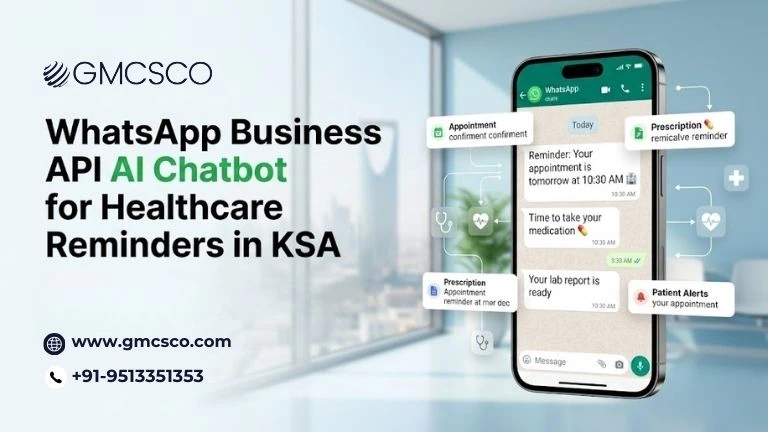
WhatsApp Business API AI chatbot for healthcare reminders KSA

WhatsApp Business API AI chatbot for healthcare reminders KSA

Healthcare organizations in Saudi Arabia are rapidly embracing digital transformation. Hospitals, medical centers, dental clinics, and diagnostic labs are under increasing pressure to improve patient communication while also reducing operational costs. One of the most common operational challenges healthcare providers face today is missed appointments and poor patient follow up. Missed appointments create significant revenue loss. Doctors waste valuable consultation time. Staff members spend hours manually calling patients for reminders. At the same time, patients expect convenient communication through the same platforms they use daily. This is where WhatsApp powered AI chatbots built on the WhatsApp Business API are transforming healthcare communication. An intelligent WhatsApp chatbot can automatically remind patients about appointments, medication schedules, follow ups, lab results, vaccination reminders, and wellness checkups. For healthcare providers in the Kingdom of Saudi Arabia, this technology is becoming an essential tool for improving patient engagement while streamlining operations. In this guide we will explore how AI powered WhatsApp chatbots work for healthcare reminders in KSA, why hospitals are adopting them rapidly, and how organizations can implement them successfully. Chat on WhatsApp The Real Operational Challenges Healthcare Providers Face Healthcare communication is far more complex than many industries. Hospitals and clinics manage thousands of patient interactions every day. Common operational challenges include: Manual appointment reminder calls Patient no shows leading to revenue loss Staff time wasted on repetitive communication  Difficulty sending multilingual reminders to diverse patient populations Poor patient follow up after treatments Medication adherence issues Missed vaccination schedules Delayed test result notifications For large hospitals and clinics across cities like Riyadh, Jeddah, and Dammam, these communication challenges scale quickly. Research across healthcare systems globally shows that missed appointments alone can reach 20 percent to 30 percent if no reminder system is used. For healthcare providers this translates into massive operational inefficiencies. Patients also increasingly prefer messaging over phone calls. In Saudi Arabia, WhatsApp penetration exceeds 85 percent among smartphone users. This makes WhatsApp the most natural communication channel between healthcare providers and patients. Instead of relying on staff members to manually manage reminders, AI powered WhatsApp automation allows healthcare providers to communicate instantly, reliably, and at scale. Healthcare leaders exploring digital patient engagement platforms should strongly evaluate WhatsApp automation as part of their communication strategy. Why This Topic Matters in Saudi Arabia’s Healthcare Landscape Saudi Arabia is undergoing one of the largest healthcare modernization initiatives in the region. Vision 2030 is driving major investments in digital health infrastructure, patient centric services, and smart hospital technologies. Several trends make WhatsApp chatbot automation highly relevant in the Saudi healthcare ecosystem. First, mobile first communication is dominant in the region. Patients are far more likely to respond to WhatsApp messages compared to email or traditional SMS. Second, the healthcare sector is expanding rapidly with new private hospitals, specialty clinics, and telemedicine platforms entering the market. Third, healthcare providers are under pressure to improve patient satisfaction scores and reduce operational waste. Fourth, the population includes both Arabic and international patients, making multilingual communication essential. AI powered WhatsApp chatbots provide a powerful solution that aligns perfectly with these trends. Healthcare organizations can send automated appointment reminders in Arabic and English. Patients can confirm or reschedule appointments directly from the chat. Medication reminders can be delivered on schedule without manual intervention. As Saudi Arabia continues its healthcare digital transformation, conversational AI platforms are becoming a strategic tool rather than just a convenience. Healthcare leaders looking to modernize patient communication should explore how WhatsApp Business API solutions can fit into their digital engagement strategy. Also Read About WhatsApp Chatbot for Clinics and Hospitals What Is a WhatsApp Business API AI Chatbot for Healthcare? In simple terms, a WhatsApp Business API AI chatbot is an automated messaging assistant that interacts with patients through WhatsApp. Unlike the standard WhatsApp Business app, the Business API allows hospitals and healthcare systems to automate large scale communication securely and integrate with existing healthcare software systems. The AI chatbot acts like a virtual patient assistant. It can automatically send reminders, answer common questions, guide patients through appointment scheduling, and deliver important healthcare notifications. Key capabilities include: Appointment reminders before scheduled visits Medication reminders for chronic patients Follow up reminders after procedures Vaccination schedule alerts Lab result notifications Health check reminders Insurance documentation prompts Patient satisfaction surveys The chatbot can also integrate with hospital systems such as: Hospital Information Systems Electronic Medical Records Patient scheduling platforms Healthcare CRM systems Telemedicine platforms This integration allows the chatbot to trigger reminders automatically based on real patient data. Instead of staff manually tracking appointments, the system runs continuously and communicates with patients in real time. Organizations exploring healthcare workflow automation should consider conversational AI platforms that integrate with existing medical systems. Talk to Automation Expert Practical Use Cases of WhatsApp AI Chatbots in Healthcare To understand the real impact of this technology, let us look at several practical use cases used by hospitals and clinics in Saudi Arabia. Appointment Reminders for Clinics One of the most common use cases is automated appointment reminders. Patients receive a WhatsApp message 24 hours before their appointment. The message includes appointment time, doctor name, clinic location, and an option to confirm or reschedule. This simple automation dramatically reduces patient no show rates. Many healthcare providers report reductions of up to 40 percent in missed appointments. Medication Adherence Reminders Patients managing chronic conditions such as diabetes or hypertension often forget medication schedules. AI chatbots can send daily reminders and even ask patients to confirm medication intake. This improves treatment outcomes and strengthens patient relationships with healthcare providers. Vaccination Schedule Reminders Pediatric clinics can use WhatsApp chatbots to remind parents about upcoming vaccination schedules. Parents receive clear instructions and can easily confirm appointments. Lab Result Notifications Diagnostic centers often struggle with communicating test results efficiently. Instead of requiring patients to call the clinic, the chatbot can notify patients when results are ready and guide them through next steps. Post Treatment Follow Ups Hospitals can schedule automated follow ups after surgeries or treatments. Patients receive

WhatsApp Business API AI chatbot for healthcare reminders KSA Read More »
WhatsApp automation for logistics daily updates Gulf

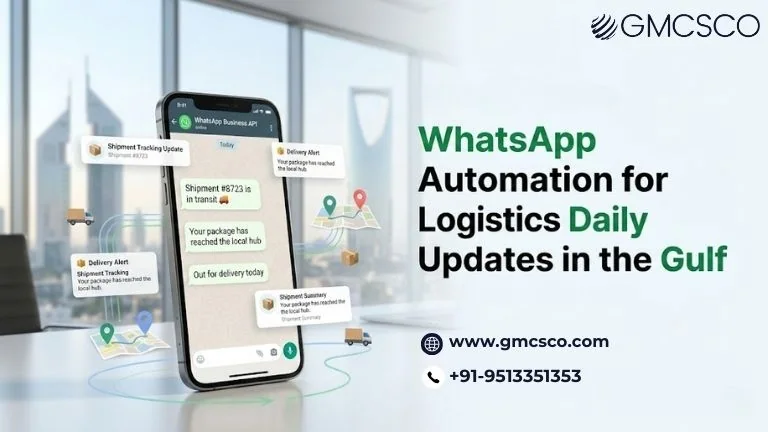
WhatsApp automation for logistics daily updates Gulf

The Communication Gap in Modern Logistics Logistics businesses operate in a world where timing and transparency define customer trust. Clients expect to know exactly where their shipments are, when deliveries will happen, and if there are any delays. For logistics companies operating in the Gulf region, managing this communication efficiently can become a serious operational challenge. Many logistics teams still rely on manual calls, email updates, or fragmented tracking systems. As shipment volumes increase, communication bottlenecks start affecting productivity and customer satisfaction. This is where WhatsApp automation for logistics daily updates in the Gulf becomes a powerful operational advantage. By integrating automated messaging, AI chatbots, and logistics tracking systems with WhatsApp, companies can deliver real time shipment updates directly to customers, partners, and internal teams. Instead of reactive communication, logistics companies move toward proactive customer engagement. For businesses operating in the UAE, Saudi Arabia, Qatar, and other GCC markets, adopting communication automation is quickly becoming a competitive necessity rather than a technological luxury. Get Automation Consultation The Growing Operational Challenges in Gulf Logistics The Gulf logistics industry has experienced rapid growth over the past decade. E commerce expansion, cross border trade, and infrastructure investments have significantly increased shipment volumes across the region. However, this growth also introduces operational complexity. High Volume of Customer Inquiries Logistics teams often receive hundreds of daily inquiries related to shipment tracking, delivery status, or delays. Customer service teams spend a large portion of their time answering repetitive questions such as: Where is my shipment When will my delivery arrive Has the package been dispatched Is there a delay Handling these queries manually slows down operations and increases support costs. Multi Stakeholder Communication Logistics operations involve many stakeholders including: Shippers Warehouses Transport teams Customs agents Delivery drivers Customers Ensuring all stakeholders receive timely updates is difficult without automation. Also Read About WhatsApp Chatbot for Logistics Companies Last Mile Delivery Pressure Last mile delivery is the most sensitive stage in logistics. Customers expect accurate delivery windows and proactive notifications. Without automated communication, delivery teams often face missed deliveries and customer frustration. Cross Border Shipment Tracking The Gulf region frequently handles cross border shipments between GCC countries. Communication delays during customs processing or transit updates create uncertainty for clients. As logistics networks grow larger, manual communication simply cannot keep up with operational demands. Why WhatsApp Has Become the Preferred Communication Channel In the Gulf region, WhatsApp is one of the most widely used communication platforms for both personal and business interactions. Its penetration rate in countries such as the UAE and Saudi Arabia is among the highest globally. For logistics companies, this creates a natural opportunity. Customers already use WhatsApp daily. Delivering shipment updates through this familiar platform dramatically improves engagement and response rates. Benefits of Using WhatsApp for Logistics Communication Instant message delivery Shipment notifications reach customers immediately. High open rates WhatsApp messages often achieve open rates above ninety percent. Two way communication Customers can ask questions and receive automated responses. Mobile first experience  Most logistics clients rely on mobile communication during delivery. Reduced support workload  Automated updates eliminate repetitive customer queries. By integrating logistics systems with WhatsApp automation tools, companies can create a seamless communication flow without increasing operational overhead. If your logistics business is exploring ways to improve customer communication, it is worth evaluating how messaging automation can fit into your broader digital transformation strategy. book your free consultation today. What Is WhatsApp Automation for Logistics? WhatsApp automation for logistics refers to the use of automated messaging systems connected to logistics platforms to send shipment related updates directly to customers via WhatsApp. These systems typically connect with: Transport management systems Warehouse management systems Shipment tracking platforms Fleet management tools Customer relationship management software Whenever a shipment status changes, the system automatically triggers a WhatsApp notification. Examples of Automated Logistics Updates Order confirmed Shipment dispatched Shipment in transit Out for delivery Delivery completed Delivery delay notification Customs clearance update Instead of waiting for customers to ask for updates, the system proactively communicates with them. Many advanced solutions also include AI powered WhatsApp chatbots capable of answering common questions such as: Track my shipment Reschedule delivery Share delivery address Contact support This creates a self service experience that significantly reduces manual intervention. Also Read About Daily Order Update Automation WhatsApp API Gulf Real World Use Cases in Gulf Logistics Companies Automation is not just a theoretical concept. Many logistics companies in the GCC region are already using WhatsApp automation to streamline communication. Shipment Tracking Notifications When a package leaves the warehouse, the system sends an automated message: Your shipment has been dispatched and is currently in transit. Customers receive real time updates without needing to call support. Delivery Day Alerts On the day of delivery, customers receive a message such as: Your shipment will be delivered today between 2 PM and 5 PM. This reduces missed deliveries and improves customer satisfaction. Driver Coordination Delivery drivers can also receive automated updates related to route assignments, shipment instructions, or customer information. Customs Clearance Notifications For cross border shipments, automated messages can inform customers when goods clear customs or when additional documentation is required. Customer Self Service Tracking Customers can simply send a tracking number via WhatsApp and receive automated shipment status information. This significantly reduces inbound customer service requests. Companies that are evaluating automation should consider how messaging platforms can integrate with their existing logistics management systems for seamless communication. Book Free Automation Call Step by Step Implementation of WhatsApp Automation for Logistics Implementing automation does not require a complete technology overhaul. Most logistics companies can gradually adopt messaging automation using structured steps. Step 1: Identify Communication Bottlenecks Start by mapping customer communication points. Common areas include: Shipment confirmation Dispatch notifications Transit updates Delivery alerts Customer support inquiries These are the best starting points for automation. Step 2: Integrate Logistics Systems The next step involves connecting WhatsApp messaging platforms with your existing systems such as: Transport management systems Warehouse systems Shipment tracking platforms This integration allows automatic message

WhatsApp automation for logistics daily updates Gulf Read More »

WhatsApp API chatbot features comparison for customer updates UAE

WhatsApp API chatbot features comparison for customer updates UAE

Introduction: Why Businesses in UAE Are Turning to WhatsApp API Chatbots Customer expectations have changed dramatically in the last few years. People no longer want to wait for emails or hold on phone lines to receive updates about orders, deliveries, payments, or appointments. They expect instant communication on the platforms they already use every day. In the UAE, one messaging channel clearly dominates this expectation. WhatsApp. With more than 90 percent smartphone penetration and extremely high WhatsApp usage across Dubai, Abu Dhabi, Sharjah, and other emirates, businesses increasingly rely on WhatsApp Business API chatbots to deliver automated customer updates. These updates can include: Order confirmations Delivery tracking notifications Appointment reminders Payment alerts Service updates Customer support messages But here is the challenge many companies face. Not all WhatsApp chatbot platforms offer the same features. Some are designed for marketing campaigns, others for support automation, and some specialize in transactional customer updates. For business owners, startup founders, and enterprise leaders, selecting the right WhatsApp API chatbot requires a careful comparison of features, integration capabilities, scalability, and automation capabilities. This guide provides a detailed WhatsApp API chatbot features comparison for customer updates in the UAE. The goal is to help decision makers understand what truly matters when selecting a solution that improves customer communication while reducing operational workload. Get Free WhatsApp Consultation The Growing Communication Challenge for Businesses Customer communication is one of the most underestimated operational challenges in modern organizations. Businesses deal with hundreds or thousands of customer interactions every day. These interactions often revolve around simple updates such as order status, shipping notifications, appointment confirmations, or service alerts. Traditionally these updates were handled through: Email notifications SMS alerts Call center agents Manual CRM messaging However, these methods create multiple operational problems. First, email open rates continue to decline, especially for time sensitive updates. Second, SMS messages are limited in functionality and often expensive at scale. Third, customer support teams become overwhelmed answering repetitive questions like: Where is my order When will my delivery arrive Has my payment been confirmed Can I reschedule my appointment In fast moving markets like UAE ecommerce, logistics, healthcare, and fintech, these questions appear thousands of times per day. This is where WhatsApp API chatbots transform business operations. Instead of relying on human agents for repetitive updates, companies automate customer notifications through conversational messaging. Customers receive instant updates on WhatsApp and can respond with questions if needed. The result is faster service, lower support costs, and significantly better customer satisfaction. Businesses exploring automation often begin by evaluating WhatsApp chatbot capabilities across different platforms before deciding on an implementation strategy. Also Read About WhatsApp API vs SMS Automation Why WhatsApp API Chatbots Matter in the UAE Market The UAE has one of the most digitally connected populations in the world. Messaging apps are deeply embedded in everyday communication for both consumers and businesses. Several market factors make WhatsApp API chatbots particularly powerful in this region. Extremely High WhatsApp Usage WhatsApp is used across every demographic in the UAE including expatriates, local residents, professionals, and students. This means businesses do not need to convince customers to download a new app or platform. The communication channel already exists. Mobile First Customer Behavior Consumers in Dubai and across the UAE prefer quick mobile interactions rather than formal communication channels. WhatsApp messaging fits perfectly into this behavior. Multilingual Customer Base The UAE hosts residents from more than 200 nationalities. WhatsApp chatbots can support multiple languages including English, Arabic, Hindi, Urdu, and more. Fast Growing Ecommerce and Service Economy Industries like ecommerce, food delivery, healthcare, travel, and real estate depend heavily on real time customer communication. Automated messaging through WhatsApp API chatbots enables these industries to scale customer communication efficiently. Organizations evaluating digital transformation strategies increasingly consider WhatsApp automation as a central customer engagement tool. Get Automation Strategy Advice What Is a WhatsApp API Chatbot? A WhatsApp API chatbot is an automated conversational system that communicates with customers through WhatsApp using the official WhatsApp Business API. Unlike the regular WhatsApp Business app used by small businesses, the API version allows companies to integrate messaging into their existing systems such as: CRM platforms Order management systems Customer support software Marketing automation tools Enterprise ERP systems A chatbot powered by the WhatsApp API can automatically send customer updates and respond to customer queries using predefined workflows or artificial intelligence. For example, when a customer places an order on an ecommerce website, the chatbot can automatically send a message on WhatsApp confirming the order. As the order moves through fulfillment and delivery stages, additional notifications can be triggered. Customers can also ask questions and receive automated responses. This creates a seamless communication experience without requiring manual intervention from customer service teams. Key WhatsApp API Chatbot Features for Customer Updates Before comparing platforms, businesses must understand the core features that enable automated customer messaging. Automated Transactional Notifications The most important capability is sending automated notifications triggered by business events. Examples include: Order confirmations Payment receipts Shipping alerts Delivery updates Appointment confirmations These notifications are delivered instantly through WhatsApp. Start Free WhatsApp Consultation Two Way Customer Communication Customers should not only receive updates but also respond. Two way messaging allows users to ask questions or request assistance after receiving a notification. For example: A delivery notification could allow customers to confirm their address or reschedule delivery. CRM and System Integrations A chatbot must connect with internal systems to trigger notifications automatically. Common integrations include: Shopify and ecommerce platforms Salesforce and CRM systems Order management tools Customer support software Payment gateways Without integrations, automation becomes difficult to scale. AI Based Natural Language Understanding Advanced chatbots use conversational AI to understand customer questions. Instead of rigid menus, customers can ask questions in natural language such as: Where is my order Can I change my delivery time Has my payment been received The chatbot interprets the request and responds automatically. Also Read About Best WhatsApp Chatbot Tools Comparison Message Templates and Personalization WhatsApp API requires businesses to use approved

WhatsApp API chatbot features comparison for customer updates UAE Read More »

WhatsApp automation tools comparison for enterprises in the Gulf region

WhatsApp Automation Tools Comparison for Enterprises in the Gulf

Introduction: Why Gulf Enterprises Are Rapidly Adopting WhatsApp Automation Across the Gulf region, the way customers interact with businesses has changed dramatically. Traditional communication channels such as phone calls, emails, and website forms are no longer enough to meet modern expectations. Customers now want immediate responses, simple conversations, and convenient communication through messaging apps. In countries such as the UAE, Saudi Arabia, and Qatar, WhatsApp has become the most preferred communication channel for both personal and business interactions. Customers often contact businesses directly on WhatsApp to ask questions, request quotes, book services, or track orders. For small businesses, responding to these messages manually may still be manageable. However, for growing companies and large enterprises, handling hundreds or thousands of WhatsApp conversations every day quickly becomes overwhelming. Sales teams miss opportunities. Support teams struggle to respond quickly. Customers become frustrated with delayed replies. This is exactly why enterprises across the Gulf are investing in WhatsApp automation tools. These platforms combine the official WhatsApp Business API with artificial intelligence, chatbots, and automated workflows to help businesses manage customer conversations at scale. But choosing the right platform is not always straightforward. There are multiple tools in the market, each offering different capabilities. For decision makers, understanding how these platforms compare and which solution fits enterprise requirements is critical. This guide explains the key differences between WhatsApp automation tools, how enterprises in the Gulf are using them, and what businesses should consider before implementing automation. The Rise of Messaging Driven Customer Engagement in the Gulf Digital transformation initiatives across the Gulf Cooperation Council countries have significantly accelerated in recent years. Governments are investing heavily in smart cities, digital services, and AI technologies. At the same time, consumers across the region are among the most digitally connected populations in the world. Smartphone penetration in the UAE exceeds ninety percent. Messaging apps have become the primary communication channel for daily interactions. For businesses, this shift creates both an opportunity and a challenge. The opportunity is clear. WhatsApp allows companies to communicate with customers directly on a platform they already use daily. The challenge comes from scale. As customer inquiries increase, manual responses become inefficient and costly. Companies across sectors such as retail, real estate, healthcare, banking, travel, and education are now using messaging automation to manage customer engagement more effectively. Businesses that adopt automation early often see improvements in response times, customer satisfaction, and operational efficiency. Organizations exploring digital customer engagement strategies should evaluate how messaging automation can support both marketing and customer support functions. Also Read About WhatsApp Business API Providers Comparison for AI Automation What Are WhatsApp Automation Tools? WhatsApp automation tools are software platforms that allow businesses to automate conversations with customers through the official WhatsApp Business API. Instead of responding to every message manually, businesses can deploy intelligent chatbots and automated workflows that interact with customers in real time. These platforms typically include several important capabilities. AI powered chatbots that understand customer questions Automated responses triggered by customer messages Lead qualification workflows for sales teams Customer support automation Marketing broadcast messaging CRM integration for managing customer data Conversation analytics and performance tracking In simple terms, these platforms transform WhatsApp into a scalable customer engagement system. Businesses can respond to thousands of customer inquiries simultaneously while maintaining fast response times and consistent communication. For enterprises managing large volumes of customer interactions, automation becomes essential to maintain service quality and operational efficiency. Companies looking to improve digital customer experience often begin with messaging automation because it delivers quick and measurable results. Book Your Free Consultation Why Enterprises in the Gulf Are Prioritizing WhatsApp Automation There are several reasons why WhatsApp automation is gaining momentum among enterprises across the Gulf. Customer Expectations for Instant Communication Customers expect immediate responses when they send messages. Long response times often lead to lost sales opportunities. Automation ensures that customers receive quick responses even outside business hours. Rapid Growth of Digital Inquiries Businesses investing in online advertising campaigns frequently receive a large number of inquiries through WhatsApp. Chatbots help manage these inquiries efficiently. Rising Operational Costs Hiring large support teams to manage messaging manually increases operational expenses. Automation allows companies to scale communication without increasing staffing costs. Need for Consistent Customer Experience Automated systems ensure that customers receive accurate and consistent information every time they interact with the business. Data Driven Decision Making Automation platforms provide insights into customer behavior, conversation trends, and engagement patterns. This data helps companies improve marketing and service strategies. For organizations planning long term digital transformation, messaging automation has become an essential component of modern customer engagement. Businesses evaluating automation strategies should analyze how WhatsApp can support their sales, marketing, and support teams simultaneously. Also Read About Best WhatsApp Chatbot Tools Comparison for Businesses Key Features Enterprises Should Evaluate in WhatsApp Automation Platforms Not all WhatsApp automation platforms offer the same capabilities. Enterprises should evaluate several factors before choosing a solution. Conversational AI Capabilities Advanced platforms use artificial intelligence to understand customer intent and deliver meaningful responses. Basic rule based chatbots often struggle with complex conversations. CRM and System Integration Enterprises typically rely on CRM systems to manage customer relationships. Automation platforms should integrate seamlessly with these systems. Omnichannel Communication Many modern platforms support multiple communication channels such as WhatsApp, web chat, Instagram, and SMS. This allows businesses to manage conversations from a single interface. Marketing Campaign Automation Businesses often use WhatsApp to send promotional messages, product updates, and event announcements. Platforms should support targeted broadcast messaging. Workflow Automation Advanced tools allow companies to automate customer journeys based on specific triggers such as purchases, inquiries, or abandoned carts. Security and Compliance Enterprises must ensure that platforms comply with WhatsApp policies and regional data protection standards. Companies planning to implement messaging automation should evaluate these features carefully to ensure the solution supports long term scalability. Get WhatsApp Automation Advice Popular WhatsApp Automation Platforms Used by Businesses Several platforms provide WhatsApp automation capabilities. Each platform offers different strengths depending on business requirements. Twilio Twilio is

WhatsApp Automation Tools Comparison for Enterprises in the Gulf Read More »

WhatsApp Business API providers comparison for AI automation in UAE

WhatsApp Business API Providers Comparison for AI Automation UAE

Introduction: Why Businesses Are Rethinking Customer Communication Across the Gulf region, businesses are undergoing rapid digital transformation. Governments, including Saudi Arabia through Vision 2030 initiatives, are encouraging organizations to modernize customer engagement, automate operations, and adopt artificial intelligence driven solutions. At the same time, customer expectations have changed dramatically. People no longer want to wait hours for support responses. They expect instant answers, seamless conversations, and personalized interactions across the channels they already use every day. One platform dominates this space in the Middle East. WhatsApp. With extremely high adoption across Saudi Arabia and the wider GCC, WhatsApp has become one of the most powerful business communication channels available today. Companies are increasingly moving beyond simple messaging and deploying advanced automation using the WhatsApp Business API. However, implementing WhatsApp automation at enterprise scale requires the right technology partner. Businesses must evaluate different WhatsApp Business API providers carefully to ensure reliability, compliance, AI capabilities, and seamless integration with their systems. This guide explores how WhatsApp Business API platforms work, how they enable AI automation, and how organizations in Saudi Arabia and the UAE can choose the right provider. If your organization is considering automation but unsure where to begin, this article will help you evaluate the landscape strategically. Why This Topic Matters for Businesses in Saudi Arabia and the GCC Saudi Arabia is currently experiencing one of the fastest digital transformation shifts in the region. Several factors are driving this change: Growing investment in artificial intelligence Strong push for digital services under Vision 2030 Expanding ecommerce and online services  Rising demand for instant customer communication At the same time, WhatsApp usage in Saudi Arabia is among the highest in the world. Many customers prefer messaging over phone calls or email. For businesses, this creates a major opportunity. Instead of relying on call centers or fragmented communication channels, organizations can deploy automated messaging solutions powered by AI directly inside WhatsApp. These solutions can handle customer inquiries, generate leads, process service requests, and even automate transactions. However, the success of such systems depends heavily on choosing the right WhatsApp Business API providers. Not all platforms offer the same level of scalability, AI capabilities, or enterprise integration. Before implementing automation, businesses should carefully evaluate their operational readiness, technology stack, and customer engagement goals. Get Free Consultation What Is WhatsApp Business API Providers WhatsApp Business API providers are authorized technology platforms that enable companies to integrate WhatsApp messaging into enterprise systems such as CRM, ERP, customer support tools, and AI automation platforms. These providers allow businesses to automate conversations, manage high message volumes, deploy chatbots, and create scalable customer engagement workflows. How WhatsApp Business API Automation Works in Real Business Environments Many organizations assume WhatsApp automation is simply about sending automated replies. In reality, enterprise implementations are far more sophisticated. A typical system works through several integrated components. 1. WhatsApp Business API Platform Businesses connect to WhatsApp through an official provider. This platform enables message delivery, conversation management, and compliance with WhatsApp policies. 2. AI Chatbot or Conversational Engine An AI chatbot interprets customer messages and responds intelligently. These bots can understand Arabic and English, which is critical for businesses operating in Saudi Arabia and the wider GCC. 3. CRM Integration Customer data is synchronized with platforms like Salesforce, HubSpot, or custom CRM systems. This allows the chatbot to personalize conversations using customer history and profile information. 4. ERP and Backend System Integration Operational workflows such as order tracking, appointment scheduling, billing inquiries, and service requests are connected to ERP systems. This ensures customers receive real time updates automatically. 5. Human Agent Handoff When a conversation becomes complex, the system transfers the chat to a human support agent while preserving the conversation history. 6. Analytics and Performance Monitoring Businesses track customer interactions, conversion rates, response time, and automation performance to continuously improve engagement. When implemented correctly, WhatsApp automation becomes a powerful operational engine for customer communication. Also Read About WhatsApp API vs Chatbot Comparison Real World Use Cases in the Saudi Market Many industries in Saudi Arabia are already adopting WhatsApp automation to improve operational efficiency and customer experience. Retail and Ecommerce Retail companies use WhatsApp automation for: Product inquiries Order tracking Automated promotions Personalized product recommendations AI driven conversational commerce enables customers to browse products, receive offers, and complete purchases directly through messaging. Healthcare Hospitals and clinics use WhatsApp automation for: Appointment scheduling Patient reminders Prescription refill requests Basic symptom guidance This reduces administrative workload while improving patient communication. Logistics and Delivery Logistics providers use automated WhatsApp notifications for: Shipment tracking Delivery confirmations Address verification Customer service support Customers receive real time updates without needing to call support centers. Real Estate Real estate agencies use WhatsApp chatbots for: Property inquiries Lead qualification Viewing appointment scheduling Automated follow up messaging This significantly increases lead conversion rates. Financial Services Banks and fintech platforms deploy WhatsApp automation for: Account updates Transaction notifications Loan inquiries Customer support Security compliant integrations ensure customer data protection. Enterprise Services Large organizations use WhatsApp automation for: IT service requests HR inquiries Internal support workflows Customer service management These systems reduce operational friction and streamline communication. Also Read About WhatsApp API Automation vs SMS Comparison Business Benefits and ROI Impact Organizations adopting WhatsApp automation typically experience measurable improvements across several business metrics. Faster Customer Response Automated systems respond instantly to customer inquiries, dramatically reducing response time. This improves customer satisfaction and builds trust. Reduced Operational Costs Automation significantly lowers the need for large call center teams handling repetitive queries. Support agents can focus on complex issues while chatbots manage routine interactions. Higher Customer Engagement WhatsApp has extremely high open rates compared to email or SMS. Businesses achieve stronger engagement through conversational messaging. Increased Revenue Opportunities AI powered messaging can recommend products, capture leads, and guide customers through purchase journeys. This transforms messaging into a revenue channel. Scalable Customer Communication As businesses grow, automation platforms handle increasing conversation volumes without expanding support teams. This scalability is essential for fast growing organizations. If your

WhatsApp Business API Providers Comparison for AI Automation UAE Read More »

How to Send OTP and Notification SMS for Businesses in Saudi Arabia

How to Send OTP and Notification SMS for Businesses in Saudi Arabia

In today’s fast-moving digital economy, secure and instant communication is no longer optional—it’s essential. Businesses across Saudi Arabia, from banks and fintech startups to eCommerce platforms and healthcare providers, rely heavily on real-time messaging to engage customers and protect transactions. With one of the highest mobile penetration rates in the region, Saudi Arabia presents a massive opportunity for businesses to leverage SMS communication. Whether it’s sending one-time passwords (OTP) for secure logins or delivering real-time notifications, SMS remains the most reliable and effective channel. If you’re looking to implement OTP SMS Saudi Arabia, integrate an SMS API Saudi Arabia, or scale using bulk SMS Saudi Arabia, this guide will walk you through everything you need to know. What is OTP SMS and Notification SMS OTP SMS (One-Time Password) OTP SMS is a security mechanism used to verify user identity. A unique, time-sensitive code is sent via SMS to a user’s mobile number during login, registration, or transaction processes. Key characteristics: Single-use code Short validity period Enhances security and fraud prevention Notification SMS Notification SMS is used to send informational updates to customers. These messages are not for authentication but for communication. Examples include: Order confirmations Delivery updates Appointment reminders Account alerts Key Difference OTP SMS is security-focused Notification SMS is information-focused Both are critical for customer experience and operational efficiency. Also Read About Transactional SMS vs Promotional SMS in Saudi Arabia Why SMS is Highly Effective in Saudi Arabia High Open Rates SMS boasts open rates of over 90%, making it far more effective than email or app notifications. Messages are typically read within minutes. Strong Mobile Penetration Saudi Arabia has a mobile penetration rate exceeding 100%, meaning most individuals own at least one mobile device. This ensures maximum reach for your SMS campaigns. Instant Delivery SMS messages are delivered within seconds, making them ideal for time-sensitive communications like OTP verification or delivery alerts. No Internet Required Unlike app-based notifications, SMS does not rely on internet connectivity, ensuring consistent delivery across all regions. Get OTP SMS Setup Today Use Cases of OTP and Notification SMS Businesses across industries use SMS in various ways to improve operations and customer satisfaction. OTP Authentication Secure login verification Transaction approvals Password resets Order Confirmations Instant purchase confirmation Payment success alerts Delivery Notifications Shipment tracking updates Estimated delivery times Banking Alerts Transaction notifications Fraud alerts Balance updates Appointment Reminders Healthcare bookings Service appointments Event confirmations Customer Engagement Promotional campaigns Loyalty updates Feedback requests Using bulk SMS Saudi Arabia, businesses can automate and scale these communications efficiently. Also Read About Bulk SMS campaign strategy for businesses in Saudi Arabia Regulations and Compliance in Saudi Arabia Before sending SMS messages, businesses must comply with local regulations to avoid penalties and ensure customer trust. Key Compliance Guidelines Obtain explicit user consent before sending SMS Provide opt-out mechanisms Avoid sending spam or unsolicited messages Maintain data privacy and security standards Saudi Arabia has strict telecom and data protection regulations, so working with a compliant SMS provider is essential. Best Practices Use verified sender IDs Send messages during appropriate hours Keep content clear and relevant Store user consent records Compliance not only protects your business but also improves message deliverability. Start Your SMS Integration How to Send OTP SMS in Saudi Arabia (Step-by-Step) Implementing OTP SMS is easier than you might think when using a reliable SMS API provider. Step 1: Choose an SMS Gateway Provider Select a provider that offers: Local Saudi routing High delivery rates Strong API documentation Step 2: Integrate SMS API Use the provider’s SMS API Saudi Arabia to integrate messaging into your platform. Typical integration steps: Generate API credentials Connect API to your backend system Configure authentication workflows Step 3: Generate OTP Create a secure, random OTP code on your server. Best practices: Use 4–6 digit codes Set expiration time (e.g., 5 minutes) Avoid reuse Step 4: Send OTP via SMS Trigger the SMS API to send the OTP to the user’s mobile number instantly. Step 5: Verify OTP Match the user-entered code with the generated OTP to complete authentication. Automation ensures a seamless and secure user experience. Talk to SMS API Expert Features to Look for in an SMS Provider Choosing the right SMS provider can significantly impact your business performance. Delivery Speed and Reliability Real-time delivery for OTP messages High uptime and minimal delays Local Routing in Saudi Arabia Direct connections with local telecom operators Better delivery rates and lower latency API Performance Easy-to-use REST APIs Scalable infrastructure Detailed documentation Arabic Language Support Unicode SMS support Right-to-left text compatibility Security Features End-to-end encryption Secure API authentication Reporting and Analytics Delivery reports Message tracking Performance insights A robust provider ensures your OTP SMS Saudi Arabia campaigns are both reliable and scalable. Also Read About SMS vs WhatsApp marketing in Saudi Arabia Pricing and ROI of SMS Services Cost Factors Number of messages sent Destination (local vs international) Message type (OTP vs promotional) SMS length (GSM vs Unicode) Why SMS is Cost-Effective Despite being a paid channel, SMS offers exceptional ROI due to: High engagement rates Reduced fraud and chargebacks Improved customer satisfaction Increased conversion rates For example: Faster OTP delivery reduces login drop-offs Real-time notifications improve customer trust Automated alerts reduce support costs Investing in bulk SMS Saudi Arabia can drive measurable business growth. Book Free SMS Consultation Why Choose GMCSCO for SMS API Saudi Arabia When selecting an SMS provider, reliability and local expertise matter. GMCSCO offers a powerful SMS platform tailored for businesses in Saudi Arabia. Key Benefits High-speed OTP delivery with local routing Scalable bulk SMS infrastructure Easy-to-integrate SMS API Full support for Arabic messaging Competitive pricing for high-volume usage Advanced reporting and analytics Built for Businesses Whether you’re a fintech company requiring secure authentication or an eCommerce platform sending thousands of notifications daily, GMCSCO provides a dependable solution. Dedicated Support Technical onboarding assistance 24/7 support Custom solutions for enterprise needs With GMCSCO, businesses can streamline communication, enhance security, and improve customer engagement. Also Read About Top bulk SMS gateway providers in Saudi Arabia

How to Send OTP and Notification SMS for Businesses in Saudi Arabia Read More »

Scroll to Top