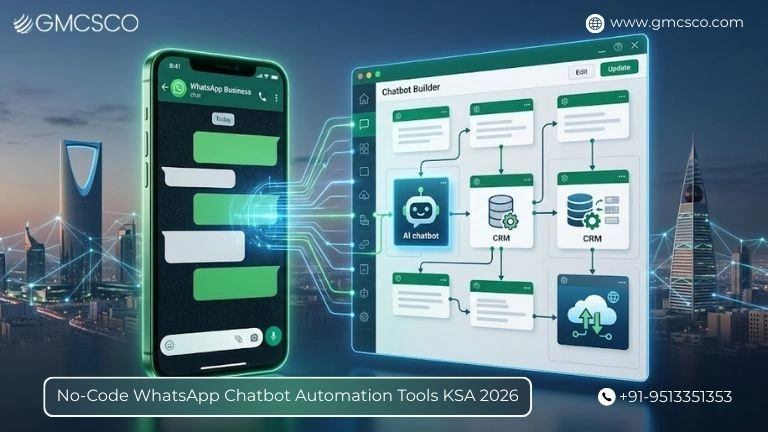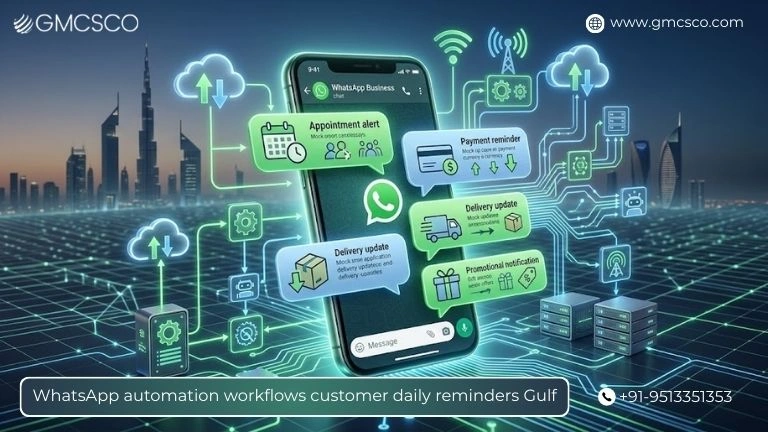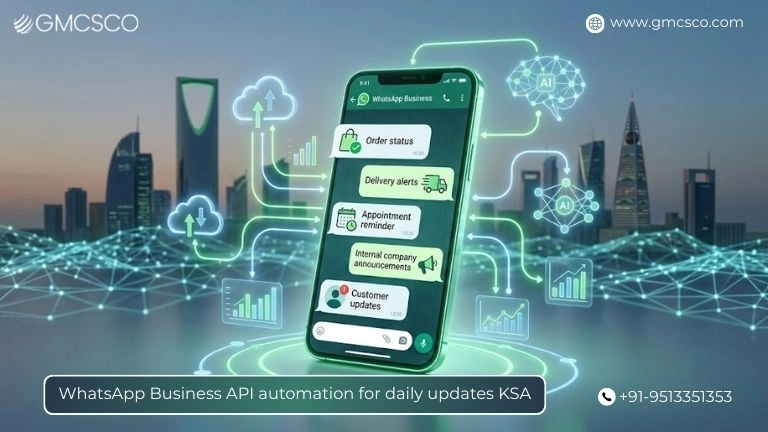
WhatsApp Business API Automation for Daily Updates in KSA
In the fast-paced world of business, staying connected with customers can feel like a constant uphill battle. Imagine running a retail chain in Riyadh, where inventory changes hourly, promotions pop up unexpectedly, and customer queries flood in around the clock. Without the right tools, these daily demands can overwhelm your team, leading to missed opportunities and frustrated clients. This is where WhatsApp Business API automation steps in, transforming how companies in the Kingdom of Saudi Arabia handle routine communications. The Real Challenges Businesses Face in Customer Communication Businesses in KSA often struggle with fragmented communication channels. Emails get buried in inboxes, SMS feels impersonal, and social media posts can easily be overlooked. For companies dealing with daily updates like stock alerts, order statuses, or promotional news, these issues compound quickly. Operational hurdles add to the mix. Manual messaging eats up hours that could be spent on strategy. Teams juggle spreadsheets, phone calls, and apps, risking errors and delays. In a market as dynamic as Saudi Arabia, where Vision 2030 drives rapid digital transformation, falling behind on communication means losing competitive edge. Consider a logistics firm in Jeddah. Without automation, sending shipment updates to hundreds of clients daily becomes a logistical nightmare itself. Staff burnout rises, response times lag, and customer satisfaction dips. These are not just minor inconveniences; they directly impact revenue and loyalty. Also Read About High-volume WhatsApp API messaging strategies Why WhatsApp Business API Automation Matters in KSA and Globally In KSA, WhatsApp reigns supreme as the go-to messaging app, with penetration rates exceeding 90 percent among adults. This ubiquity makes it an ideal platform for business outreach. Globally, similar trends hold in emerging markets, where instant messaging drives customer interactions. The topic gains urgency amid Saudi Arabia’s push for economic diversification. With e-commerce booming and sectors like tourism and retail expanding, businesses need tools that scale. Automation via WhatsApp Business API aligns perfectly with this, offering real-time, personalized updates that foster trust. On a broader scale, the global shift to AI-driven solutions amplifies its importance. Companies worldwide are adopting chatbots and APIs to cut costs and boost efficiency. In KSA, regulations like those from the Communications and Information Technology Commission encourage secure, compliant tech adoption. Ignoring this could leave your business outdated in a digitally savvy environment. If you are exploring ways to enhance customer touchpoints, consider how automation can integrate seamlessly into your operations. It is worth consulting experts to assess if this fits your needs. Breaking Down WhatsApp Business API Automation in Simple Terms At its core, WhatsApp Business API is a developer-friendly interface that lets businesses send and receive messages at scale. Unlike the standard app, it supports automation, integrating with CRMs, ERPs, and AI systems. Automation for daily updates means setting up rules or triggers. For instance, when a customer’s order ships, the system automatically sends a notification. No human intervention needed. This uses bots powered by AI to handle queries, schedule messages, and personalize content based on user data. Think of it as your business’s silent assistant. It operates 24/7, ensuring updates reach customers instantly. In KSA, where time zones and cultural preferences matter, this reliability is key. The API complies with data privacy laws, making it suitable for regulated industries like finance and healthcare. Real-World Business Examples and Use Cases in KSA Let us look at practical applications. A Riyadh-based e-commerce store uses WhatsApp automation to send daily stock updates. Customers opt-in for alerts on restocked items, driving repeat visits and sales. In hospitality, a Jeddah hotel chain automates reservation confirmations and daily event reminders. Guests receive personalized messages about check-in times or special offers, enhancing their experience. For startups in the fintech space, daily balance updates via WhatsApp keep users engaged. An enterprise in Dammam might automate supply chain notifications, alerting partners to inventory levels in real time. These use cases show versatility. From marketing campaigns to customer service, automation adapts to various sectors, proving its value in KSA’s diverse economy. Also Read About AI automation on WhatsApp API for high-volume messaging Step-by-Step Guide to Implementing WhatsApp Business API Automation Getting started requires planning. First, assess your needs. Identify what daily updates matter most, like promotions or service alerts. Next, choose a provider. WhatsApp requires approved partners for API access. Select one with strong integration capabilities and KSA compliance. Step three: Integrate with your systems. Connect the API to your CRM or database using webhooks. This allows data flow for automated triggers. Then, build your bots. Use no-code tools or AI platforms to design conversation flows. Test for natural language processing to handle Arabic queries effectively in KSA. Launch with a pilot. Start small, gather feedback, and scale. Monitor metrics like open rates to refine. Finally, ensure security. Implement end-to-end encryption and data consent protocols to build trust. This process, when done right, can go live in weeks, delivering immediate wins. To make informed choices on implementation, reaching out to automation specialists can provide tailored guidance without commitment. Key Business Benefits: Efficiency Gains and ROI Impact Automation slashes manual labor, freeing teams for high-value tasks. In KSA, where labor costs rise, this translates to significant savings. ROI shines through higher engagement. Messages via WhatsApp boast 98 percent open rates, far surpassing email. Daily updates keep customers informed, boosting retention by up to 25 percent. Efficiency metrics improve too. Response times drop from hours to seconds, enhancing satisfaction scores. For enterprises, scalable messaging handles thousands without extra staff. Measurable outcomes include revenue uplift. A Saudi retailer might see 15 percent sales growth from timely promotions. Overall, businesses report 20 to 30 percent cost reductions in communication. Common Pitfalls Businesses Encounter Without Automation Many companies stick to manual methods, leading to inconsistencies. Updates get delayed, frustrating customers and eroding trust. Over-reliance on emails or calls ignores preferences. In KSA, where WhatsApp is cultural norm, this disconnects you from your audience. Data silos create issues. Without integration, updates lack personalization, feeling generic and ineffective. Compliance risks loom. Manual processes might violate privacy
WhatsApp Business API Automation for Daily Updates in KSA Read More »