
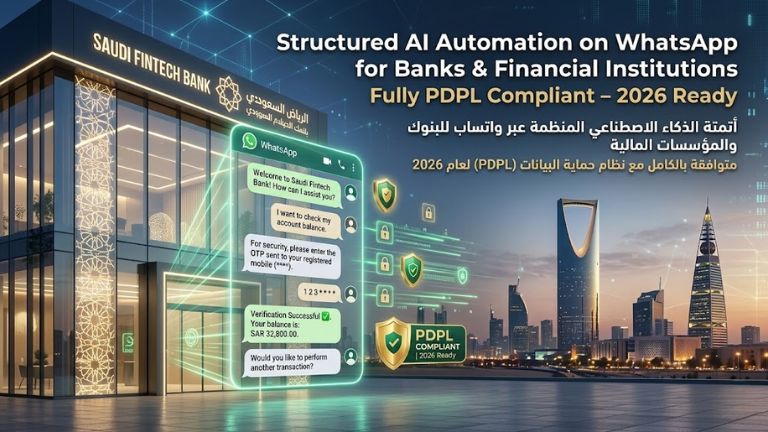
In 2026, banks and financial institutions in Saudi Arabia and the UAE are facing massive pressure to deliver instant, secure, and personalized customer service while strictly following PDPL, SAMA, and Central Bank regulations.
WhatsApp Business API, combined with structured, task-specific AI automation, has emerged as the most effective channel to achieve this balance between high engagement and full regulatory compliance.
This in-depth guide is written specifically for CXOs, Digital Transformation Heads, and IT Directors in banks, fintech companies, insurance firms, and payment providers who want to deploy secure, scalable AI-powered WhatsApp solutions.
Why Banks in KSA & UAE Are Moving Aggressively to WhatsApp in 2026
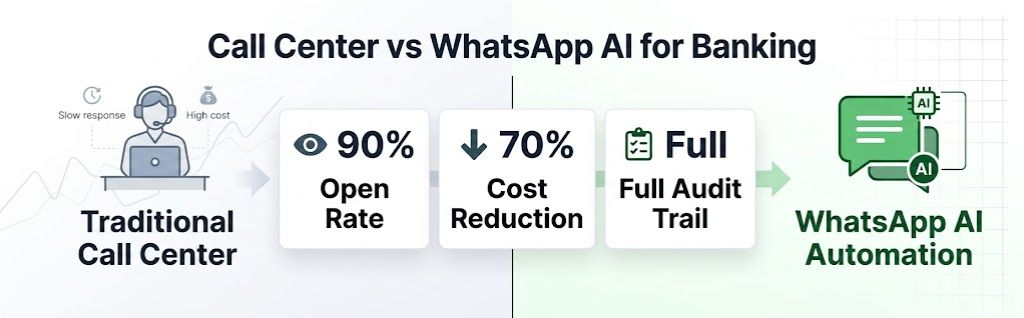
Customers now expect banking services on the apps they already use daily. WhatsApp delivers 90%+ open rates and response times under 60 seconds — something no other channel can match.
Meta’s January 2026 updates made it very clear: only structured, task-specific AI is allowed on WhatsApp Business API. This actually works in favor of banks because financial interactions are naturally rule-based and auditable.
Ready to deliver the instant banking experience your customers demand? Book a 30-minute executive briefing with our Banking Solutions team to explore how WhatsApp can transform your customer engagement in 2026.
Understanding SAMA Regulations for WhatsApp Business API in Banking & Finance
The Saudi Arabian Monetary Authority (SAMA) has established strict guidelines for digital communication and customer data handling in the financial sector.
Key SAMA requirements for WhatsApp Business API deployments include:
- Strong customer authentication for any sensitive transaction.
- Clear separation between service/utility messages and marketing messages.
- Comprehensive audit logs for every customer interaction.
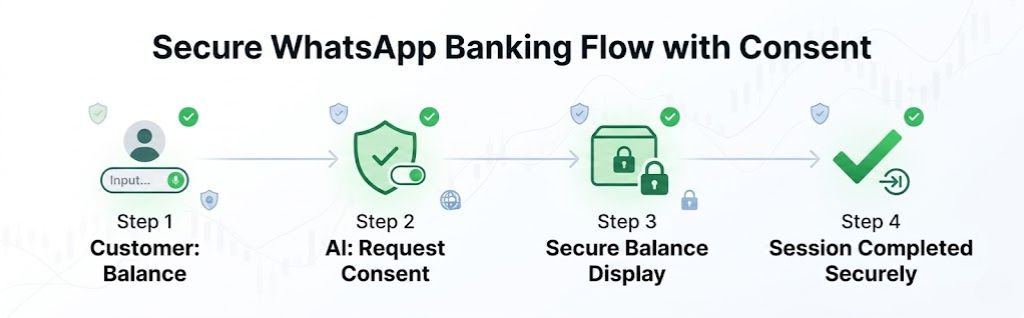
- Explicit consent management before sending any promotional or automated messages.
- Robust security controls and regular compliance reporting to SAMA.
- Protection of customer confidentiality and prevention of unauthorized access.
Our banking and financial solutions are built to fully align with SAMA guidelines while delivering seamless, secure, and efficient customer experiences through structured AI automation.
Ensure your WhatsApp deployment meets every SAMA requirement from day one. Request a free SAMA Compliance Gap Assessment tailored for your institution.
Understanding Meta’s 2026 Rules for AI on WhatsApp
Meta strictly prohibits general-purpose conversational AI (like open ChatGPT-style chatting). Only predictable, business-defined flows are permitted. This is perfect for banking use cases such as:
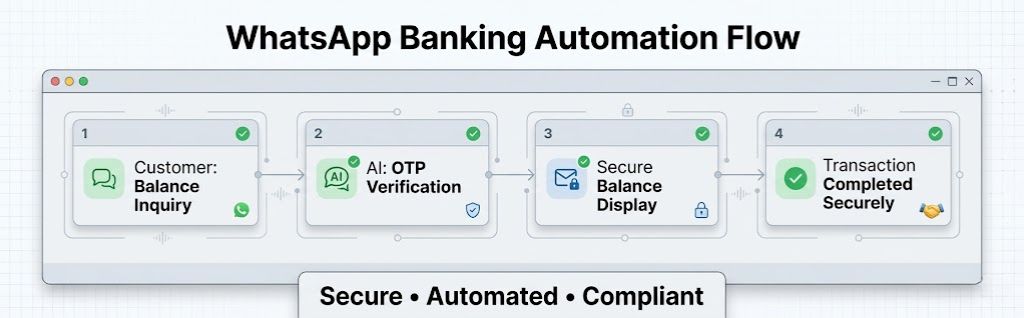
- Balance inquiry
- Transaction alerts
- Loan application status
- Card blocking
- OTP verification
- KYC document collection
All these can be built as structured flows that are 100% auditable and PDPL compliant.
Stay compliant with Meta’s 2026 AI rules while maximizing automation. Schedule a technical workshop on building structured AI agents for banking.
High-Impact Automation Flows for Banks (2026)
Here are proven automation flows currently running successfully for financial institutions:
- Proactive Transaction Alerts – Real-time fraud alerts, salary credit, bill payment reminders.
- Self-Service Banking – Balance check, mini-statement, cheque book request, card PIN reset.
- Loan & Credit Journey – Application status tracking, document collection, approval notifications.
- Customer Onboarding – Digital KYC via WhatsApp with secure document upload and e-signature.
- Collections & Recovery – Gentle, compliant payment reminder sequences.
Discover which automation flows will deliver the highest ROI for your bank. Book a customized use-case demo designed for Saudi and UAE financial institutions.
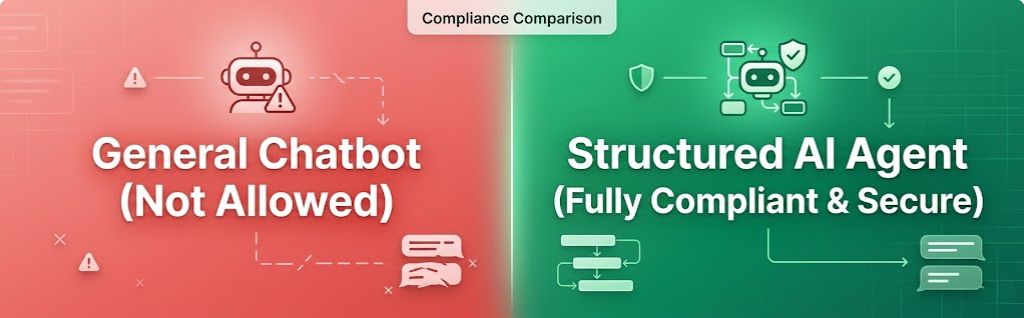
Structured AI Agents vs General Chatbots
We build structured AI agents — not open chatbots. These agents follow predefined decision trees with clear escalation paths to human agents. This ensures:
- 100% compliance with Meta rules
- Zero risk of hallucination or wrong financial advice
- Full auditability for regulators
Client-Server Hosted Architecture for Maximum Security
For banks and government-linked financial entities, we strongly recommend client-server hosted models where:
- All conversation history and customer data stays inside your own data centre
- Only encrypted message routing happens through Meta
- Complete data sovereignty is maintained
This architecture satisfies even the strictest PDPL and SAMA requirements.
Eliminate compliance risks while scaling intelligent automation. Request a live demonstration of structured AI agents built specifically for banking.
Understanding PDPL Regulations for WhatsApp Business API
The Personal Data Protection Law (PDPL), regulated by the Saudi Data and Artificial Intelligence Authority (SDAIA), is the cornerstone of data privacy in the Kingdom of Saudi Arabia.
For any WhatsApp Business API deployment, full compliance with PDPL is mandatory. Key requirements include:
- Obtaining explicit and documented consent from customers before sending messages.
- Practicing data minimization – collecting and processing only necessary information.
- Ensuring data sovereignty and storing sensitive data within approved environments.
- Maintaining complete audit trails of all communications.
- Honoring data subject rights (access, correction, deletion, and restriction).
- Notifying SDAIA and affected individuals of any data breach within 72 hours.
All our WhatsApp Business API solutions are architected with PDPL compliance by design, including client-server hosting options for maximum data control and security.
Here’s the complete set of 20 high-intent, AI-searchable and Google Ask optimized FAQs for the 2026 Banking & Finance WhatsApp Business API Guide.
FAQs
Q1: Why are banks in Saudi Arabia and UAE adopting WhatsApp Business API in 2026?
Banks and financial institutions are rapidly moving to WhatsApp because it delivers 90%+ open rates and responses under 60 seconds. It enables instant, secure, and personalized customer service while meeting strict PDPL and SAMA regulations through structured automation.
Q2: Is WhatsApp Business API compliant with SAMA regulations for banking in Saudi Arabia?
Yes. When properly deployed, WhatsApp Business API can fully comply with SAMA guidelines. This includes strong customer authentication, clear separation of service vs marketing messages, comprehensive audit logs, explicit consent management, and robust security controls.
Q3: What is the difference between structured AI agents and general chatbots on WhatsApp for banks?
Meta prohibits general-purpose chatbots in 2026. Only structured, task-specific AI agents are allowed. These follow predefined decision trees for banking tasks like balance inquiry or transaction alerts, ensuring 100% auditability and zero risk of wrong financial advice. GMCSCO specializes in building these compliant structured AI agents.
Q4: How can banks use WhatsApp Business API for customer onboarding in Saudi Arabia?
Banks can run full digital KYC processes via WhatsApp, including secure document upload, e-signature, and consent capture. This creates a fast, compliant onboarding journey that meets both PDPL and SAMA requirements.
Q5: What SAMA requirements must banks follow when using WhatsApp Business API?
Key SAMA requirements include strong customer authentication for transactions, explicit consent before promotional messages, complete audit logs for every interaction, separation of utility and marketing messages, and regular compliance reporting.
Q6: Can banks store WhatsApp conversation data inside their own data centre in KSA?
Yes. Client-server hosted architecture allows banks to keep all conversation history and customer data inside their own data centre or approved sovereign cloud. Only encrypted routing goes through Meta. GMCSCO provides this secure client-server solution for banks and financial institutions.
Q7: What automation flows work best for banks on WhatsApp Business API in 2026?
Proven flows include proactive transaction & fraud alerts, self-service banking (balance check, mini-statement, card PIN reset), loan application tracking, collections & recovery reminders, and secure OTP verification.
Q8: Does WhatsApp Business API meet PDPL requirements for financial institutions in Saudi Arabia?
Yes, when built with PDPL-by-design architecture. This includes explicit consent, data minimization, data sovereignty, full audit trails, support for data subject rights, and 72-hour breach notification. GMCSCO’s solutions are architected to be fully PDPL compliant.
Q9: What types of AI are allowed on WhatsApp Business API for banks under Meta 2026 rules?
Only structured, task-specific AI flows are permitted. General conversational AI is banned. Banks can use predictable flows for balance inquiries, transaction alerts, card blocking, loan status, and KYC — all fully auditable and compliant.
Q10: How much can banks reduce customer service costs using WhatsApp automation in 2026?
Leading banks report up to 70% reduction in support costs along with significantly higher customer satisfaction through WhatsApp structured automation compared to traditional call centers.
Q11: Is client-server hosted WhatsApp Business API recommended for banks in KSA and UAE?
Yes, especially for banks and fintechs handling sensitive financial data. It ensures complete data sovereignty and meets the strictest PDPL and SAMA standards. GMCSCO specializes in deploying secure client-server WhatsApp solutions for the financial sector.
Q12: How do banks handle consent and compliance on WhatsApp Business API?
Banks must obtain explicit, documented, and withdrawable consent before sending marketing or automated messages. GMCSCO implements centralized consent management with real-time audit logging to maintain full regulatory compliance.
Q13: Can WhatsApp be used for secure transactions and OTP delivery in banking?
Yes. Banks use WhatsApp for secure OTP verification, transaction alerts, and card management through structured, authenticated flows that comply with SAMA security standards.
Q14: What are the main benefits of WhatsApp Business API for fintech and insurance companies in UAE and KSA?
Benefits include dramatically higher engagement (90%+ open rates), lower operational costs, faster query resolution, improved customer experience, and full regulatory compliance when using structured automation.
Q15: How does GMCSCO help banks deploy compliant WhatsApp solutions in 2026?
GMCSCO, as an experienced partner, helps banks design SAMA and PDPL-compliant architectures, build structured AI agents, implement client-server hosting, and deliver secure automation flows tailored for banking use cases.
Q16: What is the best WhatsApp solution for high-volume banking communications in Saudi Arabia?
The best solution combines client-server hosting, structured AI agents, robust consent management, and full auditability. GMCSCO delivers this enterprise-grade, regulator-approved setup for banks and financial institutions.
Q17: Can WhatsApp Business API handle collections and recovery processes for banks compliantly?
Yes. Gentle, compliant, multi-step reminder sequences can be automated while maintaining full PDPL and SAMA adherence. These flows improve recovery rates while protecting customer relationships.
Q18: How secure is WhatsApp Business API for financial services in the Middle East?
When deployed with client-server architecture, it is highly secure. Customer data stays within the bank’s environment, and all interactions are encrypted and auditable, meeting stringent regulatory standards.
Q19: What changed in Meta’s policy for AI on WhatsApp Business API in 2026?
Meta banned general-purpose conversational AI and now allows only structured, business-defined, task-specific flows. This change actually benefits banks as most financial interactions are rule-based and auditable.
Q20: How can banks in Saudi Arabia and UAE get started with WhatsApp Business API?
The recommended first step is to schedule a consultation with a partner experienced in financial services. GMCSCO offers compliance assessments, SAMA/PDPL gap analysis, architecture design (including client-server), and proven banking automation frameworks.
Also Read About: https://gmcsco.com/pdpl-compliant-high-volume-whatsapp-business-api-saudi-arabia-2026/
This content is intended for general informational purposes only and does not constitute legal or regulatory advice. Use of communication platforms such as WhatsApp Business API must be in accordance with applicable laws, regulations, and platform policies. Readers are encouraged to consult qualified professionals for specific guidance.