
Introduction: Why Gulf Enterprises Are Rapidly Adopting WhatsApp Automation
Across the Gulf region, the way customers interact with businesses has changed dramatically. Traditional communication channels such as phone calls, emails, and website forms are no longer enough to meet modern expectations. Customers now want immediate responses, simple conversations, and convenient communication through messaging apps.
In countries such as the UAE, Saudi Arabia, and Qatar, WhatsApp has become the most preferred communication channel for both personal and business interactions. Customers often contact businesses directly on WhatsApp to ask questions, request quotes, book services, or track orders.
For small businesses, responding to these messages manually may still be manageable. However, for growing companies and large enterprises, handling hundreds or thousands of WhatsApp conversations every day quickly becomes overwhelming.
Sales teams miss opportunities. Support teams struggle to respond quickly. Customers become frustrated with delayed replies.
This is exactly why enterprises across the Gulf are investing in WhatsApp automation tools.
These platforms combine the official WhatsApp Business API with artificial intelligence, chatbots, and automated workflows to help businesses manage customer conversations at scale.
But choosing the right platform is not always straightforward. There are multiple tools in the market, each offering different capabilities.
For decision makers, understanding how these platforms compare and which solution fits enterprise requirements is critical.
This guide explains the key differences between WhatsApp automation tools, how enterprises in the Gulf are using them, and what businesses should consider before implementing automation.
The Rise of Messaging Driven Customer Engagement in the Gulf
Digital transformation initiatives across the Gulf Cooperation Council countries have significantly accelerated in recent years. Governments are investing heavily in smart cities, digital services, and AI technologies.
At the same time, consumers across the region are among the most digitally connected populations in the world.
Smartphone penetration in the UAE exceeds ninety percent. Messaging apps have become the primary communication channel for daily interactions.
For businesses, this shift creates both an opportunity and a challenge.
The opportunity is clear. WhatsApp allows companies to communicate with customers directly on a platform they already use daily.
The challenge comes from scale. As customer inquiries increase, manual responses become inefficient and costly.
Companies across sectors such as retail, real estate, healthcare, banking, travel, and education are now using messaging automation to manage customer engagement more effectively.
Businesses that adopt automation early often see improvements in response times, customer satisfaction, and operational efficiency.
Organizations exploring digital customer engagement strategies should evaluate how messaging automation can support both marketing and customer support functions.
Also Read About WhatsApp Business API Providers Comparison for AI Automation
What Are WhatsApp Automation Tools?
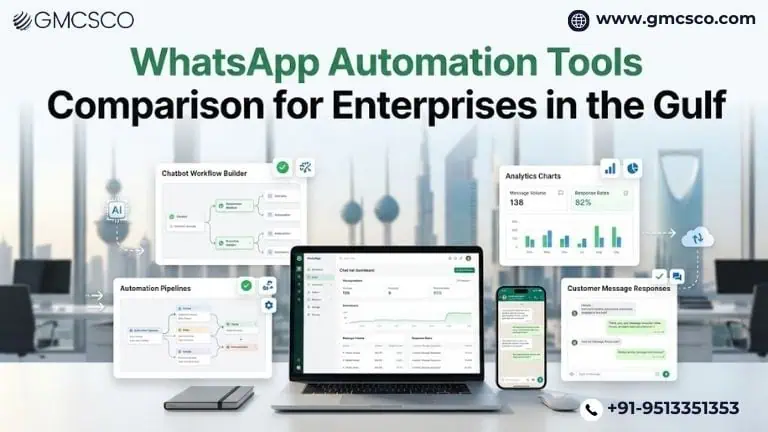
WhatsApp automation tools are software platforms that allow businesses to automate conversations with customers through the official WhatsApp Business API.
Instead of responding to every message manually, businesses can deploy intelligent chatbots and automated workflows that interact with customers in real time.
These platforms typically include several important capabilities.
- AI powered chatbots that understand customer questions
- Automated responses triggered by customer messages
- Lead qualification workflows for sales teams
- Customer support automation
- Marketing broadcast messaging
- CRM integration for managing customer data
- Conversation analytics and performance tracking
In simple terms, these platforms transform WhatsApp into a scalable customer engagement system.
Businesses can respond to thousands of customer inquiries simultaneously while maintaining fast response times and consistent communication.
For enterprises managing large volumes of customer interactions, automation becomes essential to maintain service quality and operational efficiency.
Companies looking to improve digital customer experience often begin with messaging automation because it delivers quick and measurable results.
Why Enterprises in the Gulf Are Prioritizing WhatsApp Automation
There are several reasons why WhatsApp automation is gaining momentum among enterprises across the Gulf.
Customer Expectations for Instant Communication
Customers expect immediate responses when they send messages. Long response times often lead to lost sales opportunities.
Automation ensures that customers receive quick responses even outside business hours.
Rapid Growth of Digital Inquiries
Businesses investing in online advertising campaigns frequently receive a large number of inquiries through WhatsApp. Chatbots help manage these inquiries efficiently.
Rising Operational Costs
Hiring large support teams to manage messaging manually increases operational expenses. Automation allows companies to scale communication without increasing staffing costs.
Need for Consistent Customer Experience
Automated systems ensure that customers receive accurate and consistent information every time they interact with the business.
Data Driven Decision Making
Automation platforms provide insights into customer behavior, conversation trends, and engagement patterns. This data helps companies improve marketing and service strategies.
For organizations planning long term digital transformation, messaging automation has become an essential component of modern customer engagement.
Businesses evaluating automation strategies should analyze how WhatsApp can support their sales, marketing, and support teams simultaneously.
Also Read About Best WhatsApp Chatbot Tools Comparison for Businesses
Key Features Enterprises Should Evaluate in WhatsApp Automation Platforms
Not all WhatsApp automation platforms offer the same capabilities. Enterprises should evaluate several factors before choosing a solution.
Conversational AI Capabilities
Advanced platforms use artificial intelligence to understand customer intent and deliver meaningful responses. Basic rule based chatbots often struggle with complex conversations.
CRM and System Integration
Enterprises typically rely on CRM systems to manage customer relationships. Automation platforms should integrate seamlessly with these systems.
Omnichannel Communication
Many modern platforms support multiple communication channels such as WhatsApp, web chat, Instagram, and SMS. This allows businesses to manage conversations from a single interface.
Marketing Campaign Automation
Businesses often use WhatsApp to send promotional messages, product updates, and event announcements. Platforms should support targeted broadcast messaging.
Workflow Automation
Advanced tools allow companies to automate customer journeys based on specific triggers such as purchases, inquiries, or abandoned carts.
Security and Compliance
Enterprises must ensure that platforms comply with WhatsApp policies and regional data protection standards.
Companies planning to implement messaging automation should evaluate these features carefully to ensure the solution supports long term scalability.
Get WhatsApp Automation Advice
Popular WhatsApp Automation Platforms Used by Businesses
Several platforms provide WhatsApp automation capabilities. Each platform offers different strengths depending on business requirements.
Twilio
Twilio is a global communication platform that provides access to the WhatsApp Business API.
It offers strong infrastructure, high scalability, and extensive developer capabilities. However, implementation typically requires technical expertise.
This platform is often used by technology companies that prefer building custom automation solutions.
WATI
WATI focuses specifically on WhatsApp automation for business communication.
The platform includes a chatbot builder, team inbox, and broadcast messaging features. It is relatively easy to implement and popular among growing businesses.
Interakt
Interakt is widely used by ecommerce companies for order notifications and customer communication.
Its features are particularly useful for online stores that want to automate order updates, support queries, and marketing campaigns.
360dialog
360dialog provides direct WhatsApp Business API infrastructure and integrates with several automation platforms.
It is commonly used by companies building their own messaging solutions.
Yellow.ai
Yellow.ai is an advanced conversational AI platform designed for enterprise automation across multiple communication channels.
It offers powerful AI capabilities and multilingual chatbot support.
Each platform offers valuable capabilities, but choosing the right tool depends on business objectives, technical resources, and scalability requirements.
The Hidden Challenge: Tools Alone Are Not Enough
Many businesses assume that selecting a WhatsApp automation platform automatically solves their customer communication challenges.
In reality, technology is only one part of the equation.
Successful automation requires designing effective conversation flows, integrating CRM systems, mapping customer journeys, and continuously optimizing chatbot interactions.
Without proper strategy and implementation, even the most powerful automation platform may fail to deliver meaningful results.
This is why many enterprises choose to work with automation specialists who understand both the technology and the business processes behind customer engagement.
Working with experienced consultants helps organizations design automation systems that align with sales funnels, support workflows, and marketing strategies.
Companies exploring messaging automation often begin with a strategic assessment to identify where automation can deliver the greatest impact.
Also Read About AI Chatbot vs Rule-Based Chatbot for WhatsApp
Practical Business Use Cases for WhatsApp Automation
Enterprises are using WhatsApp automation across multiple departments.
Lead Qualification and Sales Conversations
Chatbots can capture customer information, ask qualifying questions, and route potential leads to the appropriate sales representatives.
Ecommerce Customer Communication
Online stores use automation to send order confirmations, shipping updates, and delivery notifications.
Appointment Scheduling
Service businesses such as healthcare clinics and salons automate appointment bookings and reminders.
Customer Support Automation
Common customer inquiries such as product information, store hours, or service availability can be answered instantly.
Marketing Campaign Messaging
Businesses can send targeted promotional campaigns and product announcements directly to customers.
Payment Notifications
Financial services companies use messaging automation to send payment confirmations and account alerts.
Organizations that integrate automation into multiple customer touchpoints often achieve stronger engagement and higher conversion rates.
How Enterprises Can Implement WhatsApp Automation Successfully
Adopting WhatsApp automation requires a structured implementation approach.
Define Automation Goals
Businesses should identify whether automation will focus on sales inquiries, customer support, marketing communication, or a combination of all three.
Obtain WhatsApp Business API Access
Enterprises must use the official WhatsApp Business API to deploy automation at scale.
Design Customer Conversation Flows
Understanding the most common customer inquiries helps businesses design effective chatbot interactions.
Integrate CRM and Business Systems
Connecting automation with CRM platforms ensures that customer data and conversation history remain centralized.
Test and Improve
Continuous monitoring and optimization improve chatbot performance and customer satisfaction.
Many organizations find that working with experienced automation consultants significantly accelerates implementation and reduces operational complexity.
Enterprises looking to implement scalable messaging solutions often collaborate with GMCSCO to design customized WhatsApp automation systems aligned with their operational requirements.
Schedule Your Free Consultation
Business Benefits of WhatsApp Automation
When implemented effectively, WhatsApp automation delivers measurable business outcomes.
- Faster response times improve customer satisfaction
- Sales teams receive qualified leads automatically
- Support teams handle fewer repetitive inquiries
- Operational costs decrease as automation handles routine communication
- Customer engagement increases through personalized messaging
For enterprises across the Gulf region, these benefits translate directly into stronger customer relationships and improved business performance.
Messaging automation also enables companies to scale communication without dramatically increasing staffing requirements.
Common Mistakes Businesses Make When Implementing Automation
Despite its advantages, some companies struggle to achieve the full benefits of automation.
Common mistakes include:
- Deploying overly rigid rule based chatbots
- Ignoring the need for human agent handoff
- Sending excessive promotional messages
- Failing to integrate automation with existing CRM systems
- Neglecting conversation analytics and performance monitoring
Automation should enhance the customer experience rather than create frustration.
Businesses that treat automation as an evolving system and continuously optimize interactions see the best results.
Also Read About AI Chatbot Automation with WhatsApp API for Gulf Enterprises
Future Trends in WhatsApp Automation and Conversational AI
Messaging technology continues to evolve rapidly, and several trends are shaping the future of WhatsApp automation.
AI Powered Conversational Experiences
Advances in generative AI are enabling chatbots to handle complex conversations more naturally.
Conversational Commerce
Customers will increasingly complete purchases directly within messaging conversations.
Personalized Messaging
Automation platforms will use behavioral data to deliver highly personalized customer interactions.
Deeper Integration with Business Systems
Messaging platforms will become central hubs connecting marketing, sales, and customer support systems.
Enterprises that adopt messaging automation early are better positioned to capitalize on these innovations and deliver superior customer experiences.
Frequently Asked Questions
Q: What is the WhatsApp Business API
The WhatsApp Business API allows companies to integrate WhatsApp messaging into software systems and automate communication with customers.
Q: Are WhatsApp chatbots allowed
Yes. Chatbots are allowed when implemented through official WhatsApp Business API providers and when messaging policies are followed.
Q: How much does WhatsApp automation cost
Costs vary depending on the automation platform, message volume, and additional features such as AI chatbots and CRM integration.
Q: Can WhatsApp automation increase sales
Yes. Automation helps businesses respond faster to inquiries, qualify leads automatically, and send personalized marketing messages.
Q: Is WhatsApp automation secure
Yes. WhatsApp messages are protected by end to end encryption when implemented through approved providers.
Q: How long does implementation take
Basic systems can be implemented within weeks, while enterprise scale automation may require several months depending on integrations.
Q: Which industries benefit most from WhatsApp automation
Retail, ecommerce, banking, healthcare, education, travel, and real estate companies frequently use WhatsApp automation.
Q: Can WhatsApp automation integrate with CRM platforms
Yes. Most enterprise automation platforms integrate with CRM systems to manage customer relationships and track sales pipelines.
Building a Scalable WhatsApp Automation Strategy
Implementing messaging automation successfully requires more than simply choosing a platform. Businesses must design customer journeys, integrate systems, and continuously optimize conversations to maximize results.
Companies exploring advanced customer engagement strategies often begin by assessing their existing communication workflows and identifying opportunities for automation.
Organizations seeking expert guidance in WhatsApp automation strategy, AI chatbot development, and enterprise messaging implementation frequently collaborate with GMCSCO to design solutions tailored to their operational goals.
Schedule Your Free Consultation.
Conclusion
Messaging has become the dominant communication channel for businesses across the Gulf region. WhatsApp, in particular, plays a critical role in how customers interact with companies.
For enterprises managing high volumes of customer inquiries, automation is no longer optional. It is essential for delivering fast responses, improving customer experience, and scaling communication efficiently.
While there are many WhatsApp automation tools available, successful implementation requires a combination of technology, strategy, and continuous optimization.
Businesses that approach automation strategically gain significant advantages in customer engagement, operational efficiency, and revenue growth.
As messaging continues to shape the future of digital customer interactions, organizations working with experienced automation specialists such as GMCSCO are well positioned to unlock the full potential of WhatsApp automation and build stronger relationships with their customers.
Disclaimer: This content is for general informational purposes only. Information may be sourced from AI tools, search engines, and trusted references. Please verify all details with official sources before making any business or legal decisions. We are not responsible for actions taken based on this content.