
The Communication Gap in Modern Logistics
Logistics businesses operate in a world where timing and transparency define customer trust. Clients expect to know exactly where their shipments are, when deliveries will happen, and if there are any delays. For logistics companies operating in the Gulf region, managing this communication efficiently can become a serious operational challenge.
Many logistics teams still rely on manual calls, email updates, or fragmented tracking systems. As shipment volumes increase, communication bottlenecks start affecting productivity and customer satisfaction.
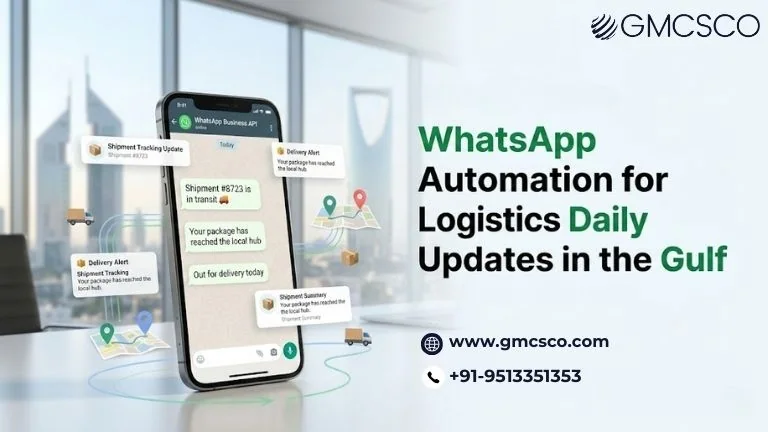
This is where WhatsApp automation for logistics daily updates in the Gulf becomes a powerful operational advantage. By integrating automated messaging, AI chatbots, and logistics tracking systems with WhatsApp, companies can deliver real time shipment updates directly to customers, partners, and internal teams.
Instead of reactive communication, logistics companies move toward proactive customer engagement.
For businesses operating in the UAE, Saudi Arabia, Qatar, and other GCC markets, adopting communication automation is quickly becoming a competitive necessity rather than a technological luxury.
The Growing Operational Challenges in Gulf Logistics
The Gulf logistics industry has experienced rapid growth over the past decade. E commerce expansion, cross border trade, and infrastructure investments have significantly increased shipment volumes across the region.
However, this growth also introduces operational complexity.
High Volume of Customer Inquiries
Logistics teams often receive hundreds of daily inquiries related to shipment tracking, delivery status, or delays. Customer service teams spend a large portion of their time answering repetitive questions such as:
- Where is my shipment
- When will my delivery arrive
- Has the package been dispatched
- Is there a delay
Handling these queries manually slows down operations and increases support costs.
Multi Stakeholder Communication
Logistics operations involve many stakeholders including:
- Shippers
- Warehouses
- Transport teams
- Customs agents
- Delivery drivers
- Customers
Ensuring all stakeholders receive timely updates is difficult without automation.
Also Read About WhatsApp Chatbot for Logistics Companies
Last Mile Delivery Pressure
Last mile delivery is the most sensitive stage in logistics. Customers expect accurate delivery windows and proactive notifications. Without automated communication, delivery teams often face missed deliveries and customer frustration.
Cross Border Shipment Tracking
The Gulf region frequently handles cross border shipments between GCC countries. Communication delays during customs processing or transit updates create uncertainty for clients.
As logistics networks grow larger, manual communication simply cannot keep up with operational demands.
Why WhatsApp Has Become the Preferred Communication Channel
In the Gulf region, WhatsApp is one of the most widely used communication platforms for both personal and business interactions. Its penetration rate in countries such as the UAE and Saudi Arabia is among the highest globally.
For logistics companies, this creates a natural opportunity.
Customers already use WhatsApp daily. Delivering shipment updates through this familiar platform dramatically improves engagement and response rates.
Benefits of Using WhatsApp for Logistics Communication
Instant message delivery
Shipment notifications reach customers immediately.
High open rates
WhatsApp messages often achieve open rates above ninety percent.
Two way communication
Customers can ask questions and receive automated responses.
Mobile first experience
Most logistics clients rely on mobile communication during delivery.
Reduced support workload
Automated updates eliminate repetitive customer queries.
By integrating logistics systems with WhatsApp automation tools, companies can create a seamless communication flow without increasing operational overhead.
If your logistics business is exploring ways to improve customer communication, it is worth evaluating how messaging automation can fit into your broader digital transformation strategy.
book your free consultation today.
What Is WhatsApp Automation for Logistics?
WhatsApp automation for logistics refers to the use of automated messaging systems connected to logistics platforms to send shipment related updates directly to customers via WhatsApp.
These systems typically connect with:
- Transport management systems
- Warehouse management systems
- Shipment tracking platforms
- Fleet management tools
- Customer relationship management software
Whenever a shipment status changes, the system automatically triggers a WhatsApp notification.
Examples of Automated Logistics Updates
- Order confirmed
- Shipment dispatched
- Shipment in transit
- Out for delivery
- Delivery completed
- Delivery delay notification
- Customs clearance update
Instead of waiting for customers to ask for updates, the system proactively communicates with them.
Many advanced solutions also include AI powered WhatsApp chatbots capable of answering common questions such as:
- Track my shipment
- Reschedule delivery
- Share delivery address
- Contact support
This creates a self service experience that significantly reduces manual intervention.
Also Read About Daily Order Update Automation WhatsApp API Gulf
Real World Use Cases in Gulf Logistics Companies
Automation is not just a theoretical concept. Many logistics companies in the GCC region are already using WhatsApp automation to streamline communication.
Shipment Tracking Notifications
When a package leaves the warehouse, the system sends an automated message:
Your shipment has been dispatched and is currently in transit.
Customers receive real time updates without needing to call support.
Delivery Day Alerts
On the day of delivery, customers receive a message such as:
Your shipment will be delivered today between 2 PM and 5 PM.
This reduces missed deliveries and improves customer satisfaction.
Driver Coordination
Delivery drivers can also receive automated updates related to route assignments, shipment instructions, or customer information.
Customs Clearance Notifications
For cross border shipments, automated messages can inform customers when goods clear customs or when additional documentation is required.
Customer Self Service Tracking
Customers can simply send a tracking number via WhatsApp and receive automated shipment status information.
This significantly reduces inbound customer service requests.
Companies that are evaluating automation should consider how messaging platforms can integrate with their existing logistics management systems for seamless communication.
Step by Step Implementation of WhatsApp Automation for Logistics
Implementing automation does not require a complete technology overhaul. Most logistics companies can gradually adopt messaging automation using structured steps.
Step 1: Identify Communication Bottlenecks
Start by mapping customer communication points.
Common areas include:
- Shipment confirmation
- Dispatch notifications
- Transit updates
- Delivery alerts
- Customer support inquiries
These are the best starting points for automation.
Step 2: Integrate Logistics Systems
The next step involves connecting WhatsApp messaging platforms with your existing systems such as:
- Transport management systems
- Warehouse systems
- Shipment tracking platforms
This integration allows automatic message triggers based on shipment status updates.
Step 3: Design Automated Message Flows
Create clear and concise message templates for different shipment stages.
Examples include:
- Dispatch notification
- Delivery reminder
- Delay alert
- Delivery confirmation
Messages should be informative and customer friendly.
Step 4: Deploy AI Chatbot Capabilities
AI powered chatbots can handle common customer queries including:
- Track shipment
- Update delivery address
- Delivery rescheduling
- Support requests
This creates a fully automated customer support layer.
Step 5: Monitor Performance Metrics
After implementation, monitor key metrics such as:
- Customer response rate
- Delivery success rate
- Support ticket reduction
- Customer satisfaction scores
These insights help refine automation workflows over time.
Businesses that adopt automation early typically gain significant operational advantages over competitors that rely on manual communication processes.
Also Read About WhatsApp Automation Workflows for Customer Daily Reminders in the Gulf
Business Benefits and ROI Impact
For logistics companies operating in competitive markets such as the UAE, operational efficiency directly impacts profitability.
WhatsApp automation can generate measurable improvements across several areas.
Reduced Customer Support Costs
Automated updates reduce the number of support inquiries related to shipment status.
This allows support teams to focus on complex issues rather than repetitive questions.
Improved Delivery Success Rate
Automated delivery reminders ensure customers are available during delivery windows.
This reduces failed delivery attempts and operational inefficiencies.
Faster Communication with Customers
Instant messaging ensures customers stay informed at every shipment stage.
Transparent communication builds trust and improves long term relationships.
Operational Efficiency
Automation reduces manual coordination between departments such as warehouse teams, drivers, and customer service.
Better Customer Experience
Providing proactive shipment updates enhances the overall customer experience and strengthens brand reputation.
Organizations interested in modernizing their logistics communication workflows should consider consulting specialists who understand both automation technology and logistics operations.
Chat With Our Automation Expert
Common Mistakes Businesses Make Without Automation
Many logistics companies hesitate to adopt automation because they believe manual communication still works.
However, this approach often creates long term operational problems.
Delayed Customer Updates
Without automated messaging, customers receive updates only after they contact support.
Overloaded Customer Support Teams
Manual tracking inquiries consume valuable time and resources.
Inconsistent Communication
Different teams may provide inconsistent information to customers.
Missed Delivery Windows
Customers who are not informed about delivery times are more likely to miss deliveries.
Lack of Data Insights
Manual communication provides limited analytics about customer behavior and operational performance.
Automation addresses these issues while creating a scalable communication system.
Future Trends in Logistics Communication Technology
The logistics industry is rapidly evolving as companies adopt digital transformation strategies.
Several trends are shaping the future of communication automation.
AI Powered Customer Interaction
AI chatbots will become more intelligent, capable of handling complex shipment inquiries and delivery modifications.
Predictive Delivery Updates
Advanced systems will predict potential delays based on traffic data, weather conditions, and route analytics.
Integration with IoT Tracking
Connected sensors will provide real time shipment location data, enabling highly accurate updates.
Voice Enabled Logistics Support
Customers may soon request shipment updates using voice commands integrated with messaging platforms.
Hyper Personalized Customer Communication
Automation systems will deliver tailored updates based on customer preferences and shipment type.
Companies that invest early in automation infrastructure will be better positioned to scale as these technologies evolve.
Organizations exploring automation solutions can benefit from evaluating partners that specialize in AI powered messaging platforms and logistics technology integration.
Also Read About WhatsApp Business API Automation for Daily Updates in KSA
Choosing the Right Implementation Partner
Implementing messaging automation requires both technical expertise and an understanding of logistics workflows.
A reliable partner should offer:
- WhatsApp Business API integration
- AI chatbot development
- Logistics system integration
- Automation workflow design
- Analytics and reporting tools
Technology consulting firms like GMCSCO help logistics businesses design automation frameworks that connect shipment tracking systems with WhatsApp communication channels. Their approach focuses on improving operational efficiency while maintaining seamless customer engagement.
Companies interested in modernizing their logistics communication strategy can explore automation consulting services to identify the most effective implementation approach for their operations.
Frequently Asked Questions
Q: What is WhatsApp automation for logistics?
WhatsApp automation for logistics uses messaging platforms connected to logistics systems to automatically send shipment updates, delivery notifications, and tracking information to customers.
Q: How does WhatsApp help logistics companies communicate with customers?
WhatsApp enables instant communication, automated notifications, and chatbot support that keeps customers informed about shipment status in real time.
Q: Is WhatsApp automation useful for cross border shipments in the Gulf?
Yes. Automated updates help inform customers about customs clearance, shipment transit, and delivery timelines across GCC countries.
Q: Can WhatsApp chatbots handle customer support for logistics?
AI powered chatbots can answer common questions such as shipment tracking, delivery schedules, and order status, reducing the workload on support teams.
Q: Does WhatsApp automation improve delivery success rates?
Yes. Automated delivery reminders ensure customers are available when drivers arrive, reducing missed deliveries.
Q: Is WhatsApp automation secure for logistics communication?
When implemented through official WhatsApp Business API platforms, communication remains secure and compliant with data protection standards.
Q: How long does it take to implement WhatsApp automation?
Basic automation workflows can be implemented within a few weeks depending on the complexity of system integrations.
Q: Can small logistics companies benefit from automation?
Yes. Even small logistics providers can use automation to improve customer communication and operational efficiency.
Q: What systems can integrate with WhatsApp automation?
Transport management systems, warehouse systems, CRM platforms, and shipment tracking software can all integrate with WhatsApp automation.
Talk to Logistics Automation Expert
Strategic Next Step for Logistics Businesses
As logistics networks grow more complex, communication automation is becoming a critical component of operational efficiency.
Businesses that continue relying on manual updates risk falling behind competitors that offer real time, transparent communication experiences.
Organizations exploring WhatsApp automation, AI chatbots, and logistics workflow integration can work with technology specialists such as GMCSCO to design scalable messaging solutions aligned with their operational goals.
Conclusion
The logistics industry in the Gulf region is evolving rapidly. Rising shipment volumes, customer expectations, and cross border trade are pushing companies to rethink how they communicate with customers.
WhatsApp automation for logistics daily updates in the Gulf provides a practical solution to these challenges. By delivering real time shipment updates through the most widely used messaging platform in the region, logistics companies can improve transparency, reduce support workload, and enhance delivery efficiency.
Automation also enables businesses to scale operations without increasing communication complexity.
For companies ready to modernize their logistics communication infrastructure, exploring AI powered messaging platforms with experienced implementation partners like GMCSCO can help unlock the next level of operational efficiency and customer engagement.
Disclaimer: This content is for general informational purposes only. Information may be sourced from AI tools, search engines, and trusted references. Please verify all details with official sources before making any business or legal decisions. We are not responsible for actions taken based on this content.