
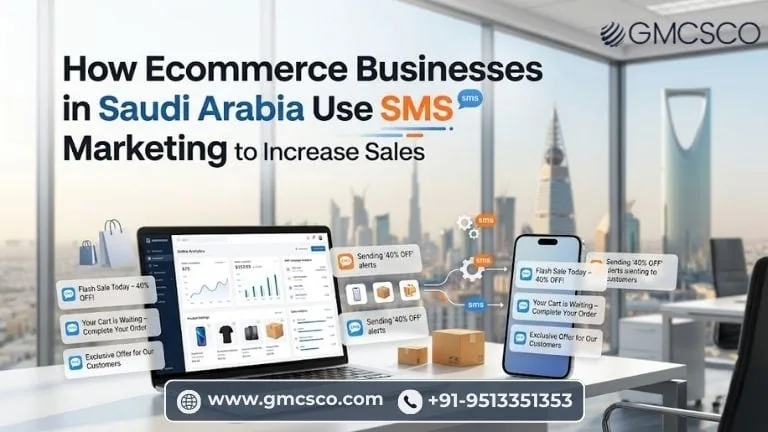
Ecommerce in Saudi Arabia is growing at an extraordinary pace. Online shopping behavior has shifted dramatically over the past few years as consumers increasingly rely on mobile devices for product discovery, purchases, and customer service interactions.
Yet despite this rapid digital growth, many ecommerce businesses still struggle with a familiar challenge. Website traffic is rising, but conversion rates remain inconsistent. Shopping carts are abandoned. Customers browse but never return. Marketing campaigns generate clicks but not enough revenue.
For business owners and marketing leaders, the question becomes clear.
How do you reach customers instantly, reliably, and at the exact moment they are ready to engage?
The answer is simpler than many expect. It lies in a communication channel that almost every consumer checks within minutes.
SMS marketing.
Across Saudi Arabia, ecommerce brands are quietly using SMS campaigns to increase conversions, recover abandoned carts, and strengthen customer loyalty. When executed strategically, SMS marketing becomes one of the highest performing revenue channels in the entire marketing stack.
In this article, we will explore how ecommerce businesses in Saudi Arabia use SMS marketing to increase sales, how companies implement it effectively, and how modern AI driven communication platforms are transforming the way businesses interact with customers.
The Ecommerce Boom in Saudi Arabia
Saudi Arabia has become one of the most dynamic ecommerce markets in the Middle East.
Government initiatives under Vision 2030, increasing internet penetration, and strong mobile adoption have accelerated the digital economy. Consumers are comfortable purchasing everything from fashion and electronics to groceries and luxury products online.
Mobile commerce now represents a significant portion of online transactions. Shoppers expect instant communication from brands throughout the buying journey.
- Order confirmations
- Delivery updates
- Payment notifications
- Customer support responses
All of these interactions influence the overall customer experience.
However, email marketing alone is no longer enough. Open rates continue to decline while inbox competition grows.
SMS on the other hand remains one of the most direct and immediate communication channels available to businesses.
For ecommerce companies in Saudi Arabia, this creates a powerful opportunity.
Why SMS Marketing Works So Well for Ecommerce
SMS marketing succeeds because it aligns perfectly with how customers already behave.
People check their phones constantly throughout the day. Text messages receive extremely high open rates, often above 95 percent.
Unlike email, SMS messages are rarely ignored.
This makes SMS an ideal tool for time sensitive communication that drives immediate action.
Here are several reasons ecommerce businesses rely on SMS marketing.
Instant Customer Reach
Messages arrive directly on a customer’s phone without requiring app downloads or internet browsing.
High Engagement Rates
SMS messages are typically opened within minutes, making them ideal for promotions and alerts.
Perfect for Mobile Shopping
Since many ecommerce purchases happen on mobile devices, SMS creates a seamless path back to the online store.
Personalized Customer Communication
Modern marketing automation tools allow companies to send tailored messages based on customer behavior and purchase history.
Strong Return on Investment
SMS campaigns often outperform other channels in terms of conversion rate and revenue impact.
When integrated into the broader ecommerce marketing strategy, SMS becomes a powerful driver of both sales and customer retention.
Also Read About Bulk SMS marketing in Saudi Arabia: strategy, benefits, and best practices
Common Challenges Ecommerce Businesses Face Without SMS Marketing
Despite the benefits, many online retailers still rely only on traditional digital marketing channels.
This creates several operational challenges.
High Cart Abandonment Rates
Customers frequently add products to their cart but leave before completing the purchase. Without real time reminders, these potential sales disappear.
Weak Customer Retention
Many brands focus heavily on acquiring new customers but fail to nurture existing ones.
Poor Post Purchase Communication
Customers want updates about orders and deliveries. When businesses fail to communicate clearly, trust can erode.
Delayed Promotional Messaging
Limited time promotions often lose effectiveness when customers do not see them quickly.
SMS marketing solves many of these issues by providing immediate communication at key stages of the customer journey.
Soft Advisory CTA
Many organizations are now exploring how automation and AI powered messaging platforms can enhance customer communication strategies across SMS, messaging apps, and ecommerce channels.
Businesses evaluating these opportunities often benefit from consulting experts who understand both marketing strategy and communication technology.
How Ecommerce Businesses Use SMS Marketing to Increase Sales
SMS marketing is most effective when it is integrated throughout the entire customer lifecycle.
Successful ecommerce companies in Saudi Arabia use SMS in several strategic ways.
- Abandoned Cart Recovery
Cart abandonment is one of the biggest revenue leaks in ecommerce.
Customers may leave due to distractions, price comparison, or hesitation.
SMS reminders can recover these lost sales.
A typical cart recovery message might include:
- A reminder of items left in the cart
- A limited time discount code
- A direct link back to the checkout page
Because SMS messages are opened quickly, they often convert customers who were already considering a purchase.
Many ecommerce brands recover a significant percentage of abandoned carts using automated SMS workflows.
- Flash Sales and Limited Promotions
Urgency is a powerful marketing driver.
SMS campaigns are ideal for promoting time sensitive offers such as:
- Seasonal discounts
- Flash sales
- Product launches
- Exclusive loyalty offers
Instead of relying on social media algorithms or crowded email inboxes, brands deliver promotions directly to customers.
This immediacy increases both click through rates and conversions.
- Order Confirmation and Transactional Updates
Transactional SMS messages play a crucial role in customer satisfaction.
Customers want immediate confirmation that their order has been processed successfully.
Common transactional SMS notifications include:
- Order confirmation
- Payment confirmation
- Shipping updates
- Delivery notifications
These messages build trust while reducing support inquiries.
They also create opportunities to introduce additional offers or product recommendations.
- Customer Loyalty and Retention Campaigns
Acquiring new customers is significantly more expensive than retaining existing ones.
SMS marketing allows ecommerce brands to nurture relationships with repeat buyers.
Examples include:
- Loyalty program updates
- Personalized birthday discounts
- VIP promotions
- Reorder reminders
By maintaining regular communication, businesses increase lifetime customer value.
- Product Back in Stock Notifications
When popular products sell out, many customers forget to return later.
SMS notifications solve this problem.
Customers who sign up for stock alerts receive a message the moment the product becomes available again.
Because demand already exists, these messages often generate immediate purchases.
Also Read About Top bulk SMS gateway providers in Saudi Arabia for businesses
How Ecommerce Companies Implement SMS Marketing
Launching SMS marketing successfully requires a structured approach.
Below is the typical implementation process used by leading ecommerce companies.
Step 1: Customer Consent and Compliance
Businesses must obtain customer permission before sending promotional SMS messages.
This typically occurs through:
- Checkout opt in options
- Account registration forms
- Promotional sign up pages
Regulatory compliance and transparent communication are critical to building trust.
Step 2: Integrating SMS With Ecommerce Platforms
SMS marketing platforms connect directly with ecommerce systems such as Shopify, Magento, or WooCommerce.
This integration enables automated messaging based on customer activity.
Step 3: Creating Automated Customer Journeys
Automation allows businesses to send messages triggered by specific behaviors.
Examples include:
- Abandoned cart reminders
- Post purchase follow ups
- Shipping updates
- Re engagement campaigns
Automation ensures consistent communication without manual effort.
Step 4: Personalizing Messages With Customer Data
Modern customer engagement platforms allow companies to personalize messages using:
- Purchase history
- Customer location
- Shopping preferences
- Loyalty status
Personalization significantly improves response rates.
Step 5: Measuring Campaign Performance
Successful SMS marketing programs continuously analyze results such as:
- Click through rates
- Conversion rates
- Revenue generated
- Customer engagement metrics
These insights help refine messaging strategies over time.
Soft Advisory CTA
Organizations exploring SMS marketing often combine it with broader customer engagement technologies including messaging apps, AI automation tools, and conversational commerce platforms. Understanding how these systems work together can unlock significantly higher marketing performance.
The Role of AI Automation in Modern SMS Marketing
SMS marketing today is no longer limited to simple promotional messages.
Artificial intelligence and automation are transforming how businesses communicate with customers.
AI powered systems can analyze customer behavior, predict purchase intent, and deliver messages at the optimal time.
Examples include:
- Predictive product recommendations
- Automated follow ups after browsing activity
- Dynamic promotional messaging
- Smart segmentation of customer groups
AI also enables brands to manage large scale messaging campaigns without overwhelming internal teams.
This combination of automation and personalization creates a far more sophisticated customer engagement strategy.
SMS and Messaging Apps: The Future of Customer Communication
While SMS remains highly effective, many ecommerce businesses are also expanding into messaging apps.
Customers increasingly prefer conversational interactions with brands.
Messaging platforms allow businesses to provide:
- Real time support
- Interactive product recommendations
- Order tracking assistance
- Conversational purchasing experiences
For example, companies using WhatsApp marketing for ecommerce can guide customers through product discovery, answer questions instantly, and even complete purchases directly within messaging conversations.
Businesses implementing WhatsApp business API Saudi Arabia solutions are able to automate large volumes of customer conversations while maintaining personalized interactions.
This shift toward conversational commerce is changing the entire ecommerce experience.
Common Mistakes Businesses Make With SMS Marketing
Despite its effectiveness, SMS marketing can fail if implemented incorrectly.
Here are several mistakes companies should avoid.
Sending Too Many Messages
Over messaging can lead to customer frustration and opt outs.
Quality communication always matters more than quantity.
Lack of Personalization
Generic messages rarely perform well. Customers expect relevant content tailored to their interests.
Poor Timing
Messages sent at inconvenient hours can damage brand perception.
Ignoring Data and Analytics
Without measuring campaign performance, businesses miss opportunities to improve results.
Not Integrating With Other Channels
SMS should be part of an omnichannel strategy that includes email, messaging apps, and AI powered chat systems.
Avoiding these mistakes ensures SMS marketing becomes a revenue driver rather than just another marketing tactic.
Future Trends in Ecommerce Customer Engagement
The ecommerce landscape is evolving rapidly.
Several emerging trends will shape the future of customer communication.
Conversational Commerce
Customers increasingly prefer chatting with brands rather than navigating complex websites.
AI Powered Customer Journeys
Artificial intelligence will continue to personalize marketing communication across multiple channels.
Omnichannel Messaging Platforms
Businesses will unify SMS, messaging apps, and chatbots into a single communication ecosystem.
Predictive Marketing Automation
Advanced analytics will allow companies to anticipate customer needs before they occur.
Companies that adopt these technologies early will gain a significant competitive advantage.
Soft Advisory CTA
Businesses that want to stay ahead in digital commerce often evaluate how automation, messaging APIs, and AI driven customer engagement platforms can improve both marketing performance and operational efficiency.
Also Read About WhatsApp vs SMS vs Email: which marketing channel works best?
How GMCSCO Helps Businesses Implement SMS and AI Communication Solutions
As ecommerce competition grows across Saudi Arabia and the broader Middle East, businesses increasingly need scalable communication systems that combine automation, messaging technology, and AI driven customer engagement.
This is where technology partners become critical.
GMCSCO works with organizations to design and implement intelligent communication ecosystems that integrate SMS marketing, messaging apps, automation platforms, and customer engagement tools.
For ecommerce companies, this typically includes:
- Automated customer messaging workflows
- Integration with ecommerce platforms
- AI powered chatbot solutions
- Advanced customer engagement platforms
- Marketing automation systems
As a WhatsApp business solution provider, GMCSCO also supports businesses implementing WhatsApp API integration that allow brands to manage customer conversations at scale while maintaining personalized interactions.
These technologies help businesses move beyond one way marketing communication toward fully interactive customer engagement.
Frequently Asked Questions
Q: Is SMS marketing legal in Saudi Arabia?
Yes, SMS marketing is legal when businesses obtain customer consent before sending promotional messages. Companies must follow regulatory guidelines and provide opt out options.
Q: How effective is SMS marketing compared to email?
SMS typically achieves significantly higher open rates and faster engagement than email. Many ecommerce businesses use both channels together for maximum impact.
Q: What type of messages work best for ecommerce SMS campaigns?
The most effective messages include cart reminders, order confirmations, flash sale promotions, loyalty offers, and product restock alerts.
Q: How often should businesses send SMS marketing messages?
Frequency depends on the business and customer preferences, but most companies limit promotional SMS campaigns to avoid overwhelming subscribers.
Q: Can SMS marketing be automated?
Yes. Modern marketing platforms allow businesses to automate messages triggered by customer actions such as cart abandonment or completed purchases.
Q: How does AI improve SMS marketing?
AI helps personalize messages, analyze customer behavior, optimize send times, and predict which offers will convert best.
Q: Should SMS be combined with messaging apps?
Yes. Combining SMS with messaging platforms creates a stronger omnichannel communication strategy that improves customer experience.
Q: Is SMS marketing suitable for small ecommerce businesses?
Absolutely. Even small online stores can benefit from SMS campaigns because the technology is scalable and relatively affordable.
Q: What industries benefit most from SMS marketing?
Retail, ecommerce, travel, logistics, and service industries often see the highest engagement rates.
Conclusion: SMS Marketing Is Becoming Essential for Ecommerce Growth
The ecommerce market in Saudi Arabia is becoming more competitive every year.
Businesses must capture customer attention quickly, communicate clearly, and provide seamless buying experiences across multiple channels.
SMS marketing offers a powerful solution.
It provides immediate communication, high engagement rates, and measurable impact on ecommerce revenue.
When combined with AI automation, messaging platforms, and conversational technologies, SMS becomes part of a broader customer engagement ecosystem that strengthens relationships and increases lifetime customer value.
Forward thinking companies are already investing in these technologies.
Organizations looking to modernize their customer communication strategies often work with experienced technology partners such as GMCSCO to implement intelligent automation systems, messaging integrations, and scalable engagement platforms.
For business leaders exploring the future of ecommerce communication, understanding how SMS, messaging apps, AI automation, and conversational commerce work together will be a critical step toward sustainable digital growth.
Disclaimer: This content is for general informational purposes only. Information may be sourced from AI tools, search engines, and trusted references. Please verify all details with official sources before making any business or legal decisions. We are not responsible for actions taken based on this content.