
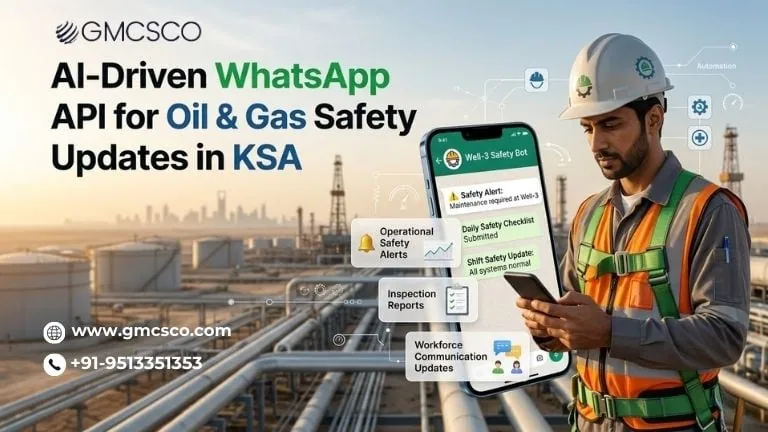
Introduction: Why Safety Communication is Becoming a Strategic Priority in the Oil and Gas Industry
The oil and gas sector has always operated in high risk environments. From offshore drilling platforms to refinery operations and pipeline networks, safety communication is not simply a regulatory requirement. It is a business critical function.
In Saudi Arabia, where the energy sector plays a central role in economic growth and global supply chains, the scale of operations is enormous. Large workforces operate across refineries, exploration sites, transportation infrastructure, and offshore platforms. Managing safety communication across such distributed environments can be extremely challenging.
Traditional communication systems such as emails, radio channels, and internal portals often struggle to reach workers in real time. Field technicians and engineers may not always have access to computers or enterprise systems while working on site. Delays in receiving safety alerts can increase operational risk and slow down emergency response.
This is where intelligent messaging platforms are changing the landscape.
The emergence of AI driven WhatsApp API solutions is enabling energy companies to deliver instant safety updates directly to employees’ mobile devices. Since WhatsApp is already widely used across Saudi Arabia, integrating safety notifications into this familiar platform improves response time, accessibility, and workforce engagement.
More importantly, when artificial intelligence is integrated into these communication systems, companies gain the ability to automate alerts, predict potential risks, and distribute real time operational updates.
For companies operating in high risk industrial environments, this shift is becoming a key component of digital transformation.
The Safety Communication Challenges Faced by Oil and Gas Companies
Energy companies manage some of the most complex operations in the world. Safety communication must function across multiple layers of operations.
These challenges typically include:
Distributed Workforce Across Large Facilities
Oil and gas operations often span multiple locations including:
- Refineries
- Drilling sites
- Pipeline networks
- Shipping terminals
- Offshore platforms
Ensuring that every worker receives timely safety information is extremely difficult when teams are geographically dispersed.
Limited Access to Enterprise Systems in the Field
Field engineers and technicians often work in environments where accessing enterprise dashboards or internal portals is not practical.
Mobile based communication platforms become essential in these environments.
Delayed Incident Communication
When an incident occurs, companies must immediately notify teams about:
- Gas leaks
- Equipment failure
- Operational hazards
- Evacuation instructions
- Weather alerts
Even a few minutes of delay in communication can impact safety outcomes.
Also Read About Highly Relevant – AI + WhatsApp Automation
Compliance and Regulatory Requirements
Saudi Arabia’s oil and gas sector follows strict safety and compliance standards. Companies must ensure that safety protocols are communicated clearly and consistently across the workforce.
Manual communication systems often struggle to maintain the speed and accuracy required for compliance.
A Quick Insight for Energy Companies
Organizations exploring digital transformation in industrial safety communication are increasingly integrating AI powered messaging platforms to reduce response time and improve workforce coordination.
Exploring intelligent automation tools early can help energy companies build more resilient safety communication frameworks.
Why This Topic Matters in the Saudi Arabia Energy Market
Saudi Arabia is one of the largest energy producers in the world. The country’s oil and gas operations are undergoing significant technological transformation as part of Vision 2030.
Digital innovation is playing a growing role in operational safety, predictive maintenance, and workforce communication.
Several trends are driving this shift:
Increased Adoption of Industrial AI
Artificial intelligence is being used for predictive risk analysis, equipment monitoring, and incident detection.
Growing Mobile Workforce
Many industrial workers rely on smartphones for communication, documentation, and reporting.
Focus on Real Time Operational Intelligence
Companies are investing in systems that enable real time decision making across operations.
Strong Regulatory Focus on Safety
Safety compliance and workforce protection remain top priorities for energy companies operating in the region.
Integrating AI driven WhatsApp communication into safety workflows aligns perfectly with these trends.
What Is an AI Driven WhatsApp API Safety Alert System
An AI driven WhatsApp API safety system is a digital communication platform that allows companies to automatically send safety alerts, incident updates, and operational notifications through WhatsApp.
This system connects enterprise safety monitoring tools with messaging infrastructure.
Artificial intelligence analyzes incoming data and triggers alerts based on predefined safety conditions.
For example, the system can automatically send alerts for:
- Equipment malfunction
- Gas leakage detection
- Weather hazards
- Emergency evacuation instructions
- Maintenance warnings
Employees receive these alerts instantly on WhatsApp.
Since WhatsApp is already widely used, workers can easily read alerts without needing additional training or software.
Many energy companies work with a WhatsApp business API Saudi Arabia implementation partner to deploy these systems within their operations.
How AI Enhances Safety Communication
Artificial intelligence adds intelligence and automation to safety alerts.
Here is how AI improves operational communication.
Predictive Risk Notifications
AI systems analyze operational data and identify patterns that may indicate potential safety risks.
When certain thresholds are detected, the system automatically sends alerts to relevant teams.
Intelligent Routing of Alerts
Different types of alerts are sent to specific teams.
- Maintenance teams receive equipment alerts
- Safety officers receive compliance warnings
- Site supervisors receive operational alerts
AI ensures that messages reach the right people instantly.
Multilingual Communication
Saudi Arabia’s industrial workforce is diverse. AI driven messaging platforms can automatically translate alerts into multiple languages.
This ensures that safety instructions are understood clearly by all workers.
Automated Incident Escalation
If a safety alert is not acknowledged within a certain timeframe, the system can automatically escalate the message to supervisors or management teams.
Operational Leaders Should Consider This
Companies that rely on manual safety communication systems often experience delays in incident response.
Exploring automated messaging frameworks can significantly improve workforce safety and operational resilience.
Also Read About Enterprise WhatsApp API Use Cases
Practical Use Cases in the Oil and Gas Industry
AI driven WhatsApp safety alerts can support several operational scenarios in the energy sector.
Refinery Safety Notifications
Refineries handle complex chemical processes where safety conditions must be monitored constantly.
AI systems can send alerts for:
- temperature fluctuations
- pressure anomalies
- chemical exposure risks
- maintenance shutdown instructions
Pipeline Monitoring Alerts
Pipeline networks often extend across large geographic areas.
AI monitoring systems can automatically notify teams about:
- pipeline pressure changes
- leak detection
- unauthorized access
- maintenance requirements
Offshore Platform Communication
Offshore teams often operate in isolated environments.
WhatsApp based safety alerts ensure instant communication for:
- Storm warnings
- Equipment malfunction
- Emergency evacuation procedures
Workforce Shift Updates
Safety updates can be sent to workers before their shift begins.
This ensures that employees are aware of current operational risks before entering the site.
Step by Step Implementation of an AI Safety Messaging System
Energy companies considering AI driven WhatsApp API solutions typically follow a structured implementation process.
Step 1: Define Safety Communication Objectives
Companies identify key safety communication requirements such as:
- Incident alerts
- Maintenance notifications
- Compliance reminders
- Shift safety briefings
Step 2: Integrate Monitoring Systems
Operational data sources such as sensors, SCADA systems, and safety dashboards are integrated with the messaging platform.
Step 3: Configure AI Alert Triggers
AI models are configured to detect safety thresholds and automatically trigger alerts.
Step 4: Deploy WhatsApp Messaging Infrastructure
The system is integrated with WhatsApp Business API to enable secure communication.
Companies typically work with a WhatsApp business API service provider during this stage.
Step 5: Train Workforce on Alert Protocols
Employees are educated on how to respond to safety alerts and acknowledge messages.
Step 6: Monitor Performance and Improve
Safety teams monitor response times, incident handling efficiency, and communication effectiveness.
Businesses Planning Digital Safety Systems
Energy companies evaluating intelligent communication solutions should assess scalability, AI capabilities, and enterprise integration before deployment.
Consulting experienced automation specialists can help streamline implementation.
Also Read About WhatsApp API Automation Workflows
Business Benefits of AI Driven WhatsApp Safety Alerts
Companies adopting intelligent safety communication platforms experience measurable operational benefits.
Faster Emergency Response
Real time alerts enable faster decision making during critical incidents.
Improved Workforce Awareness
Employees stay informed about safety risks before incidents escalate.
Reduced Operational Risk
Predictive alerts allow teams to address potential hazards early.
Higher Compliance Standards
Automated safety notifications help companies maintain regulatory compliance.
Increased Operational Efficiency
Automated communication reduces manual coordination efforts.
Stronger Workforce Engagement
Employees are more responsive to safety alerts delivered through familiar messaging platforms.
Common Mistakes Companies Make Without Automated Safety Communication
Despite advancements in industrial technology, many companies still rely on outdated communication systems.
Some common challenges include:
Delayed Incident Reporting
Manual communication channels slow down safety response.
Inconsistent Message Delivery
Important alerts may not reach all workers.
Lack of Alert Prioritization
Workers receive too many non critical messages, causing alert fatigue.
Limited Visibility for Management
Leadership teams may not have real time insights into safety communication performance.
AI driven messaging platforms solve these challenges through intelligent automation.
Exploring Smarter Workforce Communication
Industrial organizations increasingly invest in digital engagement platforms that connect safety systems, operational dashboards, and messaging tools into a unified communication ecosystem.
Future Trends in AI Safety Communication for Oil and Gas
Several technology trends will shape the future of industrial safety communication.
AI Powered Predictive Safety Platforms
Future systems will identify safety risks before incidents occur.
Integration With IoT Sensors
Industrial IoT devices will automatically trigger alerts based on environmental conditions.
Voice Enabled Safety Alerts
Voice messaging may become a powerful tool for workers operating in hazardous environments.
Data Driven Safety Analytics
Companies will analyze communication data to improve incident response and safety training.
Unified Workforce Communication Platforms
Future systems will combine safety alerts, operational updates, and workforce engagement into a single messaging platform.
As energy companies embrace digital transformation, AI powered messaging systems will become essential infrastructure.
Also Read About AI Chatbot Automation
Frequently Asked Questions
Q: How can WhatsApp be used for industrial safety alerts?
WhatsApp can deliver instant notifications about safety risks, operational hazards, and emergency instructions directly to employees’ mobile devices.
Q: Is WhatsApp secure enough for industrial communication?
The WhatsApp Business API offers enterprise grade security and encryption when implemented through approved providers.
Q: Can AI automatically detect safety risks?
Yes. AI systems can analyze operational data and trigger alerts when risk thresholds are detected.
Q: What industries benefit from AI messaging alerts?
Industries such as oil and gas, manufacturing, logistics, construction, and mining benefit from automated safety communication.
Q: How quickly can safety alerts be delivered through WhatsApp?
Alerts are delivered instantly, often within seconds after the system detects a safety event.
Q: Do employees need special training to receive alerts?
Most workers already use WhatsApp, so minimal training is required.
Q: Can safety alerts be sent in multiple languages?
Yes. AI driven messaging systems can automatically translate alerts into multiple languages.
Q: What role does AI play in emergency response?
AI helps prioritize alerts, escalate unresolved incidents, and ensure the right teams receive critical information.
Q: Can WhatsApp safety systems integrate with existing enterprise software?
Yes. These platforms can connect with industrial monitoring tools, incident management systems, and operational dashboards.
Choosing the Right Technology Partner for Implementation
Deploying AI powered safety communication platforms requires technical expertise and industry experience.
Energy companies often collaborate with experienced automation specialists who understand enterprise messaging infrastructure, AI integration, and industrial safety workflows.
An experienced WhatsApp business solution provider can help design scalable communication frameworks tailored for industrial environments.
Organizations such as GMCSCO support companies in implementing intelligent messaging systems that connect AI monitoring tools with workforce communication platforms.
If Your Organization Is Exploring AI Safety Automation
Companies planning to modernize workforce communication can evaluate AI messaging platforms, WhatsApp chatbot services, and automation consulting services to build more responsive operational environments.
Working with experienced implementation partners can significantly reduce deployment complexity and accelerate adoption.
Conclusion: The Future of Safety Communication in the Energy Industry
The oil and gas industry is entering a new phase of digital transformation where safety communication is becoming smarter, faster, and more predictive.
AI driven messaging platforms are enabling companies to deliver real time safety alerts directly to workers’ mobile devices. By combining artificial intelligence with the global reach of WhatsApp, energy companies can dramatically improve incident response, workforce awareness, and operational resilience.
For organizations operating in high risk environments such as refineries, offshore platforms, and pipeline networks, intelligent communication infrastructure is no longer optional. It is a strategic requirement.
Companies that adopt AI powered safety alert systems today will be better positioned to protect their workforce, maintain compliance, and improve operational performance in the years ahead.
Industry focused technology partners like GMCSCO are helping enterprises build these intelligent communication ecosystems, enabling energy companies to move toward safer, more connected operations.
Disclaimer: This content is for general informational purposes only. Information may be sourced from AI tools, search engines, and trusted references. Please verify all details with official sources before making any business or legal decisions. We are not responsible for actions taken based on this content.