WhatsApp Mini-Apps & In-Chat Experiences for KSA & UAE Enterprises in 2026

WhatsApp Mini-Apps & In-Chat Experiences for KSA & UAE Enterprises in 2026

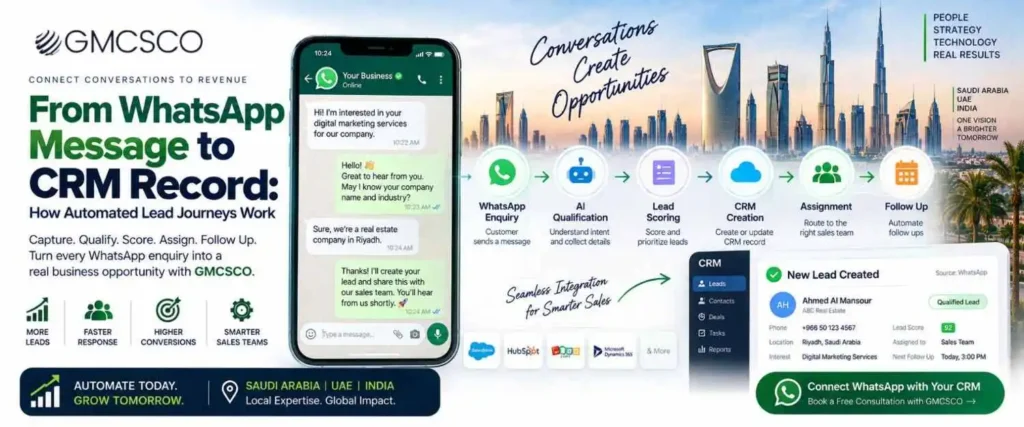
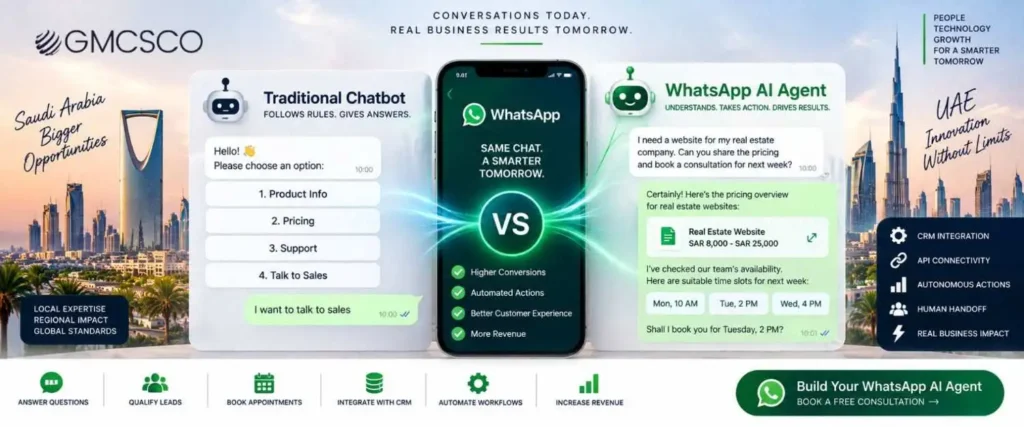
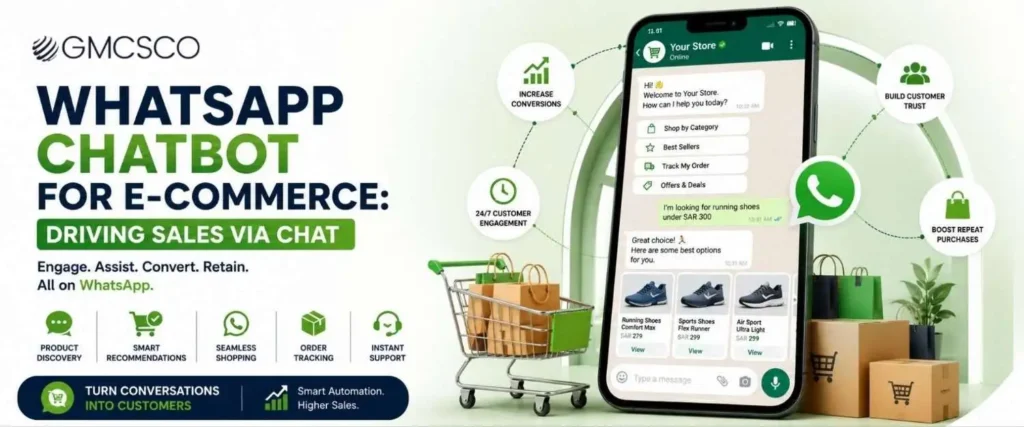
Introduction In 2026, the most advanced organizations in Saudi Arabia and the UAE are no longer limiting WhatsApp to simple notifications or basic chatbots. They are building complete business applications inside WhatsApp itself — known as WhatsApp Mini-Apps or In-Chat Experiences. This means customers can browse products, book appointments, fill forms, make payments, track orders, and complete entire processes without ever leaving WhatsApp or downloading any extra application. This shift is creating extremely high recurring message volumes while delivering superior customer experience and full regulatory compliance. Why WhatsApp Mini-Apps Are Becoming Essential in KSA & UAE Customers in Saudi Arabia and the UAE already spend a large part of their day on WhatsApp. They strongly dislike downloading new apps or switching between multiple websites. Forward-thinking companies have started bringing the full customer journey inside WhatsApp. This approach is delivering significantly higher completion rates and creating predictable, high-volume messaging every month. Key Advantages: Zero friction for the customer Much higher completion rates (85–95%) Full data control and PDPL compliance Deep integration with existing systems (Odoo, SAP, Salesforce, custom ERP) Strong potential for recurring monthly message volume Book your demo to see how WhatsApp Mini-Apps can improve completion rates and recurring message volume.  WhatsApp Mini-Apps vs Traditional Chatbots Feature Traditional Chatbot WhatsApp Mini-App (2026) Winner User Experience Text only Rich interactive interface Mini-App Form Filling & Data Collection Limited Full forms, file uploads, payments Mini-App Completion Rate 30–45% 85–95% Mini-App Integration with CRM/ERP Basic Deep & real-time Mini-App Compliance & Security Higher risk Built for PDPL & sovereign hosting Mini-App Recurring Message Volume Medium Very High Mini-App Real-World Use Cases That Are Working Well in KSA & UAE Example 1: Restaurant & QSR Chain A popular restaurant group in Riyadh built a WhatsApp Mini-App. Customers open the chat, see the full menu with images and prices, add items to cart, apply discount codes, pay securely, and receive live order tracking — all inside WhatsApp. This has significantly reduced phone orders and increased repeat business. Example 2: Real Estate Developer in Dubai A leading developer sends property options via WhatsApp. Interested buyers can view details, book a site visit slot, fill a reservation form, and make a token payment directly inside the chat without visiting any website. Example 3: Private Healthcare Group Patients can select a doctor, choose a time slot, complete a short pre-consultation form, and pay the consultation fee — all within WhatsApp. This reduced front-desk workload and improved patient experience. Example 4: Educational Institute Students can fill admission forms, upload documents, pay fees, and receive their class schedule and student ID inside WhatsApp. This simplified the entire admission process. Example 5: Government Service Department Citizens can apply for permits, submit documents, pay fees, and receive digital approval — all through a secure WhatsApp Mini-App while maintaining full PDPL compliance. Schedule consultation with GMCSCO to design a WhatsApp Mini-App for your industry and customer journey. Technical Architecture (Built for Compliance) We design every WhatsApp Mini-App with the following core principles: Data Sovereignty: All data is stored on client-server or KSA/UAE sovereign infrastructure. PDPL Compliance: Explicit consent, audit logs, data minimization, and right to be forgotten are built in. Security: End-to-end encryption + secure WebView. Integration: Seamless connection with Odoo, SAP, Salesforce, Microsoft Dynamics, or custom ERP/CRM systems. Step-by-Step Implementation Roadmap Phase 1: Discovery & Flow Design (2–3 weeks) We study your current customer journey and design the best flow inside WhatsApp. Phase 2: Development (4–6 weeks) We build the mini-app using official WhatsApp Flows and secure integration layers. Phase 3: Testing & Compliance Review (1–2 weeks) Full testing + PDPL compliance validation. Phase 4: Launch & Optimization (Ongoing) We monitor performance and continuously improve the experience. Typical timeline from start to launch: 8 to 12 weeks. Book your demo to explore PDPL-ready architecture, sovereign hosting, and CRM/ERP integrations. Expected Business Impact Organizations that have implemented WhatsApp Mini-Apps are seeing: 3x to 5x higher completion rates compared to websites Significant reduction in inbound calls and manual work Strong increase in recurring customer engagement High potential to reach 50 lakh to 2 crore messages per month within 6–9 months Schedule consultation to learn how your business can increase completion rates and reduce manual workload. Common Challenges & How We Solve Them Challenge: Fear of complexity Solution: We start with one simple high-impact flow and expand gradually. Challenge: Compliance concerns Solution: Every solution is built with PDPL compliance and sovereign hosting from day one. Challenge: Integration with existing systems Solution: We have strong experience integrating with major ERP and CRM platforms. Ready to Build Your WhatsApp Mini-App in 2026? If you want to give your customers a modern, frictionless experience while generating high recurring message volume, WhatsApp Mini-Apps are currently one of the best opportunities in KSA and UAE. FAQs Q1: What is a WhatsApp Mini-App? A WhatsApp Mini-App is an in-chat experience that allows customers to complete actions like browsing products, booking appointments, filling forms, uploading documents, making payments, and tracking orders inside WhatsApp. Q2: Why are WhatsApp Mini-Apps important in Saudi Arabia and UAE? WhatsApp Mini-Apps are important because customers in KSA and UAE prefer fast, mobile-first experiences without downloading new apps or switching between websites. Q3: How is a WhatsApp Mini-App different from a chatbot? A chatbot mainly answers questions through text, while a WhatsApp Mini-App provides rich interactive flows, forms, buttons, payments, file uploads, and real-time system integrations. 4. Can WhatsApp Mini-Apps improve conversion rates? Yes. WhatsApp Mini-Apps can improve completion rates because customers can complete the full journey inside a familiar app with fewer steps and less friction. 5. Are WhatsApp Mini-Apps suitable for enterprises? Yes. WhatsApp Mini-Apps are suitable for enterprises that need high-volume communication, secure workflows, CRM/ERP integration, and compliant customer experiences. 6. Which industries can use WhatsApp Mini-Apps? Industries such as restaurants, retail, healthcare, education, real estate, logistics, service providers, and government-related service departments can use WhatsApp Mini-Apps. 7. Can WhatsApp Mini-Apps integrate with CRM and ERP systems? Yes. WhatsApp Mini-Apps can integrate with platforms such as Odoo,

WhatsApp vs SMS vs Email – 2026 Comparison for Enterprises in KSA & UAE

WhatsApp vs SMS vs Email – 2026 Comparison for Enterprises in KSA & UAE

In 2026, enterprises in Saudi Arabia and the UAE are making critical decisions about their customer and employee communication channels. This detailed comparison helps decision-makers understand why WhatsApp Business API has become the preferred choice for large organizations. WhatsApp Business API vs SMS vs Email – 2026 Head-to-Head Comparison WhatsApp vs SMS vs Email Channel Performance Comparison See why WhatsApp Business API is becoming the preferred communication channel for high-volume enterprise messaging in GCC markets. Feature WhatsApp Business API SMS Email Winner Open / Read Rate 92–98% 20–30% 15–25% WhatsApp Response Rate 40–65% 5–12% 1–6% WhatsApp Delivery Speed Instant 3–30 seconds Minutes to hours WhatsApp Rich Media Support Images, Videos, Documents, Buttons, Location Text only Limited WhatsApp Two-Way Interaction Real-time, conversational Limited Very limited WhatsApp Personalization Very High (AI-powered) Low Medium WhatsApp Cost per Message SAR 0.06 – 0.18 SAR 0.25 – 0.45 Very low WhatsApp at scale Compliance & Security End-to-end encryption + PDPL ready Moderate Low WhatsApp Automation Capability Advanced Structured AI Agents Very limited Limited WhatsApp Customer Preference in GCC Highest daily used app Medium Low WhatsApp Best Use Case High-volume, personalized, transactional Simple alerts Formal / long content WhatsApp Ready to move from low-response SMS and email to high-performing WhatsApp automation? Talk to GMCSCO today. Key Insights for KSA & UAE Enterprises in 2026 WhatsApp dominates engagement — 4–6 times higher than SMS or Email. Cost efficiency at scale — High-volume users benefit from lower per-message rates and free service windows. Regulatory Advantage — Easier to maintain PDPL compliance with proper consent flows and audit trails. Future-Proof — Meta continues to invest heavily in WhatsApp as the primary business messaging platform. When to Still Use SMS or Email? SMS: For legal mandatory notifications or users without WhatsApp. Email: For detailed reports, contracts, or formal correspondence. Turn customer messages into real conversations with automated WhatsApp flows and quick replies. Chat on WhatsApp with us Today Recommendation For most enterprise use cases in KSA & UAE in 2026, WhatsApp Business API is the clear winner when implemented with proper PDPL compliance and sovereign architecture. GMCSCO 💬 Chat on WhatsApp 📅 Schedule Consultation Now 📞 Call Now FAQs Q1: Is WhatsApp really better than SMS for business? Yes, dramatically higher engagement and lower long-term cost. Q2: How much can we save by switching to WhatsApp? Most clients see 40-70% cost reduction at scale. Q3: Is WhatsApp secure enough for enterprise use? Yes, with end-to-end encryption and proper sovereign hosting. Q4: Can we use WhatsApp for marketing? Yes, with proper consent and approved templates. Q5: What is the biggest advantage of WhatsApp? Real-time two-way conversation and rich media. Q6: Does WhatsApp support Arabic fully? Yes, with excellent RTL support. Q7: How does PDPL compliance work on WhatsApp? Through explicit consent, audit logs, and data sovereignty. Q8: Is email still useful? Yes, for long-form and formal communication. Q9: What is Meta’s per-message rate in KSA? Varies by category – typically SAR 0.06–0.18. Q10: Can we combine WhatsApp with SMS? Yes, hybrid strategies work well. Q11: How fast is WhatsApp delivery? Usually under 2 seconds. Q12: Is AI allowed on WhatsApp? Yes, structured, task-specific AI Agents only. Q13: Which industries benefit most? Banking, Retail, Telecom, Government, Healthcare, Logistics. Q14: What is the main risk of using WhatsApp? Non-compliance with PDPL or Meta policies. Q15: How can we get started? Book a consultation – we provide a free assessment. Disclaimer: This content is for general informational purposes only. Information may be sourced from AI tools, search engines, and trusted references. Please verify all details with official sources before making any business or legal decisions. We are not responsible for actions taken based on this content.

Case Studies: Successful WhatsApp Business API Deployments in KSA & UAE – 2026

Case Studies: Successful WhatsApp Business API Deployments in KSA & UAE – 2026

Real results speak louder than promises. Below are anonymous case studies based on actual WhatsApp Business API deployments we have supported for organizations in Saudi Arabia and the UAE. Note: Client names and specific identifiers have been removed to respect confidentiality and NDA agreements. Need enterprise-grade WhatsApp automation with complete confidentiality? GMCSCO builds secure solutions with privacy-first implementation. Case Study 1: Government Department (Citizen Services)Challenge: Low response rates on permit renewals, bill payments, and public inquiries. Solution: PDPL-compliant predictive notification system with structured messaging flows. Results Achieved: Over 90% open rate on renewal reminders Significant reduction in manual follow-up calls Improved on-time completion of citizen requests Full PDPL compliance with sovereign data hosting Case Study 2: Financial Institution Challenge: High call center volume for routine balance inquiries, transaction alerts, and service requests. Solution: Structured AI automation integrated with their core systems. Results Achieved: Substantial reduction in inbound routine calls Faster response time for customers Maintained full regulatory compliance (SAMA & PDPL) Case Study 3: Logistics & Supply Chain Company Challenge: Frequent customer calls regarding shipment status and delays. Solution: Real-time tracking and predictive delay alerts via WhatsApp. Results Achieved: Major decrease in tracking-related inquiries Improved customer satisfaction and perception of reliability Case Study 4: Retail & Hospitality Group Challenge: Low engagement on promotions, loyalty programs, and booking confirmations. Solution: Personalized offers and automated booking flows. Results Achieved: Significantly higher engagement compared to previous channels Increase in repeat business and customer retention Case Study 5: Telecom & Service Provider Challenge: High volume of customer queries related to balance, recharge, and plan upgrades. Solution: High-volume automation with intelligent routing. Results Achieved: Efficient handling of large message volumes Notable reduction in call center workload Handle high-volume customer queries efficiently with scalable WhatsApp Business API automation and intelligent routing. Book free consultation with GMCSCO now. Common Success Factors Across Deployments Strong emphasis on PDPL and local regulatory compliance from day one Use of sovereign / client-server data hosting for sensitive information Structured and auditable automation (instead of open chatbots) Seamless integration with existing CRM/ERP systems Dedicated account management and ongoing optimization FAQs: Q1: What results can enterprises achieve with WhatsApp Business API in KSA and UAE? Enterprises can improve message open rates, reduce manual follow-up calls, automate customer support, increase response speed, and improve customer engagement through secure WhatsApp Business API deployments. Q2: Is WhatsApp Business API suitable for large enterprises in Saudi Arabia and the UAE? Yes, WhatsApp Business API is suitable for large enterprises when implemented with proper compliance, secure hosting, audit logs, structured automation, and integration with existing business systems. Q3: How does WhatsApp Business API improve customer communication? It allows organizations to send timely notifications, reminders, alerts, confirmations, tracking updates, and support messages directly through WhatsApp, where customers are more likely to respond quickly. Q4: Can WhatsApp Business API reduce call center workload? Yes, automated WhatsApp flows can handle routine queries, status updates, reminders, and service requests, reducing repetitive calls and allowing support teams to focus on complex cases. Q5: Is WhatsApp Business API compliant for sensitive enterprise communication? It can be compliant when deployed with consent management, secure data handling, audit logging, role-based access, approved hosting, and privacy-first automation practices. Q6: What industries benefit most from WhatsApp Business API in the GCC? Industries such as public services, finance, logistics, retail, hospitality, telecom, healthcare, education, and service-based businesses can benefit from WhatsApp automation and customer engagement. Q7: Can WhatsApp Business API be integrated with CRM or ERP systems? Yes, WhatsApp Business API can be integrated with CRM, ERP, booking systems, payment systems, tracking platforms, and internal enterprise applications for automated workflows. Q8: What type of WhatsApp automation is safe for enterprise use? Structured, task-specific automation is safest. This includes predefined flows for alerts, reminders, FAQs, bookings, tracking updates, service requests, and escalation to human agents. Q9: Why is data hosting important for WhatsApp Business API deployments? Data hosting is important because enterprises handling sensitive customer information may require client-server, private cloud, or sovereign hosting options to meet internal and regional compliance requirements. Q10: How does WhatsApp Business API improve logistics and delivery communication? It can send real-time shipment updates, delivery alerts, delay notifications, proof-of-delivery messages, and customer support responses, reducing tracking-related inquiries. Q11: Can WhatsApp Business API improve retail and hospitality engagement? Yes, businesses can use WhatsApp for personalized offers, loyalty updates, booking confirmations, reminders, feedback collection, and customer reactivation campaigns. Q12: How can GMCSCO help with WhatsApp Business API deployment in KSA and UAE? GMCSCO helps enterprises deploy secure, compliant, and scalable WhatsApp Business API solutions with structured automation, CRM/ERP integration, audit logging, sovereign hosting options, and ongoing optimization. Ready to build a secure, scalable, and compliant WhatsApp Business API system for your organization? Book a consultation with GMCSCO today. GMCSCO 💬 Chat on WhatsApp 📅 Schedule Consultation Now 📞 Call Now

How to Choose the Right WhatsApp Business API Provider in KSA & UAE – 2026 Buyer’s Guide

How to Choose the Right WhatsApp Business API Provider in KSA & UAE – 2026 Buyer’s Guide

Choosing the right WhatsApp Business API provider in 2026 is one of the most important decisions for large organizations in Saudi Arabia and the UAE. With increasing regulatory scrutiny, high message volumes, and the need for data sovereignty, selecting the wrong partner can lead to compliance risks, poor performance, and wasted investment. This comprehensive buyer’s guide is written for CIOs, Digital Transformation Heads, CXOs, and procurement teams who want to make an informed, future-proof decision. Why Choosing the Right Provider Matters in 2026? Meta’s strict policies, PDPL enforcement, and the growing demand for AI automation mean only a few providers can truly deliver secure, scalable, and compliant solutions for enterprise needs in the GCC. Avoid compliance risks and poor performance. Choose a WhatsApp API partner built for GCC enterprise requirements. 10 Critical Factors to Evaluate Before Choosing a Provider? Official Meta Business Partner Status Only verified Meta Partners have direct access and priority support. Always verify this. PDPL & Local Regulatory Expertise The provider must demonstrate deep knowledge of PDPL, NCA, SAMA (for banks), and other KSA/UAE regulations. Ask for specific compliance experience. Data Sovereignty & Client-Server Hosting For large enterprises and government-related projects, insist on client-server or sovereign hosting so sensitive data never leaves your approved environment. Structured AI & Automation Capabilities Confirm they build task-specific, rule-based AI Agents (Meta-compliant) and not general chatbots. Integration Experience Strong track record integrating with CRM (Salesforce, Zoho), ERP (SAP, Oracle), HRIS, and custom systems. Security & Compliance Standards Look for ISO 27001, regular third-party audits, end-to-end encryption, and full audit logging. Scalability & High-Volume Handling Can they reliably handle 1 Crore+ messages per month with consistent performance? Arabic Language & Local Support Full Arabic support, RTL formatting, and a team that understands GCC business culture. Transparent Pricing & No Hidden Costs Clear per-message pricing based on Meta rates + one-time onboarding fee. Avoid providers with heavy monthly/quarterly charges. Proven Track Record & References Ask for anonymous case studies from similar organizations in KSA/UAE and response times for support. Need help evaluating WhatsApp API providers? GMCSCO can guide you with a compliance-first provider assessment. Common Mistakes to Avoid Choosing the cheapest provider without checking compliance capabilities Ignoring data sovereignty requirements Accepting general-purpose AI chatbots (prohibited by Meta in 2026) Not verifying Meta Partner status Underestimating integration complexity Don’t let the wrong provider cost you time, money, and compliance confidence. Speak with GMCSCO before you decide. Our Recommendation Look for a partner that combines: Official Meta Partner status Deep PDPL & local regulatory expertise Sovereign/client-server architecture Strong integration capabilities Transparent pricing Proven GCC enterprise experience GMCSCO 💬 Chat on WhatsApp 📅 Schedule Consultation Now 📞 Call Now FAQs Q1: What is the most important factor when choosing a WhatsApp API provider in KSA? PDPL compliance and data sovereignty. Q2: Are all Meta Partners equal? No. Experience, local knowledge, and technical capabilities vary significantly. Q3: Should we prioritize local or international providers? A partner with strong GCC experience and local support is usually better. Q4: Is client-server hosting expensive? It is a worthwhile investment for large organizations handling sensitive data. Q5: How do we verify a provider is a real Meta Partner? Ask for their official Meta Partner ID or check directly with Meta. Q6: Can small providers handle high-volume enterprise deployments? Most cannot. Enterprise-grade infrastructure is required. Q7: What should we look for in AI capabilities? Structured, task-specific AI Agents, not general chatbots. Q8: How long does onboarding usually take? 7–21 days for standard setups, longer for complex integrations. Q9: Is Arabic support mandatory? Highly recommended for best user experience in the GCC. Q10: What is the typical cost structure? Meta per-message fees + one-time onboarding/setup fee. Q11: Can we switch providers later? Yes, but it is complex. Choose carefully from the beginning. Q12: How important is integration experience? Critical for large organizations with existing CRM/ERP systems. Q13: What security certifications should we look for? ISO 27001, regular penetration testing, and compliance with NCA standards. Q14: Should we ask for case studies? Yes, preferably anonymous ones from similar industries. Q15: How can GMCSCO help? As an Official Meta Partner with deep GCC experience, we offer end-to-end compliant solutions. Still unsure which WhatsApp Business API provider is right for your organization? Book a free consultation with GMCSCO today. Disclaimer: This content is for general informational purposes only. Information may be sourced from AI tools, search engines, and trusted references. Please verify all details with official sources before making any business or legal decisions. We are not responsible for actions taken based on this content.

PDPL Compliance Checklist for WhatsApp Business API in Saudi Arabia 2026 Edition

PDPL Compliance Checklist for WhatsApp Business API in Saudi Arabia 2026 Edition

As Saudi Arabia continues to strengthen data protection under the Personal Data Protection Law (PDPL), every organization using WhatsApp Business API must ensure full compliance. This practical, comprehensive checklist is designed for compliance officers, IT teams, legal departments, and decision-makers in KSA enterprises who want to deploy or audit WhatsApp solutions safely and effectively. Why PDPL Compliance is Non-Negotiable in 2026 The PDPL is strictly enforced by the Saudi Data and Artificial Intelligence Authority (SDAIA). Non-compliance can lead to heavy fines, operational suspension, and reputational damage. This checklist helps you build, audit, and maintain a fully compliant WhatsApp Business API deployment that aligns with both Saudi law and Meta’s policies. Not sure if your WhatsApp Business API is PDPL-ready? Get a compliance review with GMCSCO today. Complete PDPL Compliance Checklist for WhatsApp Business API Phase 1: Consent Management Obtain clear, explicit, informed, and easily withdrawable consent before sending any message. Record consent with timestamp, method, purpose, and user identifier. Provide simple, one-click opt-out mechanisms in every automated or marketing flow. Maintain auditable records of consent for a minimum of 6 years. Phase 2: Data Minimization & Purpose Limitation Collect and process only the minimum personal data required for the stated purpose. Clearly document the purpose of every WhatsApp communication flow. Regularly review and delete unnecessary stored data. Avoid collecting sensitive data unless absolutely necessary and legally justified. Phase 3: Data Security & Sovereignty Store sensitive conversation data on client-controlled or approved sovereign servers inside the Kingdom. Implement end-to-end encryption for all messages in transit. Use strong role-based access control with least-privilege principles. Conduct regular security audits and penetration testing by independent parties. Phase 4: Auditability & Accountability Maintain complete, tamper-proof audit logs for every message sent, received, and processed. Log all AI decisions, escalations, and system actions. Appoint a Data Protection Officer (or equivalent) responsible for WhatsApp compliance. Prepare for regular internal and external compliance audits. Make every WhatsApp message, consent record, and AI action audit-ready with GMCSCO. Schedule your consultation today with us. Phase 5: Data Subject Rights Implement technical processes to handle access, correction, deletion, and restriction requests within legal timeframes. Train all relevant staff on handling PDPL-related queries from individuals. Provide clear instructions to users on how to exercise their rights. Phase 6: Breach Management & Incident Response Have a documented data breach response plan specific to WhatsApp communications. Notify SDAIA and affected individuals within 72 hours of discovering a breach. Conduct post-incident reviews and implement corrective actions immediately. Prepare your WhatsApp communication system for fast, compliant incident response before risks happen. Chat on WhatsApp with us s today. How GMCSCO Ensures PDPL Compliance All our WhatsApp Business API solutions are built with PDPL compliance by design. We offer: Sovereign client-server hosting options Built-in consent management modules Comprehensive audit logging dashboards Regular compliance health checks and third-party audits Ready to deploy a PDPL-compliant WhatsApp Business API solution in KSA? Book your free consultation with GMCSCO today. GMCSCO 💬 Chat on WhatsApp 📅 Schedule Consultation Now 📞 Call Now FAQs: PDPL Compliance for WhatsApp Business API in Saudi Arabia Q1: What is PDPL compliance for WhatsApp Business API in Saudi Arabia? PDPL compliance means using WhatsApp Business API in a way that protects customer personal data according to Saudi Arabia’s Personal Data Protection Law. Businesses must manage consent, secure data, maintain audit logs, and respect customer privacy rights. Q2: Is WhatsApp Business API allowed under Saudi PDPL? Yes, WhatsApp Business API can be used in Saudi Arabia if the business follows PDPL requirements, including clear customer consent, secure data handling, proper storage, opt-out options, and audit-ready records. Q3: Do businesses need customer consent before sending WhatsApp messages in KSA? Yes. Businesses must obtain clear, informed, and explicit consent before sending marketing, promotional, or automated WhatsApp messages to customers in Saudi Arabia. Q4: What type of consent is required for WhatsApp Business API under PDPL? Consent should include the customer’s permission, timestamp, purpose of communication, consent source, and user identifier. It should also be easy for the customer to withdraw consent anytime. Q5: How can customers opt out from WhatsApp Business messages? Businesses should provide a simple opt-out option such as “Reply STOP” or a one-click unsubscribe link in automated and marketing WhatsApp flows. Q6: What data should companies collect through WhatsApp Business API? Companies should collect only the minimum data required for the specific business purpose. Unnecessary personal data, sensitive information, or unrelated customer details should be avoided. Q7: Where should WhatsApp customer data be stored for PDPL compliance? For stronger PDPL compliance, sensitive customer conversation data should be stored on client-controlled, approved, or sovereign servers, preferably inside Saudi Arabia. Q8: What security measures are required for WhatsApp Business API compliance? Businesses should use encryption, role-based access control, least-privilege access, audit logs, regular security checks, and penetration testing to protect WhatsApp communication data. Q9: Do companies need audit logs for WhatsApp Business API? Yes. Companies should maintain complete audit logs for messages, consent records, AI actions, escalations, user requests, and system activities to prove compliance during audits. Q10: What are customer data rights under PDPL? Customers have the right to request access, correction, deletion, and restriction of their personal data. Businesses must have a clear process to handle these requests within legal timelines. Q11: What should a company do if WhatsApp customer data is breached? The company should follow a documented breach response plan, investigate the incident, take corrective action, and notify SDAIA and affected individuals within the required timeframe. Q12: How does GMCSCO help businesses with PDPL-compliant WhatsApp Business API? GMCSCO helps KSA enterprises deploy WhatsApp Business API with consent management, sovereign hosting options, audit logging dashboards, compliance health checks, and secure automation workflows. GMCSCO 💬 Chat on WhatsApp 📅 Schedule Consultation Now 📞 Call Now

Best AI SEO Strategies for Businesses in Riyadh

Best AI SEO Strategies for Businesses in Riyadh

The business environment in Riyadh is becoming more competitive, more digital, and more performance focused in 2026. Companies are no longer depending only on referrals, offline networking, paid ads, or traditional marketing. Customers now search online before choosing a service provider, visiting a store, booking a consultation, comparing agencies, or making a purchase decision. This shift has made SEO one of the most important growth channels for businesses in Riyadh. But SEO itself has changed. Search engines now use artificial intelligence, machine learning, natural language understanding, semantic search, entity recognition, user behavior signals, and AI generated search experiences to decide which websites deserve higher visibility. That is why businesses are now actively searching for Best AI SEO Strategies for Businesses in Riyadh. AI SEO helps companies understand what customers are searching for, how competitors are ranking, what content Google prefers, and how websites can be optimized for both human users and AI driven search systems. For companies looking for AI SEO Services in Riyadh, the goal is no longer only to rank for a few keywords. The real goal is to build search authority, attract qualified leads, improve local visibility, increase conversions, and prepare the business for the future of AI powered search. In 2026, Riyadh businesses that invest in AI based SEO will have a stronger advantage because they can move faster, understand customer intent better, and create content that aligns with how modern search engines evaluate trust, relevance, and authority. Why Businesses in Riyadh Need AI SEO Services in 2026 Riyadh is one of the fastest growing commercial hubs in Saudi Arabia. The city has strong growth across real estate, healthcare, hospitality, ecommerce, education, finance, technology, consulting, legal services, construction, logistics, and professional services. With this growth, digital competition is increasing every month. A business that appeared easily on Google a few years ago may now struggle because more companies are investing in websites, Google Ads, content marketing, social media, and SEO. Traditional SEO methods are still useful, but they are no longer enough when competitors are using data driven and AI powered strategies. Why Businesses in Riyadh Need AI SEO Services is simple. AI SEO helps companies understand the full search journey of customers. It does not only show what people search. It also helps identify why they search, what stage of buying journey they are in, what content they expect, and which pages are most likely to convert them. AI SEO also helps businesses avoid wasting time on low value keywords. Many companies create blogs and service pages without understanding whether those keywords can actually generate leads. AI based SEO optimization for Riyadh companies solves this problem by analyzing search intent, competition, content gaps, and conversion potential before building a strategy. Key reasons Riyadh businesses need AI SEO now Customers are searching online before contacting companies Most buyers now compare businesses through Google before making decisions. If your company is not visible, competitors receive the inquiry first. Competition is increasing across almost every industry Riyadh has a growing number of agencies, clinics, consultants, ecommerce brands, and local service providers. AI SEO helps businesses compete smarter. Google search is becoming more intelligent Search engines now understand context, entities, user intent, and content quality. AI SEO helps websites match these ranking expectations. Paid ads are becoming more expensive Many businesses depend heavily on ads, but organic SEO creates long term visibility and reduces customer acquisition costs over time. AI search experiences are changing customer discovery Users are now getting answers through AI summaries, voice search, and conversational search. Businesses need content that is ready for this future. If your business wants stronger search visibility in Riyadh, explore AI SEO Services in Riyadh with GMCSCO and build a smarter growth strategy for 2026. How AI SEO Helps Riyadh Businesses Rank Higher Ranking higher on Google is not only about adding keywords to a page. In 2026, Google evaluates many signals including content quality, page experience, search intent, topical depth, internal linking, technical performance, local relevance, and user engagement. How AI SEO Helps Riyadh Businesses Rank Higher is by combining all these signals into one intelligent strategy. AI tools can analyze thousands of ranking factors much faster than manual research. They can study competitor pages, identify missing topics, detect weak content, find technical errors, and recommend better optimization opportunities. For example, if a business wants to rank for AI SEO for Business Growth Riyadh, AI systems can analyze the top ranking pages, understand the common content structure, identify missing subtopics, and suggest additional questions that users may ask. This helps create a page that is more complete, more helpful, and more aligned with search intent. AI SEO also improves ranking consistency. Traditional SEO teams may check performance weekly or monthly, but AI tools can monitor changes continuously. This helps businesses respond faster when rankings drop, competitors update pages, or new keyword opportunities appear. AI Ranking Improvement Checklist for Riyadh Businesses Search intent mapping: Every keyword should be mapped to a clear user intent. Informational keywords need educational content, while commercial keywords need service pages, comparisons, proof, and strong calls to action. Semantic keyword optimization: AI SEO does not depend on repeating one keyword again and again. It uses related terms, entities, questions, and contextual phrases to strengthen topic relevance. Competitor content gap analysis: AI tools compare your content with competitors and identify missing sections, weak explanations, unanswered questions, and ranking opportunities. Technical SEO monitoring: AI systems detect crawl errors, slow pages, broken links, indexing issues, duplicate content, and schema problems that may affect rankings. User engagement improvement: AI can analyze bounce rate, scroll depth, click behavior, and page flow to improve how users interact with your website. Internal linking intelligence: AI helps connect related pages properly so Google can understand your website structure and topical authority. AI search readiness: Content should be structured clearly enough for AI search engines, featured snippets, and conversational answers. Want your business to rank higher with smarter SEO intelligence? Work with GMCSCO, an AI Powered SEO Company Riyadh focused on rankings,

WhatsApp Business API for Telecom Operators & Government Mobile Services in KSA & UAE: High-Volume Customer Engagement, AI Chatbots & SIM Management Automation – The Complete 2026 Guide

WhatsApp Business API for Telecom Operators & Government Mobile Services in KSA & UAE: High-Volume Customer Engagement, AI Chatbots & SIM Management Automation – The Complete 2026 Guide

In 2026, telecom operators and government mobile service providers in Saudi Arabia and the UAE are managing millions of SIM cards and customer interactions daily. With explosive growth in mobile subscriptions and Vision 2030’s digital connectivity goals, WhatsApp Business API has become the most powerful, cost-effective, and customer-preferred channel for high-volume engagement, SIM lifecycle management, and intelligent automation. This definitive guide is written for CEOs, Chief Digital Officers, Customer Experience Heads, and Technology Leaders at telecom operators and government mobile service entities who need secure, scalable, and fully compliant WhatsApp solutions capable of handling massive daily message volumes while protecting customer data. Why Telecom Operators Are Aggressively Adopting WhatsApp in 2026 Telecom customers expect instant, personalized, and effortless communication. Traditional SMS and IVR systems deliver poor engagement and high costs. WhatsApp offers 92–98% open rates, two-way interaction, rich media, and structured automation — making it the ideal platform for telecom use cases. Meta’s 2026 framework supports high-volume, task-specific AI automation, perfectly suited for telecom operators handling millions of customers. Upgrade your customer engagement strategy with the channel customers prefer. Contact our team today for a high-volume telecom demo. PDPL & Regulatory Compliance for Telecom Operators Telecom operators handle highly sensitive customer data (SIM details, usage patterns, billing information). Every deployment must strictly comply with: Personal Data Protection Law (PDPL) – explicit consent, data minimization, right to be forgotten National Cybersecurity Authority (NCA) standards Communications, Space & Technology Commission (CST) regulations Full audit trails and secure data storage We design every solution with sovereign client-server architecture, ensuring customer conversation data and SIM-related information remain inside the operator’s approved environment. Achieve full PDPL, NCA, and CST compliance with confidence. Schedule a sovereign architecture and compliance consultation now. High-Volume Use Cases for Telecom & Government Mobile Services Proven automation flows delivering massive scale and ROI: SIM Activation & Onboarding Automated welcome flows, e-KYC, and instant SIM activation. Recharge & Balance Alerts Predictive low-balance reminders and personalized recharge offers. Usage & Billing Notifications Real-time data usage alerts, bill due reminders, and payment links. Service & Network Alerts Outage notifications, 5G rollout updates, and maintenance alerts. Customer Support & FAQs Structured AI chatbots for balance inquiry, plan upgrades, complaint resolution. Identify the use cases that will deliver maximum impact for your operations. Book a strategy workshop tailored for telecom leaders. Structured AI Chatbots & Intelligent Automation for Telecom We build task-specific, rule-based AI Agents that can: Understand customer queries in Arabic and English Provide instant balance and usage information Handle plan changes and upgrades Escalate complex issues to human agents seamlessly All agents operate within strict Meta 2026 guidelines and full PDPL compliance. Reduce support costs and improve response times with intelligent automation. Reach out to explore rule-based AI Agents for your network. Secure Integration with BSS, OSS & CRM Systems Maximum value is achieved through deep integration with: Business Support Systems (BSS) Operations Support Systems (OSS) Customer Relationship Management (CRM) Billing and SIM management platforms We create secure bidirectional integrations so that any change in the operator’s core systems automatically triggers compliant WhatsApp communications while keeping all customer data sovereign. Unlock seamless automation across your core systems. Connect with our integration experts for a technical assessment and roadmap. FAQs Q: Is WhatsApp Business API suitable and compliant for telecom operators in Saudi Arabia and UAE? Yes. Solutions are fully compliant with PDPL, NCA, and CST regulations, including explicit consent, data sovereignty, and complete audit trails. Q: How does WhatsApp compare to traditional SMS and IVR for telecom customer engagement? WhatsApp delivers 92–98% open rates, two-way conversations, rich media, and lower costs, significantly outperforming SMS and IVR in engagement and customer satisfaction. Q: Can WhatsApp handle high-volume communications for millions of telecom customers? Yes. The platform is designed for massive scale with structured automation, making it ideal for daily high-volume interactions. Q: How is customer data protected in telecom WhatsApp deployments? Sensitive customer and SIM data stays within the operator’s approved sovereign environment. Only encrypted message routing passes through Meta. Q: What are the top use cases for telecom on WhatsApp? Key use cases include SIM activation & onboarding, recharge & balance alerts, usage & billing notifications, service alerts, and AI-powered customer support. Q: Do the AI chatbots support Arabic and English? Yes. Structured AI Agents understand and respond fluently in both Arabic and English for seamless customer experience. Q: Can customers complete SIM activation and e-KYC via WhatsApp? Yes. Automated onboarding flows with e-KYC, document collection, and instant activation are fully supported. Q: How are billing and recharge processes handled on WhatsApp? Customers receive predictive low-balance reminders, real-time usage alerts, bill notifications, and secure payment links directly via WhatsApp. Q: Does it integrate with existing telecom systems? Yes. Deep bidirectional integration with BSS, OSS, CRM, and Billing/SIM management systems enables real-time automation and data sync. Q: How quickly can customers get responses to their queries? Most inquiries are answered instantly or within seconds by AI Agents, with smooth escalation to human support when needed. Q: Can WhatsApp be used for network and service alerts? Yes. Operators can send proactive outage notifications, 5G updates, maintenance alerts, and personalized service messages at scale. Q: What ROI can telecom operators expect from WhatsApp implementation? Significant reduction in customer support costs, higher engagement, improved recharge rates, faster complaint resolution, and better overall customer experience. Transform customer experience, reduce operational costs, and achieve regulatory excellence with secure, scalable, and fully compliant WhatsApp Business API solutions for telecom operators in Saudi Arabia and the UAE. Contact us today to get started. GMCSCO 💬 Chat on WhatsApp 📅 Schedule Consultation Now 📞 Call Now Disclaimer: This content is for general informational purposes only. Information may be sourced from AI tools, search engines, and trusted references. Please verify all details with official sources before making any business or legal decisions. We are not responsible for actions taken based on this content.

WhatsApp Business API for HR, Employee Experience & Internal Communications in Large Enterprises in KSA & UAE: Secure, Scalable & Intelligent Workforce Engagement – The 2026 Enterprise Guide

WhatsApp Business API for HR, Employee Experience & Internal Communications in Large Enterprises in KSA & UAE: Secure, Scalable & Intelligent Workforce Engagement – The 2026 Enterprise Guide

In 2026, large enterprises across Saudi Arabia and the UAE are facing a major shift in how they engage with their workforce. With Vision 2030 driving rapid growth, talent retention, employee experience, and internal communication have become strategic priorities. WhatsApp Business API has emerged as one of the most effective, secure, and preferred channels for HR teams to manage onboarding, payroll alerts, training, policy updates, and day-to-day employee support. This comprehensive guide is written for CHROs, HR Directors, Internal Communications Heads, and Digital Transformation Leaders in large organizations who need a secure, scalable, and intelligent WhatsApp solution for workforce engagement while maintaining full PDPL compliance and data sovereignty. Why Large Enterprises Are Moving HR & Internal Communications to WhatsApp Employees in the GCC now expect the same instant, convenient experience from their employer as they get from consumer brands. WhatsApp delivers 90–97% open rates, two-way interaction, and rich media support, making it far superior to email or traditional intranet systems. Meta’s 2026 structured automation framework allows secure, rule-based HR workflows perfect for large organizations with thousands of employees. Give your employees the instant, modern communication experience they expect. Contact our team for a customized HR WhatsApp demo. PDPL & Enterprise Compliance Non-Negotiable for HR Data HR data is highly sensitive. Every deployment must strictly follow: Personal Data Protection Law (PDPL) – explicit employee consent, data minimization, right to be forgotten NCA cybersecurity standards Full audit trails for every HR interaction Secure storage of employee conversation history on client-controlled servers We design every HR solution with sovereign client-server architecture, ensuring complete data control and regulatory compliance. Ensure full PDPL and NCA compliance for your HR communications. Schedule a secure architecture consultation today. High-Impact HR & Employee Experience Use Cases in 2026 Proven automation flows delivering strong ROI for large enterprises: Employee Onboarding & Document Collection Automated welcome flows, e-document signing, and policy acknowledgments. Payroll & Benefits Alerts Salary credit notifications, leave balance updates, and benefits reminders. Training & Learning Management Course reminders, completion certificates, and micro-learning content delivery. Internal Support & IT Helpdesk 24/7 structured support for HR, IT, and admin queries. Employee Engagement & Surveys Pulse surveys, feedback collection, and recognition programs. Discover the best HR use cases for your organization. Book a strategy session to identify quick wins and high-ROI opportunities. Structured AI Agents for HR Operations We build task-specific AI Agents that can: Handle common HR queries intelligently in Arabic & English Process leave requests and approvals Send proactive policy and compliance reminders Escalate complex cases to human HR teams seamlessly All agents follow strict rule-based logic to ensure 100% compliance with Meta’s 2026 policy and PDPL requirements. Reduce HR workload with intelligent, compliant automation. Reach out to explore AI Agents tailored for your workforce needs. Secure Integration with HRIS, Payroll & Learning Management Systems The real value comes from deep integration with your existing systems: Human Resources Information Systems (HRIS) Payroll & Benefits Platforms Learning Management Systems (LMS) Employee Directory tools We create secure bidirectional integrations so that any update in your HR system automatically triggers compliant WhatsApp communications  while keeping all employee data sovereign. FAQs Q: Is WhatsApp Business API compliant for HR and employee communications in Saudi Arabia and UAE?  Yes. Solutions are fully aligned with PDPL (explicit consent, data minimization, right to be forgotten), NCA standards, and include complete audit trails with sovereign data storage. Q: Why are large enterprises choosing WhatsApp for internal HR communications?  WhatsApp delivers 90–97% open rates, instant two-way interaction, and rich media support, providing a much better employee experience than email or intranet portals. Q: Can WhatsApp be used for sensitive HR processes like payroll and onboarding?  Yes. It supports secure, automated flows for payroll alerts, onboarding, document collection, and benefits communication with strict compliance controls. Q: How is employee data protected in WhatsApp HR solutions? All sensitive employee data and conversation history remain on client-controlled servers or approved sovereign cloud, with only encrypted routing through Meta. Q: Do the AI Agents support Arabic and English?  Yes. Structured AI Agents handle queries fluently in both Arabic and English while ensuring compliance and brand-appropriate tone. Q: Can employees complete leave requests or approvals via WhatsApp?  Yes. AI Agents can process leave requests conversationally, route for approvals, and send confirmations with full audit trails. Q: What HR use cases deliver the fastest ROI? Top use cases include employee onboarding, payroll & benefits alerts, training reminders, IT/HR helpdesk, and employee engagement surveys. Q: How does integration with existing HR systems work?  Secure bidirectional integration with HRIS, Payroll, LMS, and other platforms allows automatic triggers and real-time data synchronization. Q: Is it possible to send training materials and certificates via WhatsApp?  Yes. Training reminders, course links, micro-learning content, and completion certificates can be delivered directly through WhatsApp. Q: How quickly do employees receive responses on HR queries? Most queries are handled instantly or within seconds by AI Agents, with seamless escalation to human HR teams when required. Q: Can WhatsApp be used for employee surveys and feedback?  Yes. It supports high-response-rate pulse surveys, feedback collection, and recognition programs through interactive, structured flows. Q: Who is this HR WhatsApp solution designed for?  It is designed for large enterprises with 500+ employees, ideal for CHROs and HR teams in Saudi Arabia and UAE seeking scalable, compliant workforce communication. Achieve seamless connectivity across all your HR systems. Connect with our integration experts for a technical assessment and roadmap. Disclaimer: This content is for general informational purposes only. Information may be sourced from AI tools, search engines, and trusted references. Please verify all details with official sources before making any business or legal decisions. We are not responsible for actions taken based on this content.

WhatsApp Business API for Retail, Hospitality & Customer Experience Excellence in KSA & UAE: Personalized Engagement, Loyalty Programs & Operational Automation – The 2026 Enterprise Guide

WhatsApp Business API for Retail, Hospitality & Customer Experience Excellence in KSA & UAE: Personalized Engagement, Loyalty Programs & Operational Automation – The 2026 Enterprise Guide

In 2026, retail and hospitality sectors in Saudi Arabia and the UAE are undergoing a massive digital transformation. With Vision 2030 driving unprecedented growth in tourism, entertainment, and lifestyle sectors, leading brands are turning to WhatsApp Business API as their primary channel for personalized customer engagement, loyalty management, and operational efficiency. This premium guide is crafted for CEOs, Chief Customer Officers, Marketing Directors, and Digital Leaders in retail chains, hotels, restaurants, shopping malls, and entertainment groups who want to deliver exceptional customer experiences while maintaining full PDPL compliance and data security. Why WhatsApp Has Become the Heart of Retail & Hospitality in the GCC Modern customers in KSA and UAE expect instant, personalized, and effortless communication. WhatsApp stands out with 93–98% open rates, rich media support, and two-way conversational capabilities that no other channel can match. Meta’s 2026 structured automation framework allows sophisticated yet compliant flows perfect for retail and hospitality use cases. Make WhatsApp your core customer engagement platform. Contact our team today for a tailored demo designed for retail and hospitality leaders. PDPL Compliance & Data Sovereignty in Customer-Facing Operations Retail and hospitality handle vast amounts of personal and transactional data. Every deployment must strictly adhere to: Personal Data Protection Law (PDPL) – explicit consent, data minimization, and purpose limitation Right to access, correction, and deletion of customer data Secure storage of conversation history on client-controlled systems Full audit trails for every interaction We architect solutions with sovereign-first design, ensuring customer data remains under your complete control. Protect customer trust with full PDPL compliance. Schedule a sovereign architecture and compliance consultation now. High-Impact Use Cases for Retail & Hospitality in 2026 Proven automation and engagement strategies delivering exceptional ROI: Personalized Marketing & Offers Targeted promotions based on purchase history and preferences. Seamless Booking & Reservations Hotel rooms, restaurant tables, spa appointments, and event tickets. Loyalty & Rewards Programs Real-time points updates, tier upgrades, and exclusive offers via WhatsApp. Order & Delivery Management Real-time status updates, photo proof of delivery, and feedback collection. Post-Purchase & Support Warranty registration, service reminders, and VIP customer care. Find the perfect use cases for your business. Book a strategy session to identify quick-win opportunities with proven ROI. Structured AI Agents for Premium Customer Experience We build sophisticated yet fully compliant structured AI Agents that can: Understand customer intent in Arabic and English Provide personalized product recommendations Handle complex booking workflows Escalate to human VIP agents when needed All agents operate within strict business rules to ensure regulatory compliance and brand consistency. Deliver personalized luxury service at scale. Reach out GMCSCO to learn how compliant AI Agents can elevate your customer journey. Secure Integration with Loyalty, PMS & POS Systems True excellence comes from deep integration with your existing systems: Loyalty Management Platforms Property Management Systems (PMS) Point of Sale (POS) systems CRM and marketing automation tools We create secure bidirectional integrations so that every WhatsApp interaction updates your core systems in real-time while keeping all sensitive data sovereign. Achieve real-time operational excellence. Connect with our experts for a seamless integration assessment and roadmap. FAQs Q: Is WhatsApp Business API fully PDPL compliant for retail and hospitality in Saudi Arabia and UAE? Yes. Solutions include explicit consent, data minimization, customer rights (access, correction, deletion), full audit trails, and sovereign data storage. Q: What makes WhatsApp better than other channels for customer engagement in retail & hospitality? WhatsApp offers 93–98% open rates, rich media support, instant two-way conversations, and personalized experiences that significantly outperform email, SMS, or apps. Q: Can we use WhatsApp for hotel bookings and restaurant reservations? Yes. It supports seamless conversational booking flows with real-time availability, confirmations, and modifications for hotels, restaurants, spas, and events. Q: How can loyalty programs be managed effectively on WhatsApp? Customers receive instant points balance, tier upgrades, exclusive rewards, and personalized offers directly via WhatsApp, driving higher redemption and engagement. Q: Where is customer conversation data stored? All sensitive customer data and conversation history remain securely stored in your client-controlled or approved sovereign cloud environment. Q: Do the AI Agents support both Arabic and English? Yes. Structured AI Agents understand and respond fluently in Arabic and English while maintaining your brand tone and compliance standards. Q: Can we send personalized marketing offers through WhatsApp? Yes. Targeted, consent-based promotions and product recommendations can be delivered based on purchase history and preferences. Q: How does integration with existing systems work? Secure bidirectional integration with Loyalty Platforms, PMS, POS, CRM, and marketing tools enables real-time data synchronization. Q: Is it possible to collect feedback and reviews via WhatsApp? Yes. Automated post-purchase surveys, service feedback, and ratings can be collected conversationally with high response rates. Q: How quickly can customers receive responses on WhatsApp? AI Agents deliver instant or sub-60-second responses for most queries, with seamless escalation to human VIP agents when needed. Q: Can we send media files like photos and videos for orders and deliveries? Yes. Delivery photos, room previews, menu items, location sharing, and proof-of-service can be sent directly to enhance customer experience. Q: What kind of ROI can we expect from WhatsApp implementation? Brands typically achieve higher customer retention, increased direct bookings, improved loyalty redemption, reduced support costs, and stronger overall engagement. Disclaimer: This content is for general informational purposes only. Information may be sourced from AI tools, search engines, and trusted references. Please verify all details with official sources before making any business or legal decisions. We are not responsible for actions taken based on this content.

Top Benefits of Hiring an AI SEO Agency in Saudi Arabia

Top Benefits of Hiring an AI SEO Agency in Saudi Arabia

The digital business ecosystem in Saudi Arabia is evolving faster than ever before. Companies across industries are investing heavily in digital transformation because online visibility now directly impacts customer acquisition, brand trust, and revenue generation. Businesses that once depended only on traditional marketing are now shifting toward AI driven digital strategies to remain competitive in modern search results. Search engines have also changed significantly over the last few years. Google is no longer ranking websites purely on keywords or backlinks. Today, search algorithms evaluate user intent, semantic relevance, engagement signals, content quality, topical authority, and conversational search behavior. This shift has made traditional SEO methods less effective when used alone. This is exactly why businesses are now actively searching for AI SEO Services for Businesses in Saudi Arabia. AI powered SEO combines machine learning, predictive analytics, intelligent automation, and real time data insights to create smarter optimization strategies that align with modern search engine behavior. Whether a company operates in healthcare, ecommerce, hospitality, real estate, education, finance, or local services, AI SEO is becoming one of the most powerful growth drivers for sustainable online success. Businesses that invest in AI SEO today are positioning themselves ahead of competitors while preparing for the future of digital search. How AI SEO Accelerates Google Ranking Growth for Saudi Businesses One of the biggest reasons companies choose an AI digital marketing agency is the ability to improve search engine rankings faster and more strategically. Traditional SEO often depends heavily on manual analysis, slow optimization cycles, and assumptions about search behavior. AI SEO changes this process completely by using intelligent systems that process massive amounts of search data in real time. Modern AI SEO platforms can analyze search intent, ranking patterns, competitor performance, keyword relationships, and customer behavior simultaneously. This allows businesses to make faster and more accurate optimization decisions based on actual search engine trends instead of guesswork. For businesses exploring the Benefits of Hiring an AI SEO Agency in Saudi Arabia, ranking speed and accuracy become major competitive advantages. AI powered optimization also helps websites adapt quickly to Google algorithm updates. Instead of waiting months to understand ranking fluctuations, AI systems can identify changes early and recommend strategic adjustments immediately. Why AI SEO Improves Ranking Performance Faster AI tools identify high intent keywords before they become highly competitive Machine learning systems analyze competitor weaknesses and ranking gaps Predictive SEO models help businesses target future search trends Intelligent content optimization improves semantic relevance for Google AI systems monitor ranking fluctuations continuously for faster responses Many businesses struggle because they target broad keywords without understanding actual customer intent. AI SEO platforms solve this issue by identifying keywords connected directly to buying behavior, local search intent, and conversational queries. For example, users searching for “Best AI SEO Company Saudi Arabia” often also search for related services connected to lead generation, local SEO, AI content optimization, and multilingual search visibility. AI systems identify these relationships automatically and help businesses build complete topic authority around them. This creates stronger rankings not only for one keyword but for entire keyword clusters. Looking to improve your search visibility and dominate competitive keywords in Saudi Arabia? Connect with GMCSCO for advanced AI driven SEO strategies tailored for modern businesses. Why Local Businesses in Saudi Arabia Need AI Driven SEO Strategies Local search optimization has become one of the most important digital marketing strategies for businesses targeting nearby customers. Whether someone is searching for a clinic, restaurant, agency, ecommerce store, consultant, or service provider, most users now begin their customer journey through Google searches. Businesses operating in Riyadh, Jeddah, and Dammam face increasing online competition every year. Appearing in local search results is no longer optional because local visibility directly influences customer trust and inquiry generation. AI Driven SEO for Local Businesses in Saudi Arabia helps companies optimize their digital presence using location based search intelligence and customer behavior analysis. Unlike traditional SEO campaigns that often use generalized keyword strategies, AI SEO systems analyze hyperlocal search trends, regional customer behavior, and city specific intent patterns. Chat with us today on WhatsApp for AI SEO Services. Key Areas Where AI Improves Local SEO Google Business Profile Optimization AI tools analyze customer interactions, reviews, profile engagement, and local ranking signals to improve Google Business Profile visibility. This helps businesses appear more prominently in local map searches. Hyperlocal Keyword Research Customers in different Saudi Arabian cities may search differently for the same service. AI systems identify these variations and help businesses create geo targeted optimization strategies. Mobile Search Optimization Most local searches happen on mobile devices. AI SEO platforms improve mobile page speed, user experience, and localized engagement signals to increase visibility in mobile search results. Review and Reputation Analysis AI tools monitor customer sentiment, review trends, and engagement patterns to help businesses strengthen local trust signals. Why This Matters for Saudi Businesses Local SEO is no longer only about rankings. It is about visibility at the exact moment customers are ready to take action. Businesses investing in AI Powered SEO Solutions Saudi Arabia are gaining stronger local authority while competitors struggle with outdated SEO practices. Want more local customers and stronger visibility across Saudi Arabia? Hire AI SEO Agency in Saudi Arabia with proven local optimization expertise from GMCSCO. How AI SEO Improves User Experience and Website Performance Search engines today focus heavily on user experience. A website may contain excellent content, but if users leave quickly because of poor loading speed, confusing navigation, or weak mobile optimization, rankings can still decline. Google increasingly evaluates engagement signals such as bounce rate, session duration, click behavior, and content interaction. AI SEO agencies understand this shift and optimize websites not only for search engines but also for real human behavior. This is one of the major reasons Why Saudi Businesses Need AI SEO Services in modern digital markets. AI systems can identify technical issues affecting website performance much faster than traditional SEO audits. These systems continuously monitor user interactions and recommend optimization improvements based on

WhatsApp Business API for Supply Chain, Logistics & E-commerce Giants in KSA & UAE: Real-Time Tracking, Predictive Alerts & Intelligent Automation – The 2026 Enterprise Guide

WhatsApp Business API for Supply Chain, Logistics & E-commerce Giants in KSA & UAE: Real-Time Tracking, Predictive Alerts & Intelligent Automation – The 2026 Enterprise Guide

In 2026, supply chain, logistics, and e-commerce companies in Saudi Arabia and the UAE are under immense pressure to deliver faster, more transparent, and highly personalized customer experiences. WhatsApp Business API has emerged as the most powerful real-time communication layer for these industries, enabling end-to-end visibility, predictive alerts, and intelligent automation at massive scale. This in-depth guide is written for CEOs, Supply Chain Directors, Logistics Heads, and E-commerce leaders who want to deploy secure, high-volume WhatsApp solutions that drive operational efficiency while maintaining full PDPL compliance and data sovereignty. Why WhatsApp Has Become Essential for Logistics & E-commerce in the GCC Customers now demand instant visibility into their orders. Traditional tracking via websites or SMS no longer meets expectations. WhatsApp delivers 92–98% open rates, real-time two-way communication, and rich media support (images, videos, locations), making it the ideal channel for logistics and retail. Meta’s 2026 structured automation rules perfectly support predictive alerts and status updates exactly what high-volume logistics operations need. Transform your customer experience with real-time WhatsApp tracking and communication. Contact our team today for a customized demo tailored to your logistics or e-commerce operations. PDPL Compliance & Data Sovereignty in Logistics Operations Logistics involves massive amounts of personal and commercial data. Every WhatsApp deployment must strictly follow: PDPL (Personal Data Protection Law) requirements for consent and data minimization NCA cybersecurity standards Full data residency and sovereignty where required Complete audit trails for every customer interaction We design solutions where sensitive shipment and customer data remains inside the client’s own environment or approved sovereign cloud. Stay fully compliant while gaining competitive advantage. Schedule a compliance and architecture review with our GCC logistics specialists. High-Impact Automation Use Cases for 2026 Proven automation flows delivering strong ROI for logistics and e-commerce companies: Real-Time Shipment Tracking Automatic status updates from pickup to delivery with photo proof. Predictive Delay Alerts AI predicts potential delays and proactively informs customers with new ETAs. Abandoned Cart & Order Recovery Smart reminders with personalized offers. Returns & Refund Automation Structured flows for return pickup scheduling and refund confirmation. B2B Supplier Coordination Automated purchase order confirmations and inventory alerts. Structured AI Agents for Logistics Operations We build rule-based AI Agents that can: Understand shipment queries in Arabic & English Provide instant tracking without human intervention Predict issues and send proactive alerts Escalate complex cases to human teams seamlessly All agents are fully auditable and hosted on client-controlled infrastructure. Reduce manual workload with intelligent, compliant AI agents. Reach out now to explore rule-based automation built specifically for supply chain and e-commerce. Secure Integration with TMS, WMS & ERP Systems The real power comes from deep integration with your existing Transportation Management System (TMS), Warehouse Management System (WMS), and ERP. We create bidirectional integration so that: Any update in your system automatically triggers WhatsApp notifications Customer replies on WhatsApp update your core systems All data remains under your control Unlock seamless end-to-end visibility. Connect with our integration experts for a technical assessment and integration roadmap. FAQs Q: Is WhatsApp Business API compliant with PDPL and NCA for logistics and e-commerce use in Saudi Arabia and UAE? Yes. Solutions are designed with full PDPL consent management, data minimization, NCA cybersecurity controls, and complete audit trails while maintaining data sovereignty. Q: How does WhatsApp improve customer experience compared to traditional tracking methods? WhatsApp provides 92–98% open rates, real-time two-way communication, rich media (photos, maps, videos), and instant updates — far superior to websites or SMS. Q: Can WhatsApp handle high-volume shipment tracking for logistics companies? Yes. It supports automated real-time tracking updates from pickup to delivery, including proof-of-delivery photos, at massive scale. Q: How are predictive delay alerts implemented on WhatsApp? Rule-based AI agents analyze data and proactively send personalized delay alerts with updated ETAs, all fully auditable and consent-driven. Q: Where is customer and shipment data stored? Sensitive data remains inside your own environment or approved sovereign cloud. Only encrypted message routing passes through Meta. Q: Does the solution support Arabic and English? Yes. Structured AI agents are built to understand and respond in both Arabic and English seamlessly. Q: Can WhatsApp integrate with our existing TMS, WMS, or ERP systems? Yes. Deep bidirectional integrations allow automatic triggers from your systems and updates back into your core platforms. Q: What are the top use cases for e-commerce and logistics on WhatsApp? Key use cases include real-time tracking, predictive delay alerts, abandoned cart recovery, returns/refunds automation, and B2B supplier coordination. Q: How do AI Agents work in logistics WhatsApp deployments? AI Agents handle routine queries, provide instant tracking, send proactive alerts, and escalate complex issues to human agents while staying fully compliant. Q: Is it possible to send photo proof of delivery via WhatsApp? Yes. Automated delivery photos, signatures, and location confirmations can be sent directly to customers in real time. Q: How secure are customer interactions on WhatsApp for logistics? All interactions are end-to-end encrypted with full audit logs, consent management, and data residency controls to meet strict government regulations. Q: What ROI can we expect from WhatsApp implementation? Companies typically see higher customer satisfaction, reduced support calls, improved delivery experience, and faster order recovery through automation. Disclaimer: This content is for general informational purposes only. Information may be sourced from AI tools, search engines, and trusted references. Please verify all details with official sources before making any business or legal decisions. We are not responsible for actions taken based on this content. Disclaimer: This content is for general informational purposes only. Information may be sourced from AI tools, search engines, and trusted references. Please verify all details with official sources before making any business or legal decisions. We are not responsible for actions taken based on this content.

WhatsApp Business API for Smart Government & Citizen Services in Saudi Arabia & UAE: The Complete PDPL-Compliant Guide for 2026

WhatsApp Business API for Smart Government & Citizen Services in Saudi Arabia & UAE: The Complete PDPL-Compliant Guide for 2026

In 2026, governments and public sector organizations in Saudi Arabia and the UAE are rapidly adopting WhatsApp Business API as the primary digital channel for citizen engagement. With Vision 2030 and UAE Centennial 2071 emphasizing seamless, digital-first citizen services, WhatsApp has become the most effective platform for delivering real-time, secure, and proactive communication at scale. This comprehensive guide is written for government CIOs, Digital Transformation Directors, and project leads who need reliable, fully compliant, and highly scalable WhatsApp solutions for citizen services, internal operations, and smart city initiatives. Why Smart Government Services on WhatsApp Are a Priority in 2026 Citizens in the GCC now expect government services to be as instant and convenient as their daily messaging apps. WhatsApp delivers 90–98% open rates and response times under 60 seconds far superior to traditional SMS, email, or mobile apps. Meta’s 2026 updates support structured, task-specific automation and predictive alerts, making WhatsApp ideal for government use cases while maintaining strict regulatory compliance. Ready to deliver instant, high-engagement citizen services? Contact our government solutions team today for a compliance assessment and live demo tailored to your Vision 2030 / Centennial 2071 initiatives. PDPL, NCA & Government Compliance – The Foundation All government-related WhatsApp deployments must strictly follow: Personal Data Protection Law (PDPL) administered by SDAIA National Cybersecurity Authority (NCA) Essential Cybersecurity Controls Explicit citizen consent management Data sovereignty and localization requirements Full auditability for every interaction We design every solution with sovereign-first architecture ensuring sensitive citizen data never leaves approved government or client-controlled environments. Ensure full regulatory compliance from day one. Schedule a sovereign architecture consultation with our experts to align your WhatsApp deployment with SDAIA and NCA requirements. High-Impact Use Cases for Government & Smart City Services Proven use cases currently powering citizen services in the GCC: Citizen Support & Inquiries Real-time responses to public queries, service status checks. Permit & Document Services Proactive expiry alerts for Iqama, driving licenses, business permits. Appointment & Booking Systems Automated scheduling for government offices, hospitals, and smart city services. Emergency & Public Safety Alerts Structured, compliant notifications for traffic, weather, or public health updates. Internal Government Operations Employee coordination, policy updates, and inter-departmental communication Identify the best starting use cases for your department. Book a strategy workshop to map proven GCC deployments to your citizen service roadmap. Predictive & Intelligent Alert Systems for Government Advanced AI agents can predict citizen needs and send proactive alerts, such as: Residency permit expiry 45 days in advance Utility bill due dates with payment links Vaccination or health campaign reminders All alerts are rule-based, consent-driven, and fully auditable to meet PDPL and NCA standards. Move from reactive to proactive citizen engagement. Reach out now to explore AI-powered alert systems that improve satisfaction while maintaining full compliance. Technical Architecture for Sovereign Government Deployments We recommend dedicated Client-Server / Sovereign Hosted models where: All conversation data and business logic remain inside government-approved infrastructure Only encrypted message routing passes through Meta Complete audit logs and reporting dashboards are provided This ensures full compliance and maximum data control. Take full control of your data and communications. Connect with our team for a technical deep-dive and deployment roadmap designed exclusively for public sector needs. FAQs Q: Is WhatsApp Business API compliant with Saudi PDPL and UAE regulations for government use? Yes. All solutions are built with sovereign-first architecture, full data localization, explicit consent management, and complete audit logs to meet PDPL (SDAIA), NCA Essential Cybersecurity Controls, and other government standards. Q: How secure is citizen data when using WhatsApp for government services? Citizen data stays within government-approved infrastructure. Only encrypted message routing goes through Meta, ensuring full compliance with data sovereignty and cybersecurity requirements. Q: What are the main benefits of WhatsApp over traditional SMS/email for citizen engagement? WhatsApp delivers 90–98% open rates and responses under 60 seconds, significantly higher engagement and lower costs than SMS or email, while supporting rich, structured interactions. Q: Can WhatsApp handle proactive alerts like permit expiries and bill reminders? Yes. Rule-based, consent-driven predictive alerts for residency permits, utility bills, vaccinations, and more are fully supported and auditable. Q: Do we need a separate WhatsApp number for government services? Dedicated business numbers with official green verification are used. Solutions support high-volume government deployments with proper approval from Meta and local authorities. Q: What use cases are already working in GCC governments? Proven use cases include citizen inquiries, permit/document services, appointment booking, emergency alerts, and internal government operations. Q: How does the sovereign hosted model work? Conversation data and business logic remain entirely inside government-controlled environments. Only encrypted messages route via Meta, giving full control and auditability. Q: Is AI used in government WhatsApp solutions? Yes. Advanced AI agents enable predictive, proactive alerts while ensuring all actions remain rule-based, consent-driven, and fully compliant. Q: What is the typical response time for citizen messages? Most responses are delivered in under 60 seconds, providing near real-time engagement that citizens now expect. Q: Can WhatsApp be used for internal government employee communication? Yes. It supports secure, compliant internal coordination, policy updates, and inter-departmental workflows alongside citizen-facing services. Q: How do we manage citizen consent for WhatsApp communications? Robust consent management systems are built in. Citizens must explicitly opt-in, with easy opt-out options and full tracking for regulatory compliance. Q: What kind of support is provided for implementation? End-to-end support includes compliant architecture design, integration, Meta approvals, training, and ongoing managed services tailored for government scale and security needs. Disclaimer: This content is for general informational purposes only. Information may be sourced from AI tools, search engines, and trusted references. Please verify all details with official sources before making any business or legal decisions. We are not responsible for actions taken based on this content.

Scroll to Top